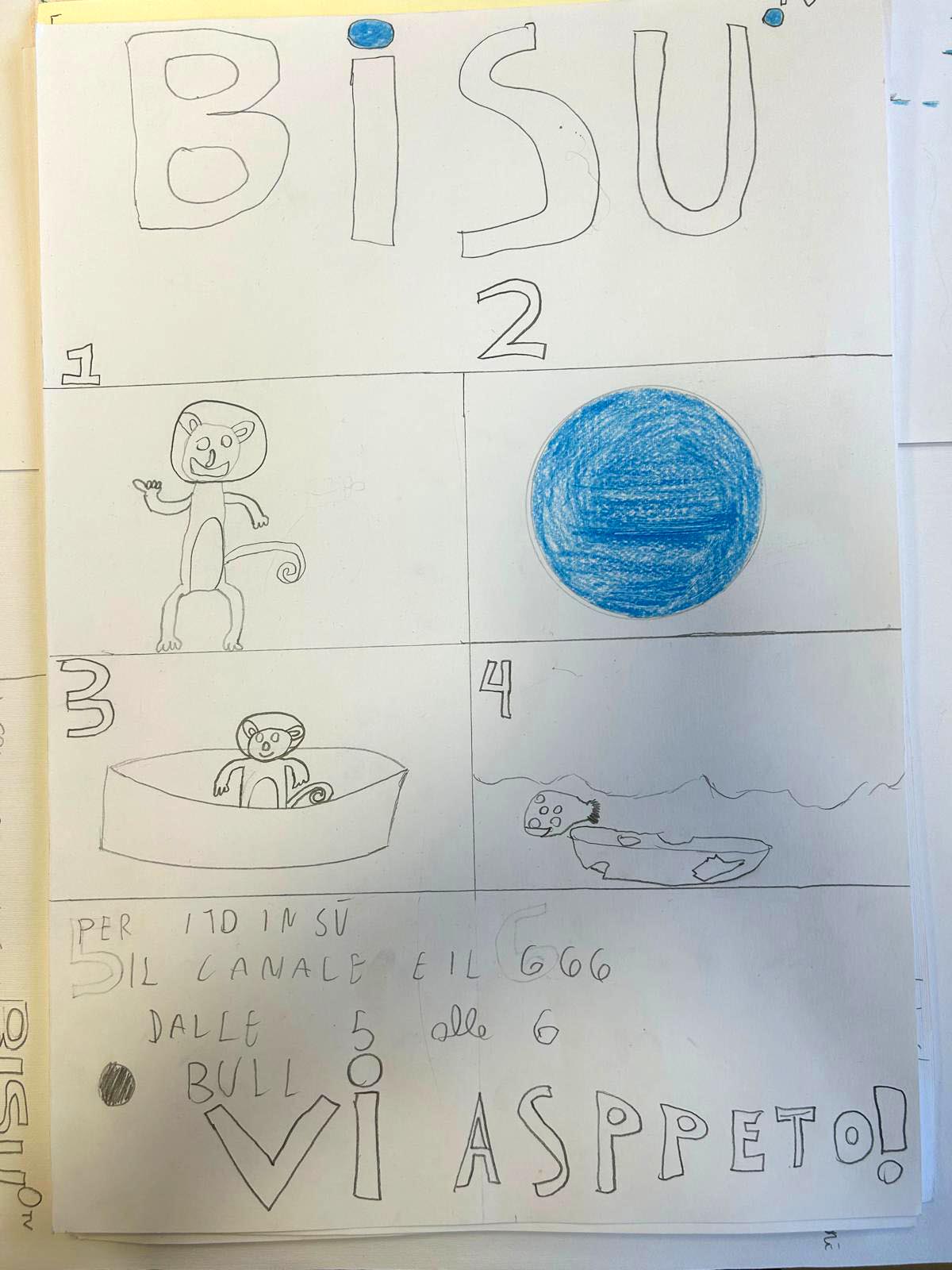
Bisu is a Sardinian word meaning “dream.” And “dream” is a word-world: you need a map to avoid getting lost in the multitude of its meanings and nuances. To simplify (a lot), there are the dreams we have while sleeping and those we have with our eyes open. The latter hold us spellbound, rooted to the spot, our eyes fixed on something beyond the visible. “Their head is in the clouds!” people often say of someone who is distracted—someone projected onto another plane of reality who, in the meantime, can’t find their house keys. And while the door remains locked and the keys are God-knows-where, epic battles between dragons play out in those clouds; solutions to unsolved mathematical problems are found; and a memory—one buried so deep in the abyss it had been forgotten—surfaces to change the course of the day. We see ourselves from above—a bird’s-eye view—in a future not too distant or in an alternative present: as doctors or astronauts, as inventors; atop a mountain or in the middle of the sea; talking with a friend against an endless sunset; immersed in the science fiction of our own lives.
In daydreams, fragments of the self and of our relationship with the world come to light—fragments that would otherwise remain hidden. In that state of apparent disconnection from reality, we connect to something deeper, something closer to our core. When we finally find the courage to speak of these flights of fancy—even if their meaning still seems obscure or trivial to us—someone might say, “It’s just daydreaming!” Yet someone else might feel that dream resonate powerfully because it mirrors their own, and say: “Wait. That dream is beautiful. I’ve had it too. It’s not silly, is it? We have to grab hold of it and bring it down to earth; we have to make it real.”
The dreams we have at night remain encapsulated in the depths of our own being. If we choose to pursue them, those dreams dreamt with eyes wide open bounce back down from the clouds like a basketball. And at that point, you cannot go it alone: you have to play the ball, form a team—a community capable of bringing that dream to life, whether big or small.
Bisu TV begins right here: by observing these tears in the fabric of everyday reality, and by practicing how to look through them—without shame—as part of constructing both the self and the “we.” How, in concrete terms, will we manage to grasp these dreams? Will Bisu TV’s antenna be able to pick them up and broadcast them back out?
The story begins in the next post. Enjoy the journey.
Pursuant to Law no. 124/2017, art. 1 co. 125 – 129, amended by Law no. 58/2019, we publish the information regarding public contributions received by Cherimus in the 2025 calendar year.
CF 90024830920
Grant: Presidency of the Council of Ministers
Amount: €74,999.82
Date of collection: December 9, 2025
Reason for contribution: TAM TAM: educational programs with Theater, Art, and Music – CUP J44C25000270004, within the PNRR M5C3 – Investment 1.3 – Structured socio-educational interventions to combat educational poverty in Southern Italy in support of the Third Sector – funded by the European Union Next Generation EU
Grant: Presidency of the Council of Ministers
Amount: €54,464.55
Date of collection: August 7, 2025
Reason for contribution Contribution: Bisu TV Project – CUP E44C22001120004; – PNRR Call M5C3 – Investment 1.3 – Structured socio-educational interventions to combat educational poverty in Southern Italy in support of the Third Sector – funded by the European Union Next Generation EU
Grant: Presidency of the Council of Ministers
Amount: €74,999.00
Date of collection: February 12, 2025
Reason for contribution: From the Nuraghi to the Stars Project. Educational Paths to Discover the Territory – CUP J44C23000350004 – Within the PNRR M5C3 – Investment 1.3 – Structured socio-educational interventions to combat educational poverty in Southern Italy in support of the Third Sector – funded by the European Union Next Generation EU
Grant: Presidency of the Council of Ministers
Amount: €69,726.26
Date of collection: January 31, 2025
Reason for contribution: Bisu TV Project – CUP E44C22001120004; – PNRR M5C3 Call – Investment 1.3 – Structured socio-educational interventions to combat educational poverty in Southern Italy in support of the Third Sector – funded by the European Union Next Generation EU
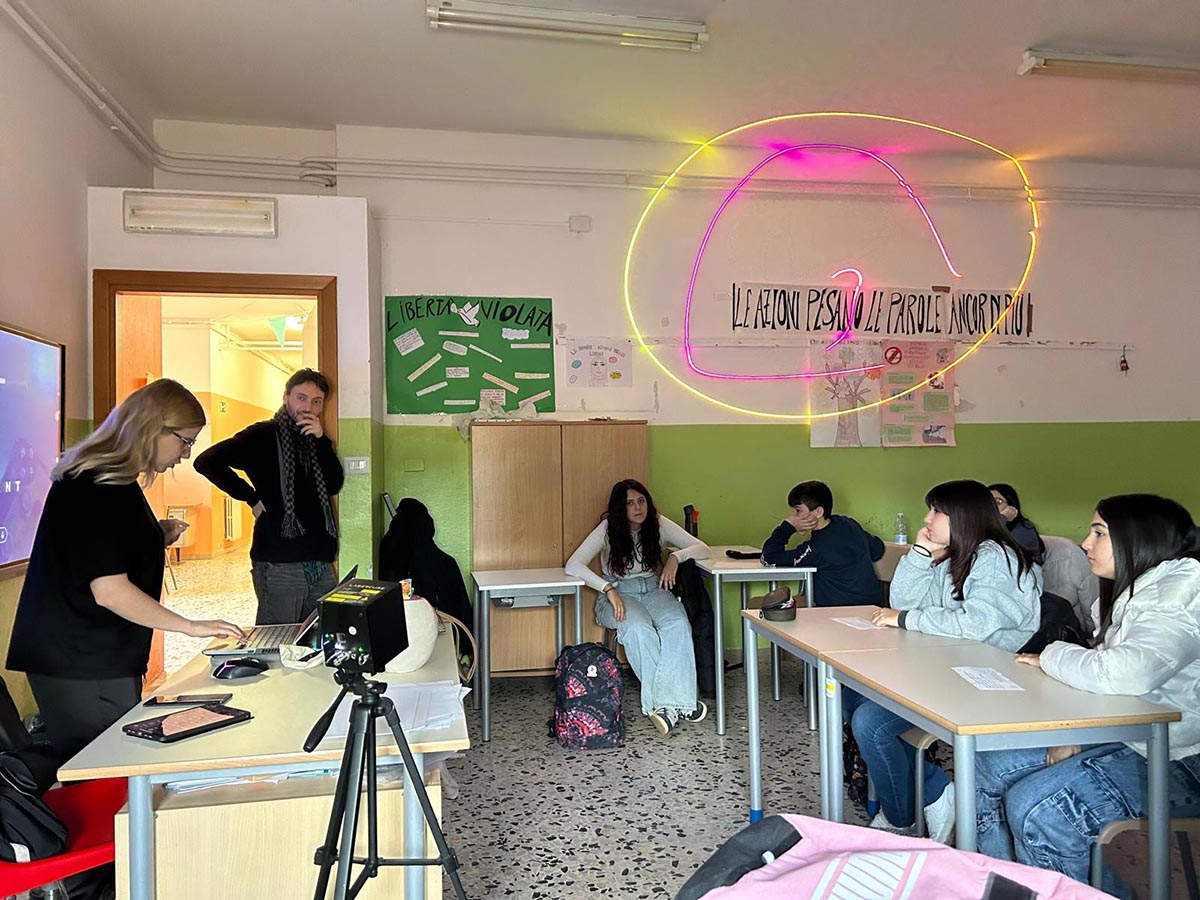
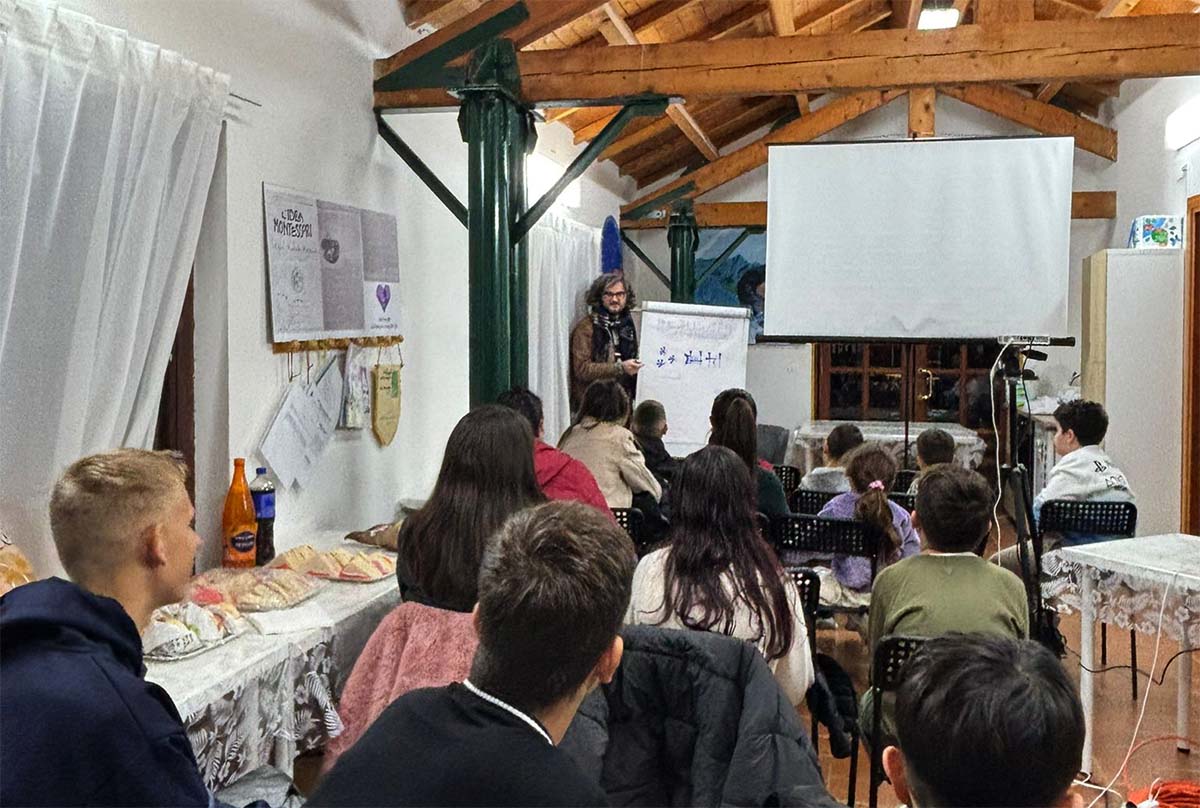
L’antenna di Bisu TV all’inizio comincia a captare segnali debolissimi. Un disegno. Una frase detta sottovoce. Una passione. Una canzone preferita. Un animale del cuore.
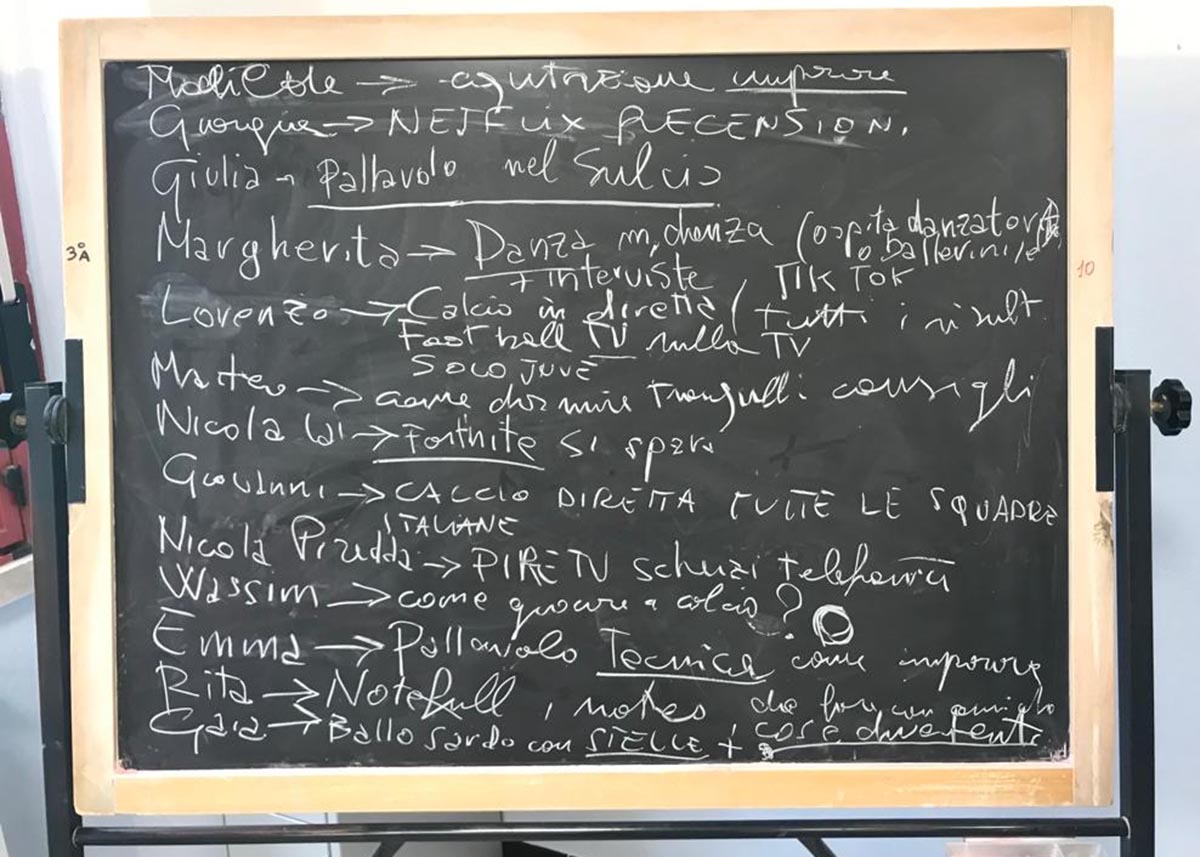
Gli artisti aiutano a orientare l’antenna: a poco a poco il segnale si fa più nitido. Non serve spiegare tutto, né essere abili con le parole. Ogni linguaggio va bene. Non siamo più a scuola anche se ci circonda la classe. Regole cambiate: si può sbagliare, anzi l’errore è prezioso. Non ci sono voti, conseguenze, giudizi di sorta. Ogni frase, ogni disegno, ogni sorriso, è un’onda.
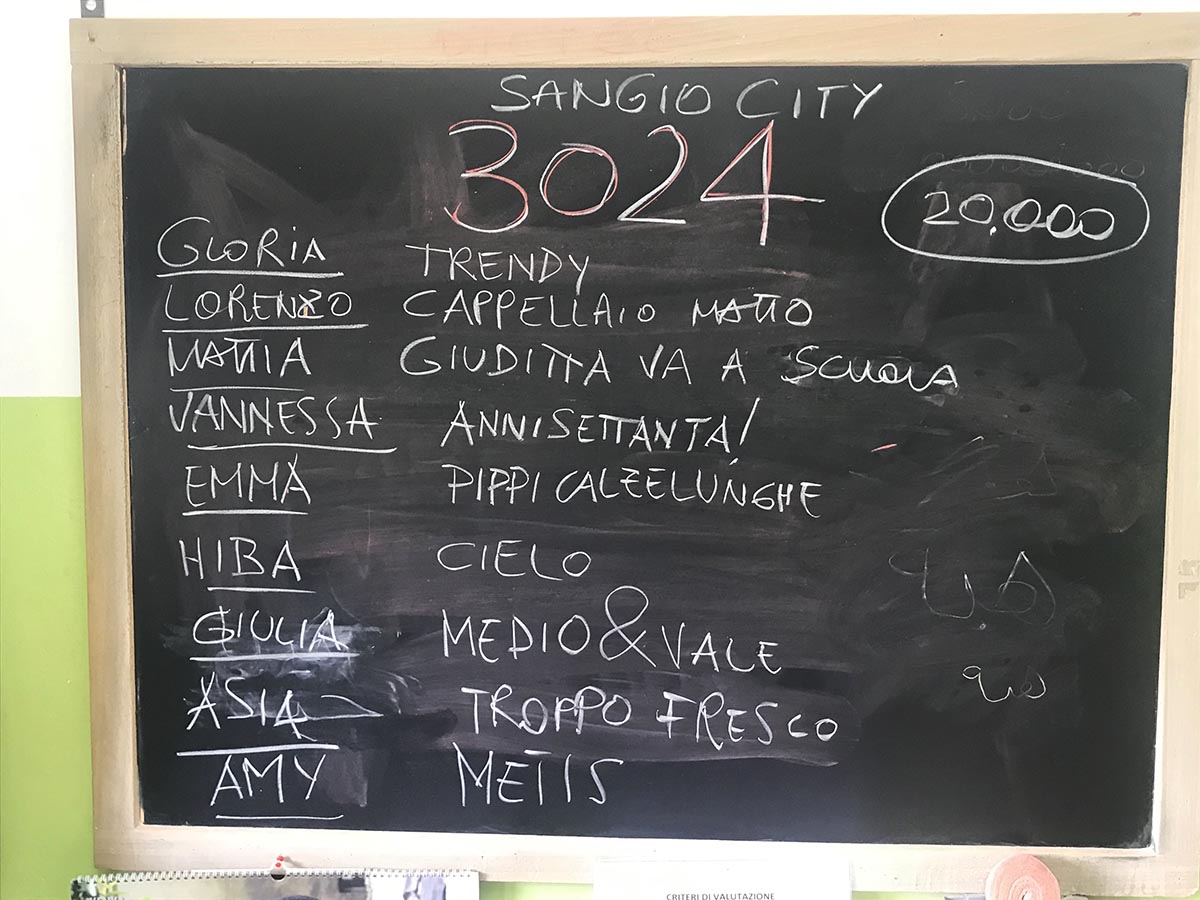
E alla fine tutte queste onde trovano posto sulla lavagna, ancora con il gesso, vecchia maniera. Ogni nome è associato a qualcosa che il giovane studente ha voluto condividere. Tutto è più chiaro. Esempio:
Questa lavagna è il punto di partenza, il campo base. Da quei primi segnali, ancora deboli, nascono le idee, i gruppi di lavoro e, poco alla volta, le storie. Quelle storie diventano racconti, dialoghi, costumi, scene, riprese. Diventano cortometraggi, videoclip, schegge video, frammenti del proprio mondo.
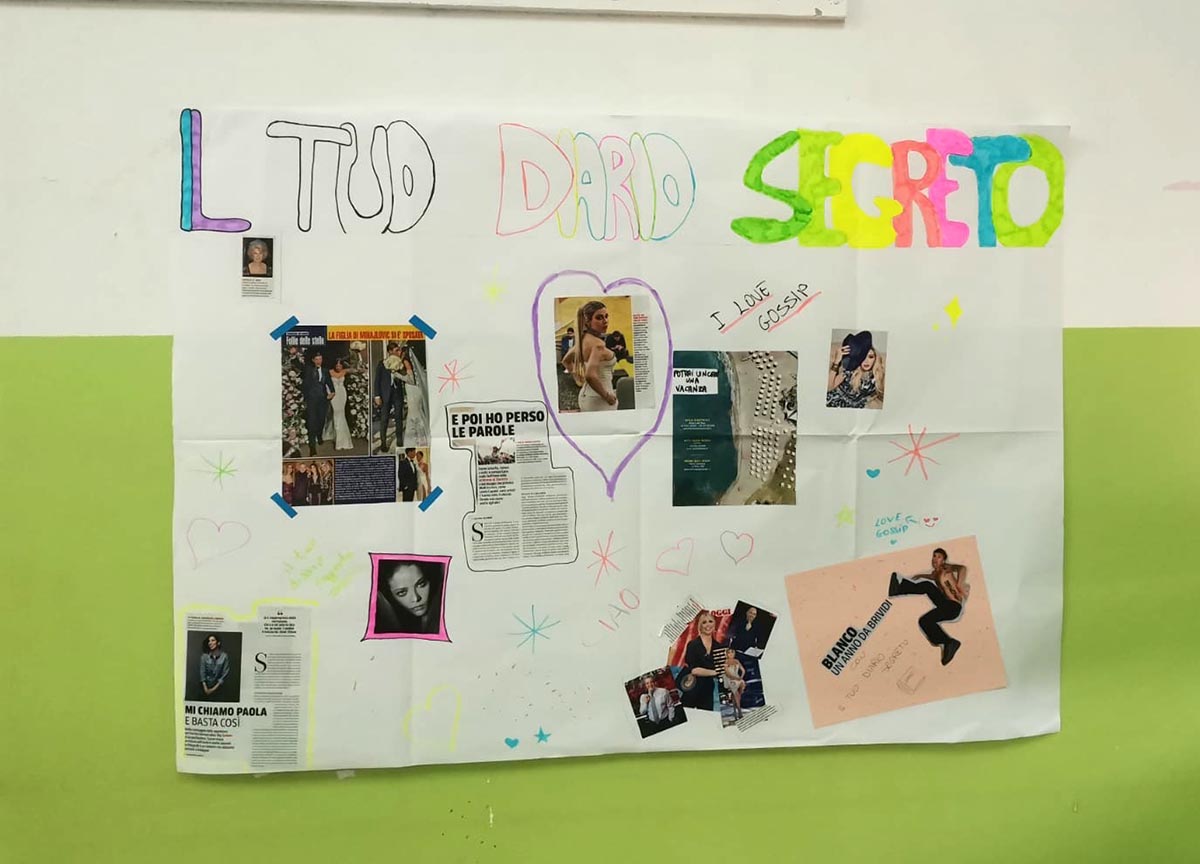
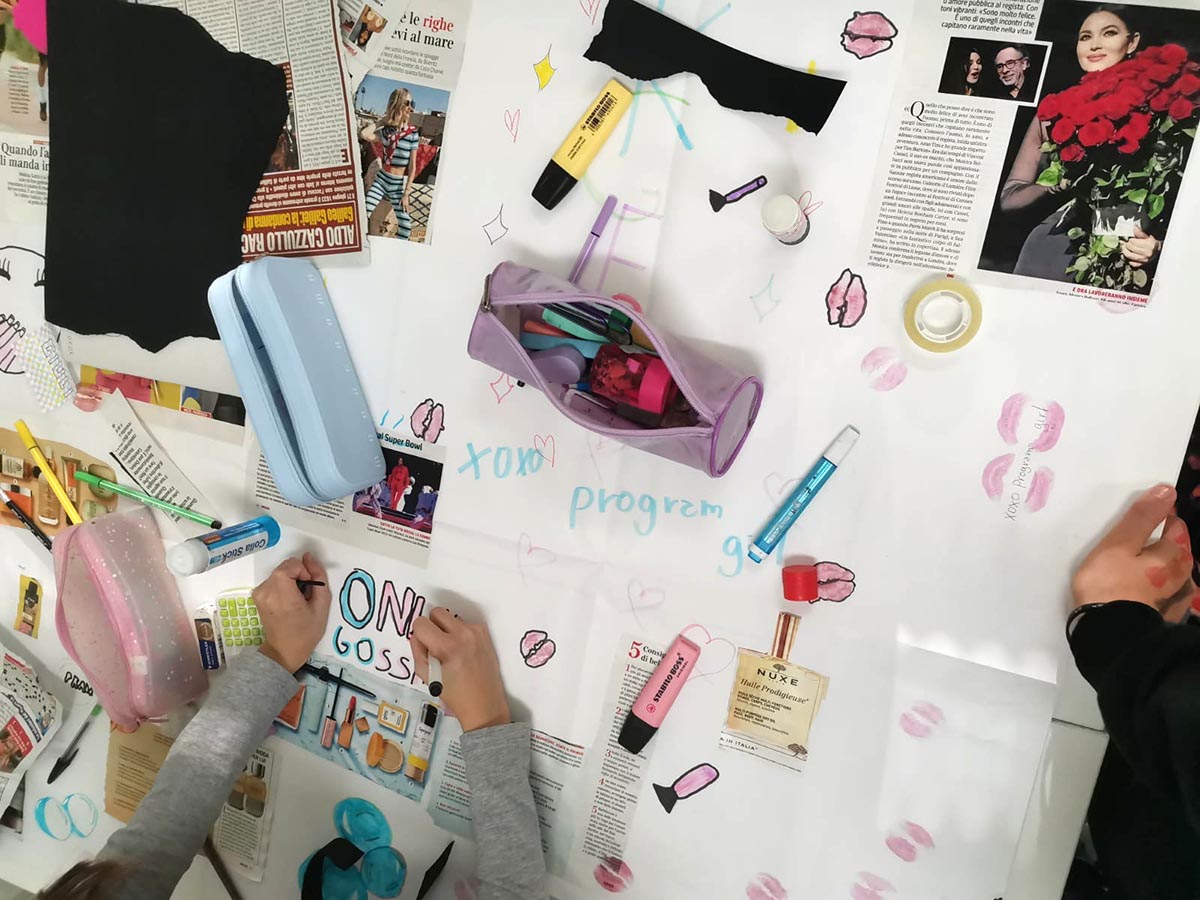
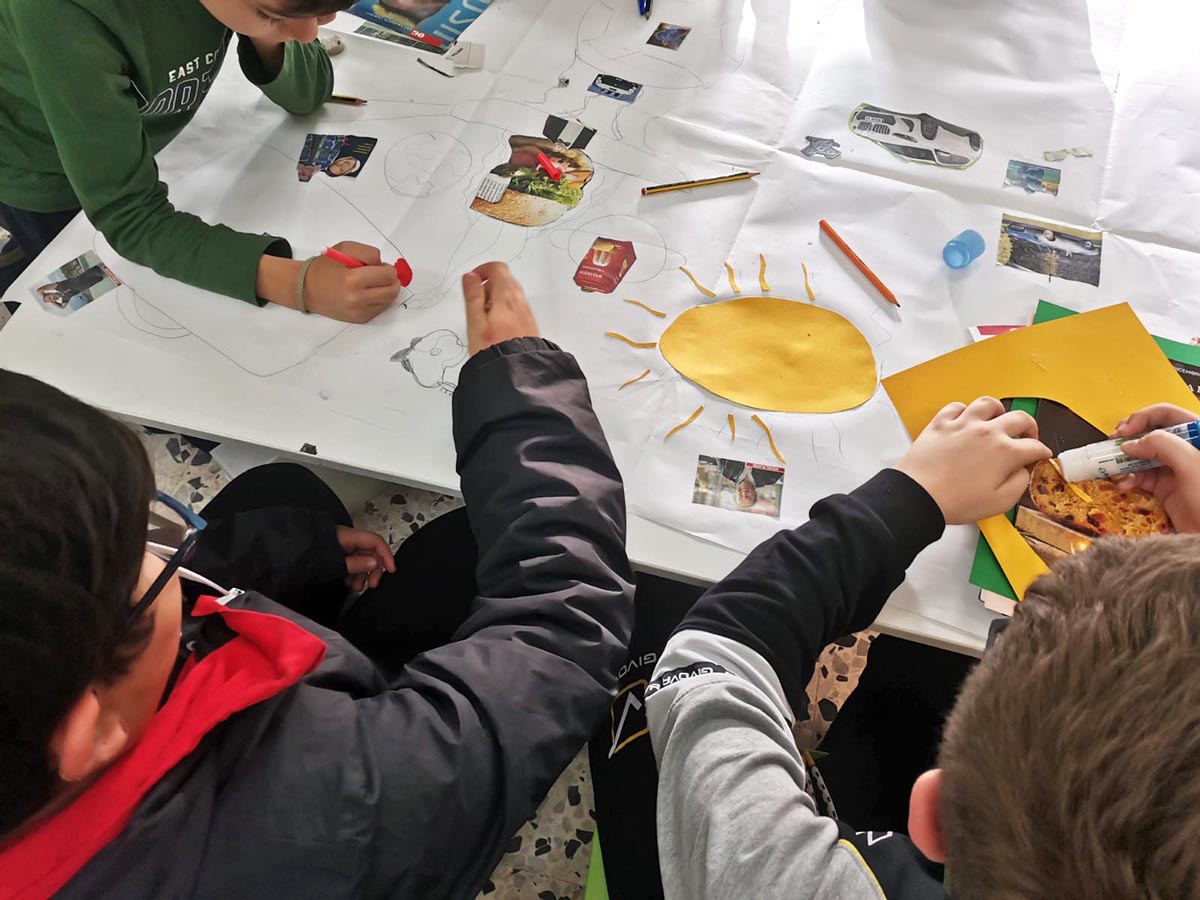
Nella galleria di immagini che seguono ripercorriamo in ordine sparso le attività che hanno portato alle riprese del primo corto realizzato.
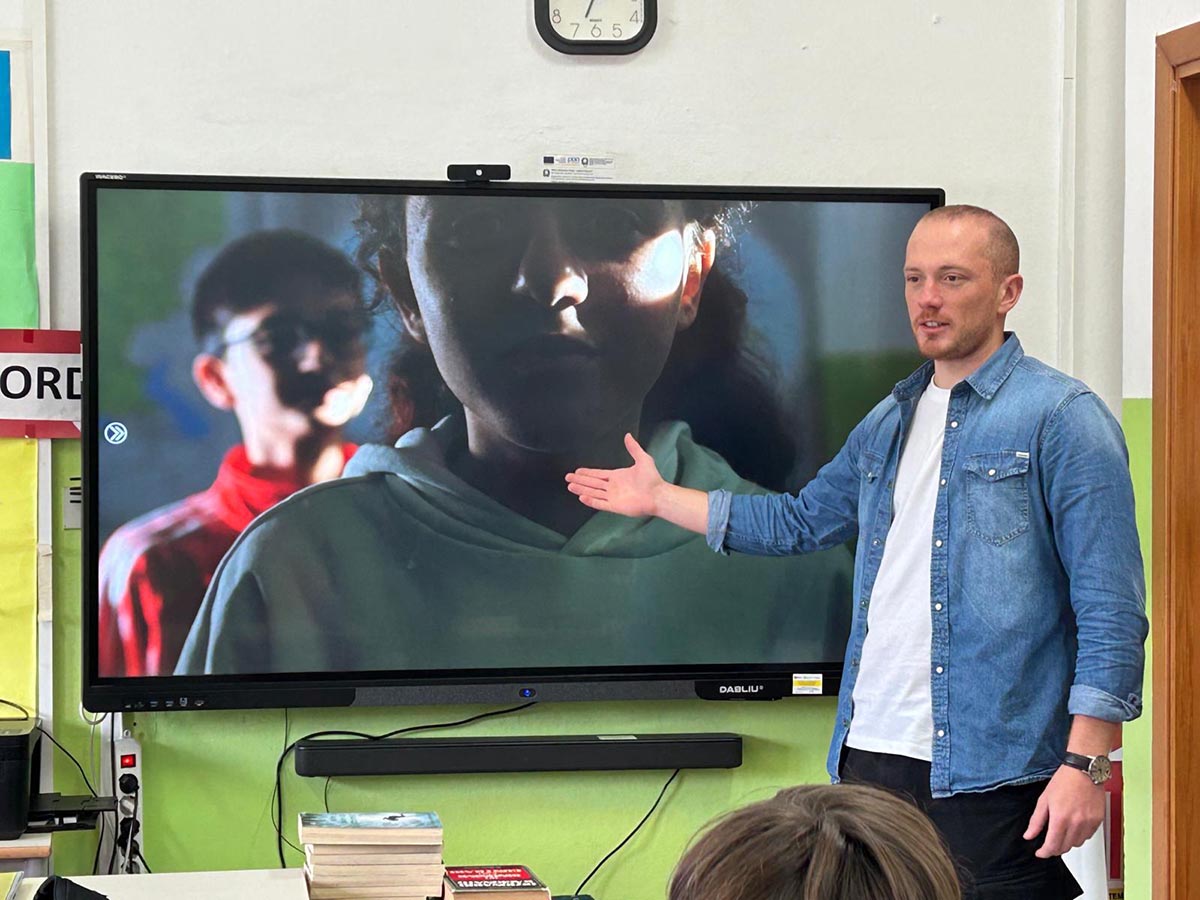
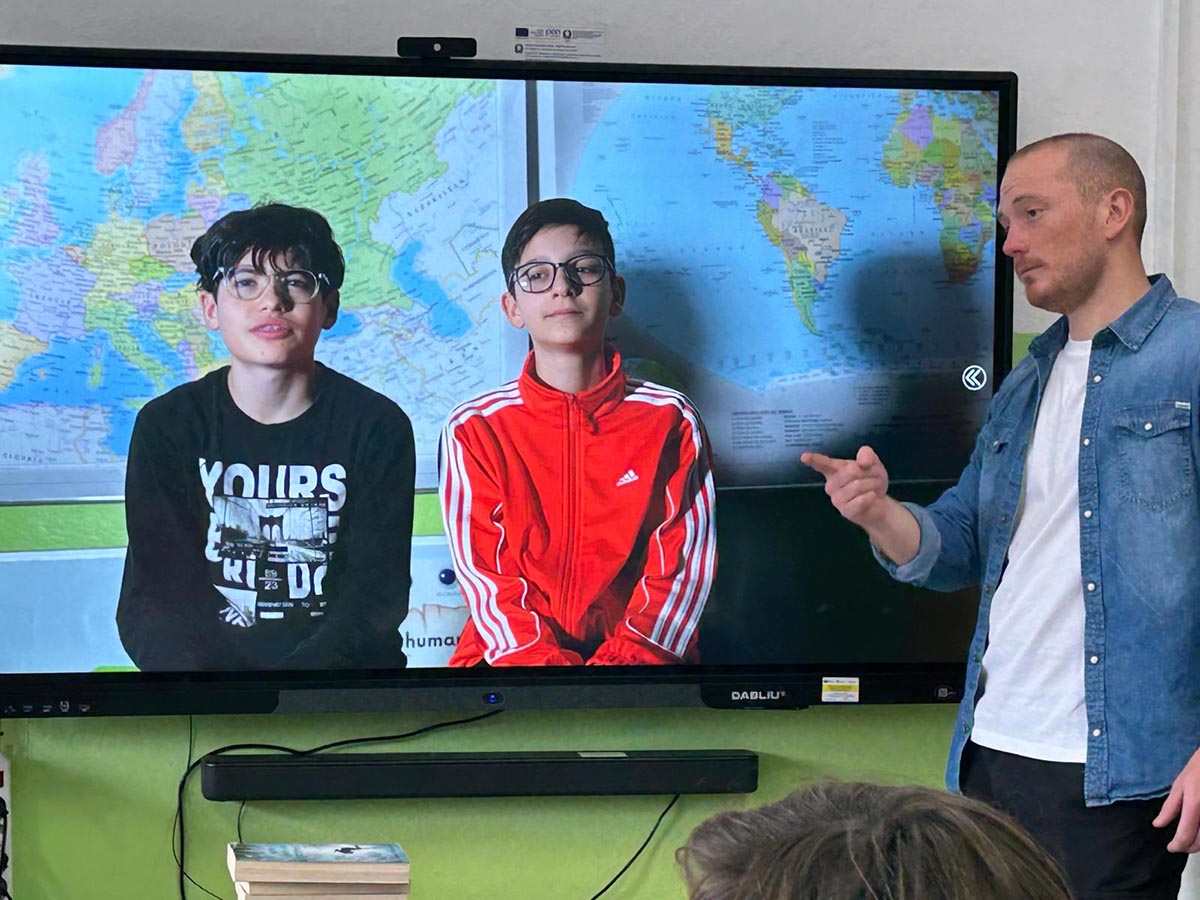
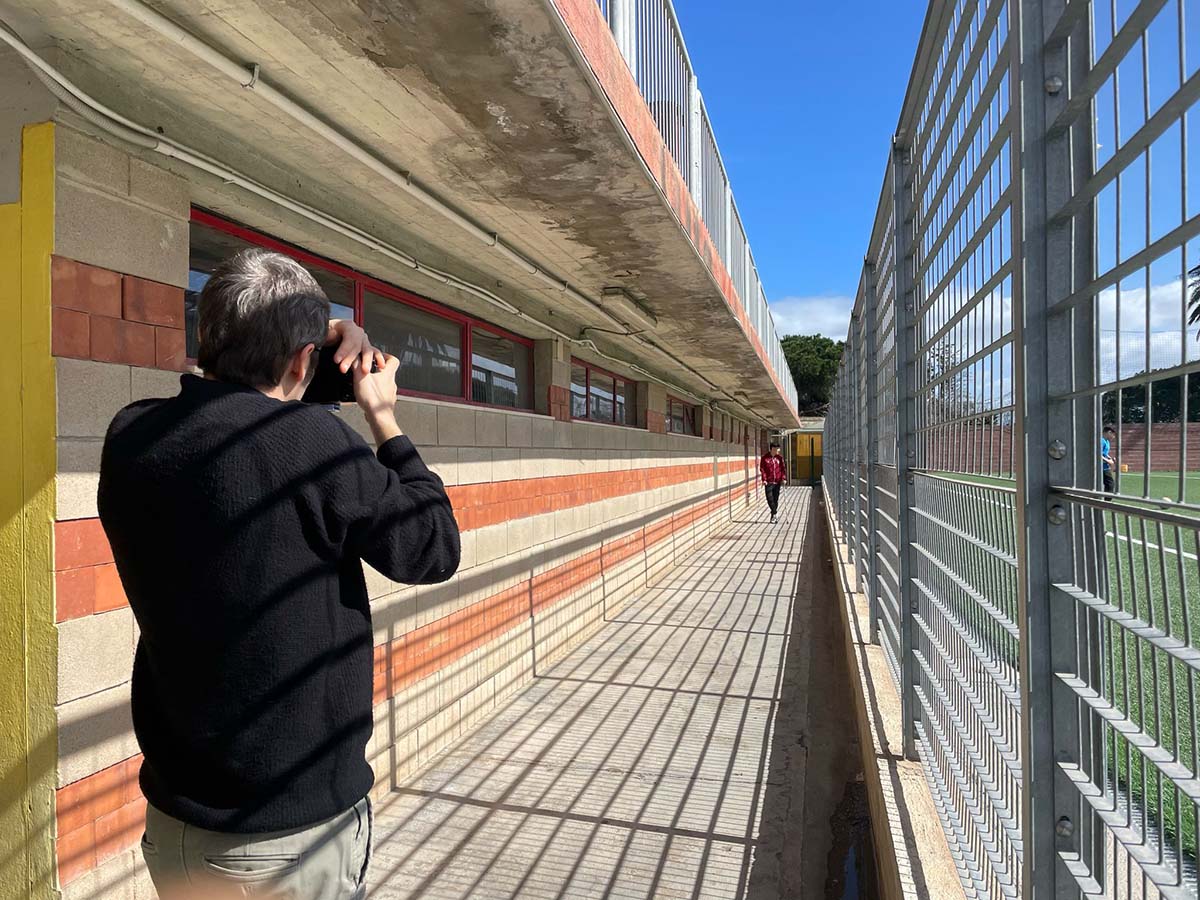
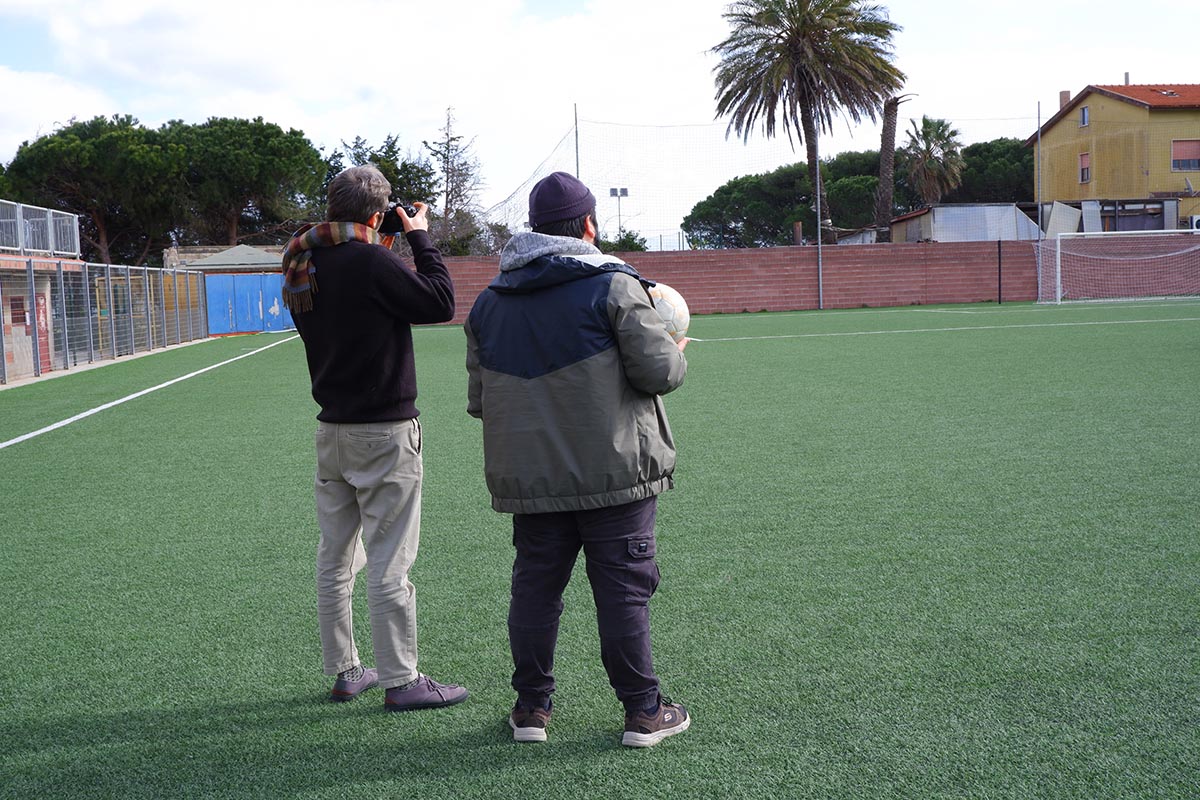
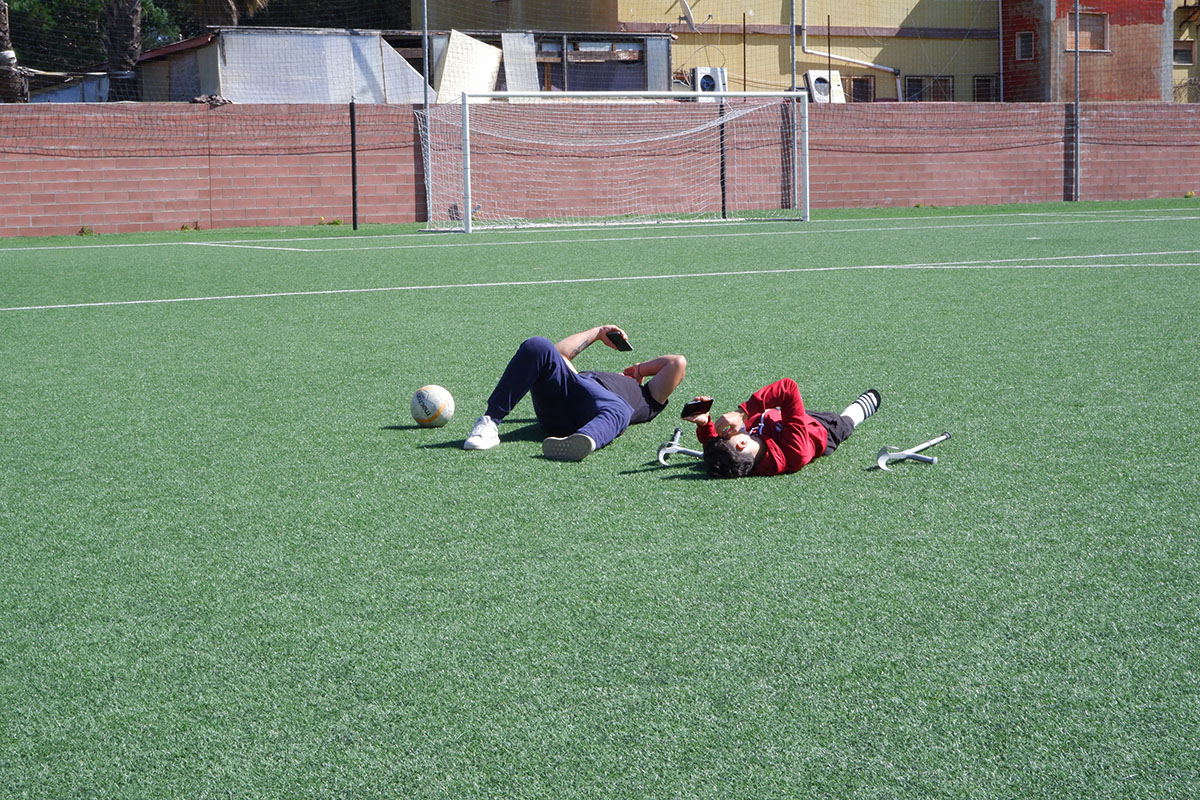
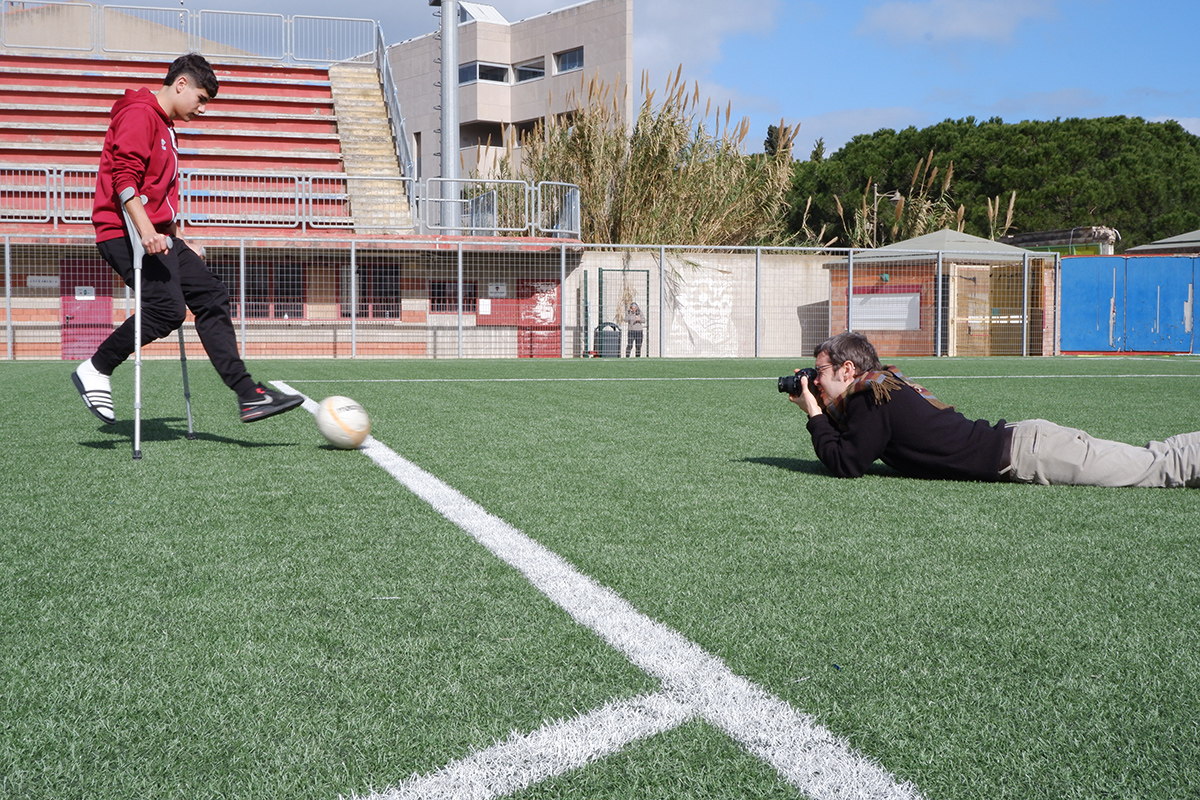
Il primo cortometraggio “Palla al centro”, noto anche con il titolo “Vai che ci sei!”, è stato il risultato di un anno di lavoro con una classe della scuola media di San Giovanni Suergiu. In classe si sono avvicendati artisti visivi, costumisti, musicisti, fotografi, registi, trasformando l’aula e la scuola in uno studio di produzione. La stessa classe è stata protagonista anche della realizzazione di un secondo corto “Geomax”. Parleremo di questi e di altri cortometraggi nei prossimi post!
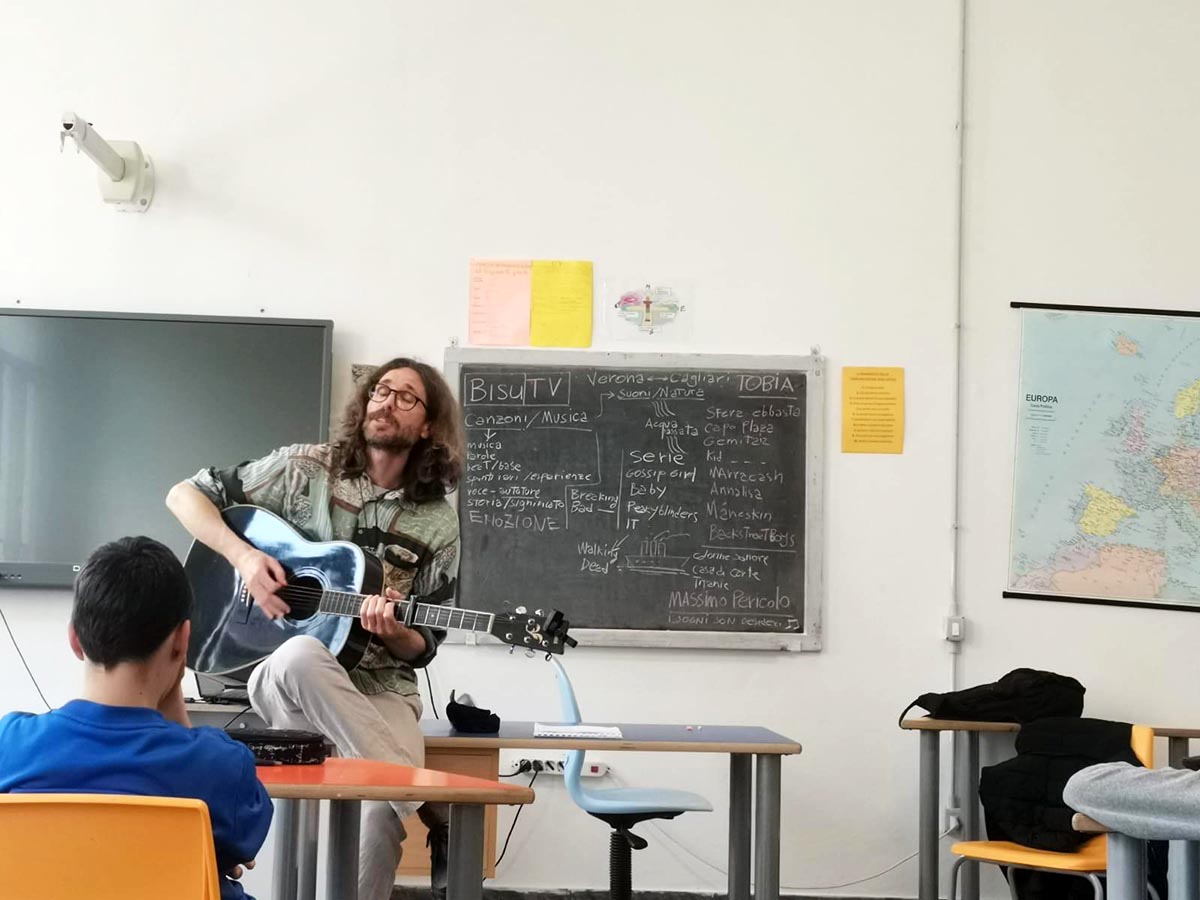
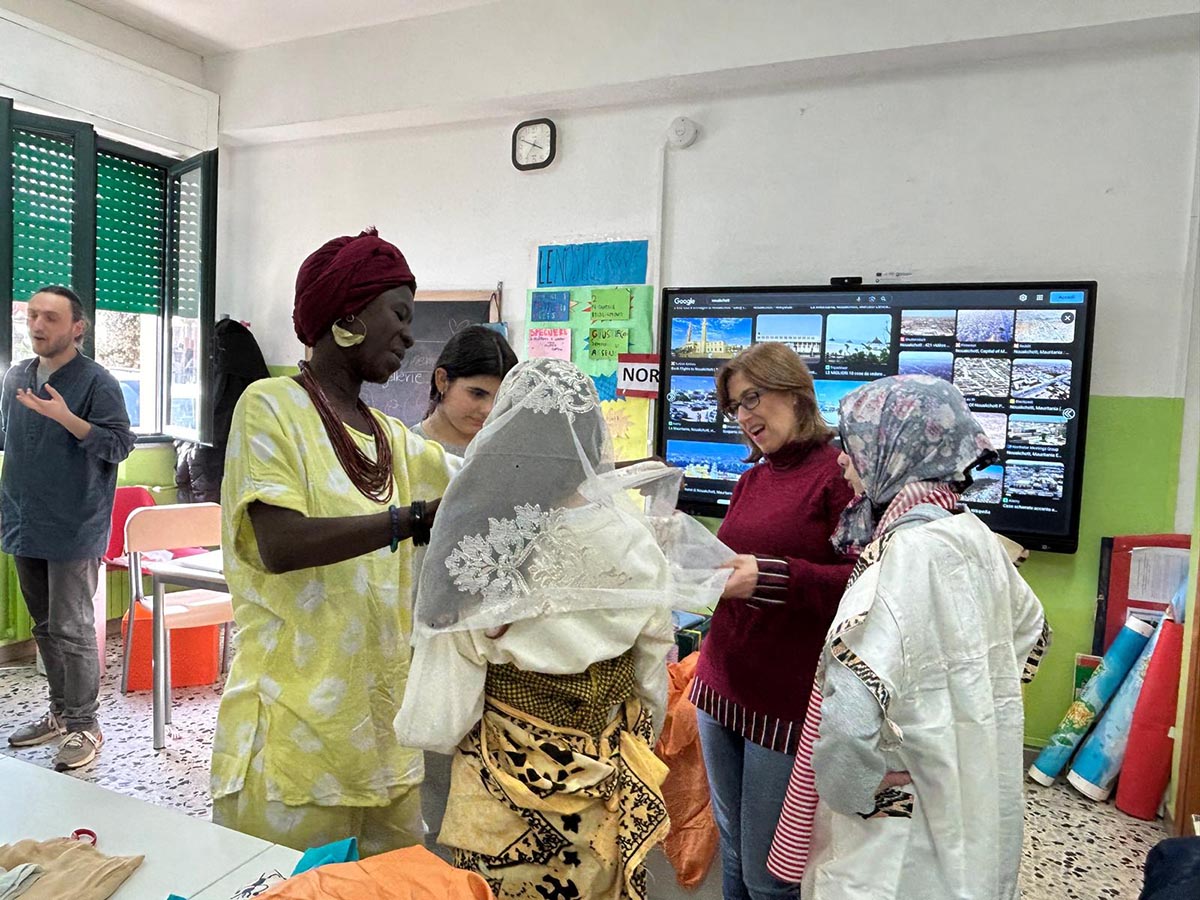
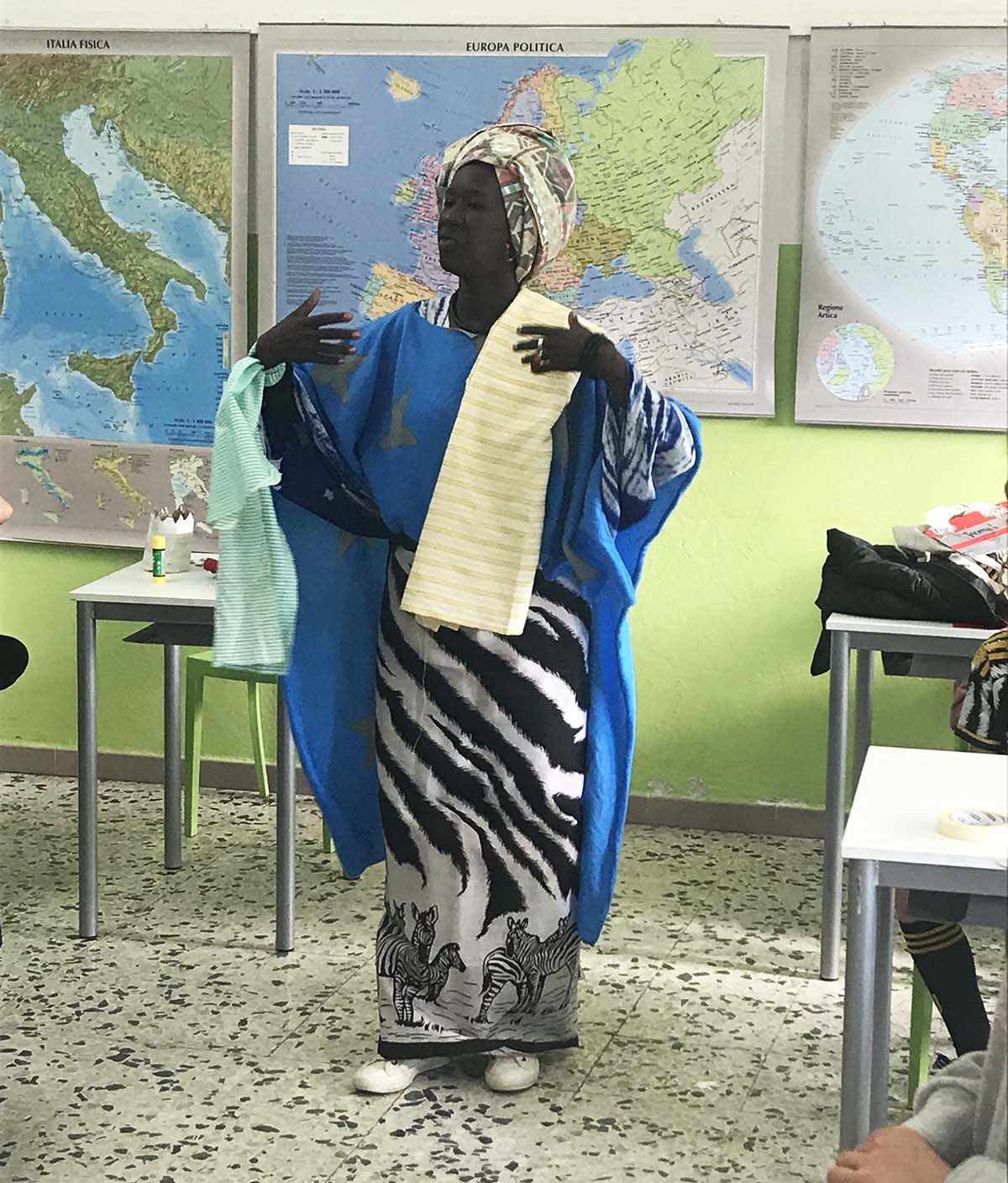
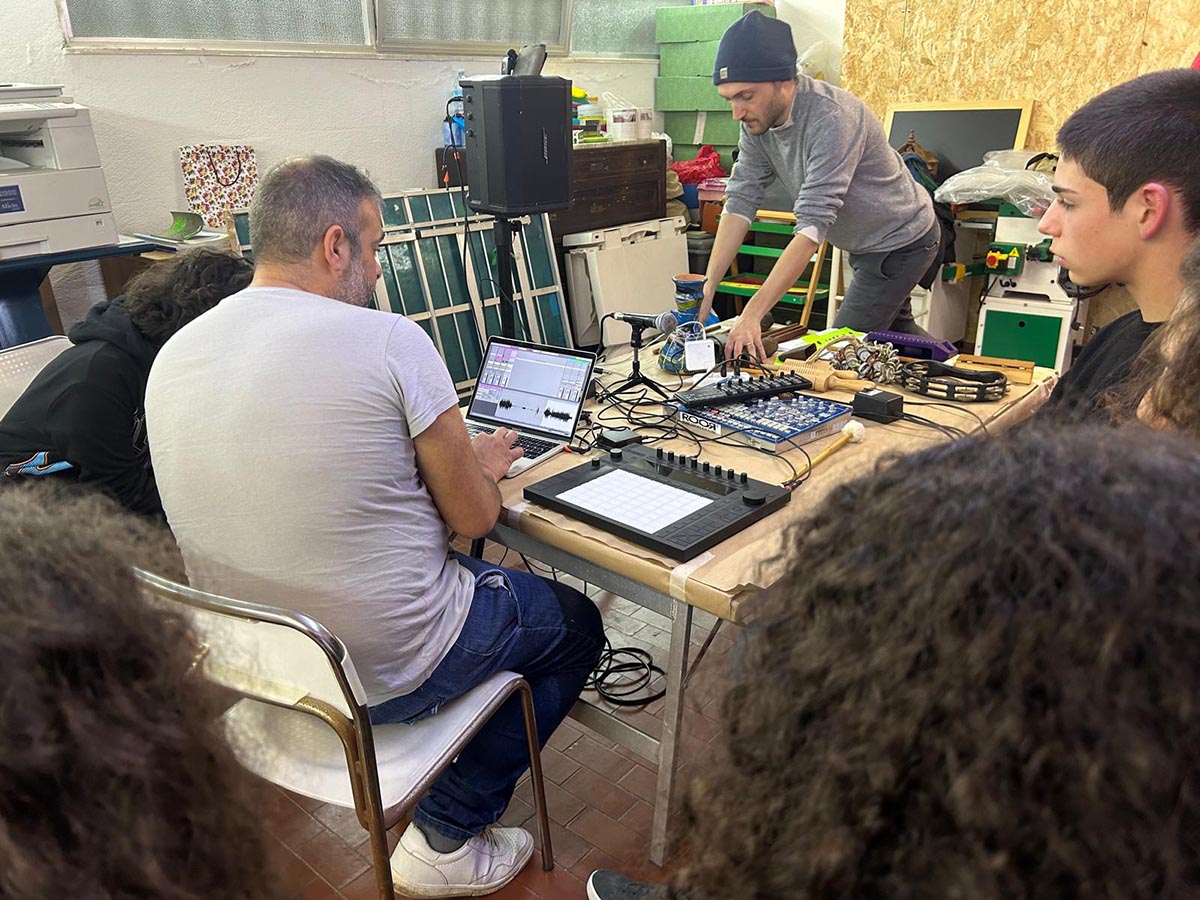
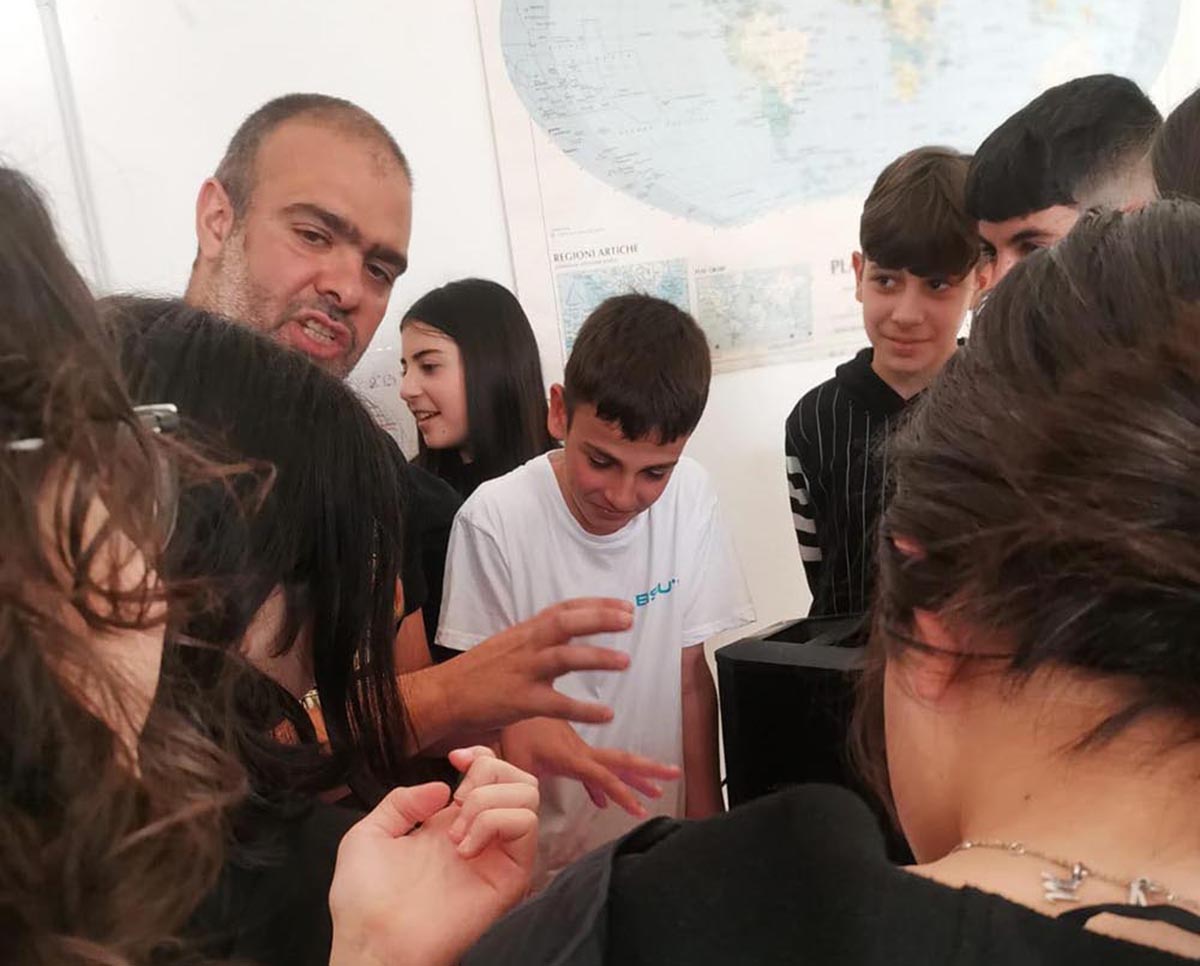
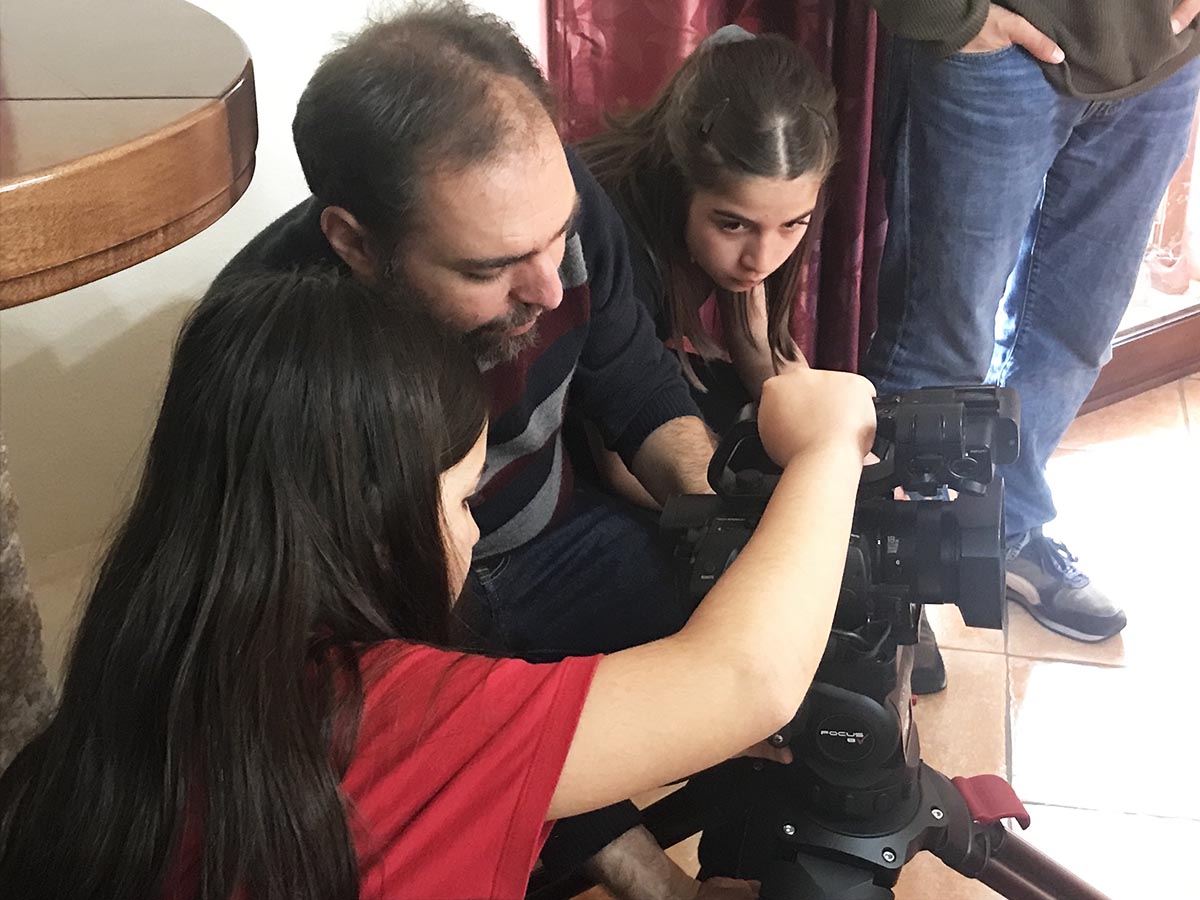
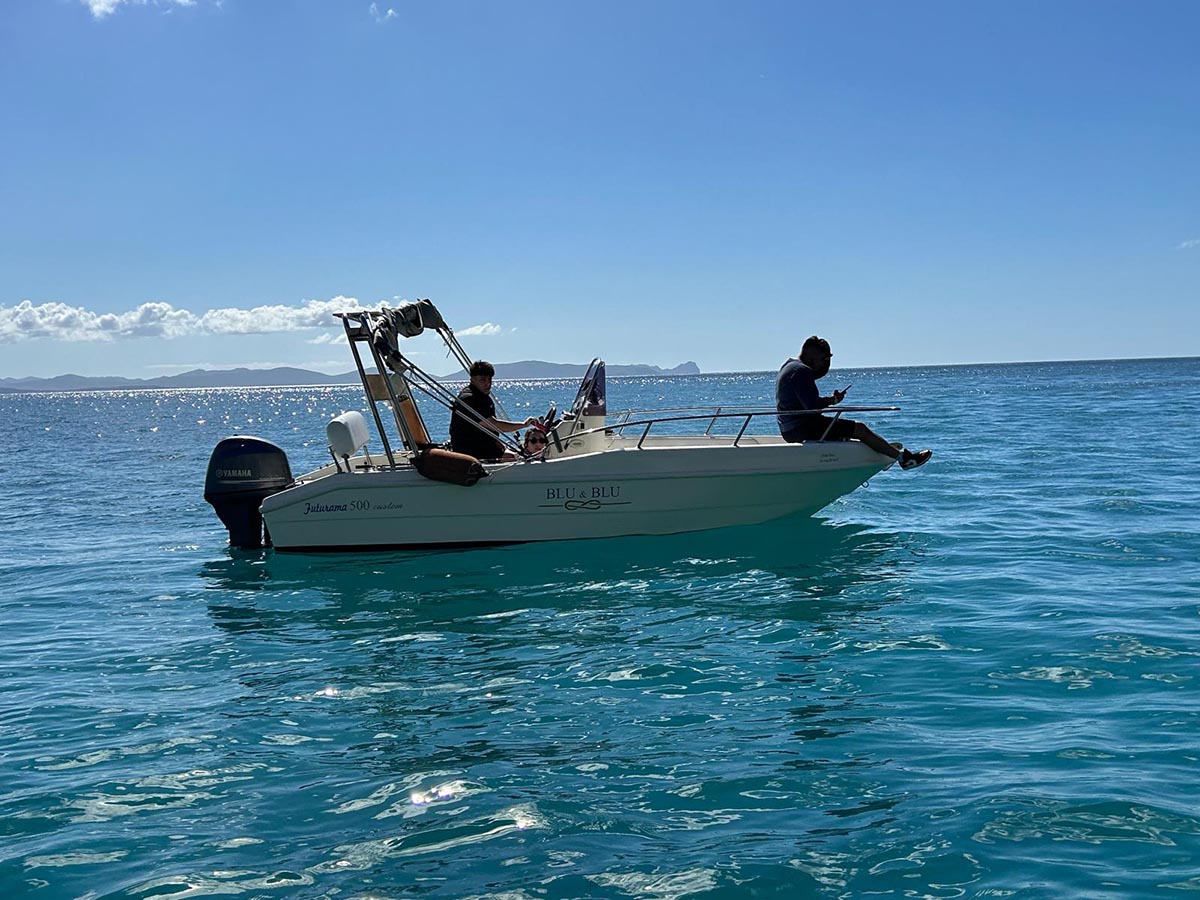
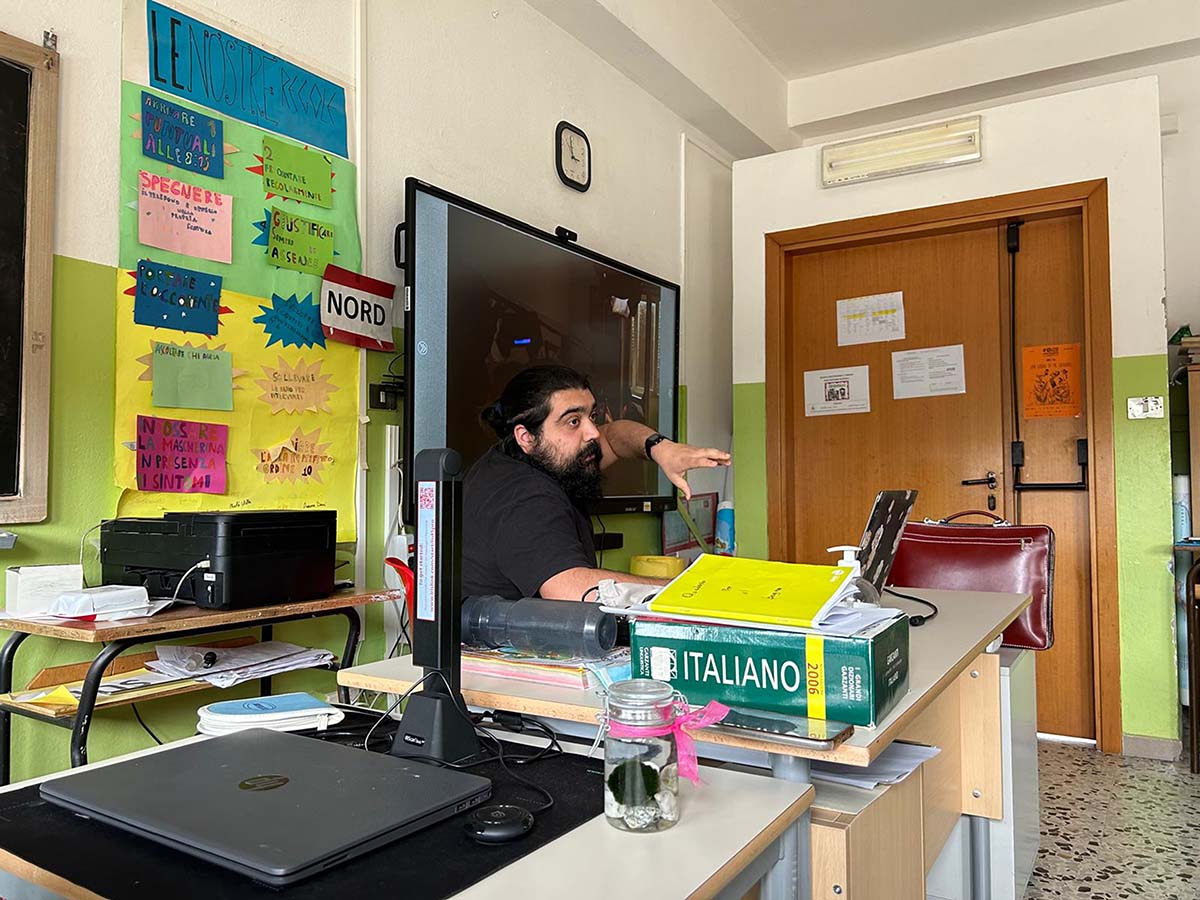
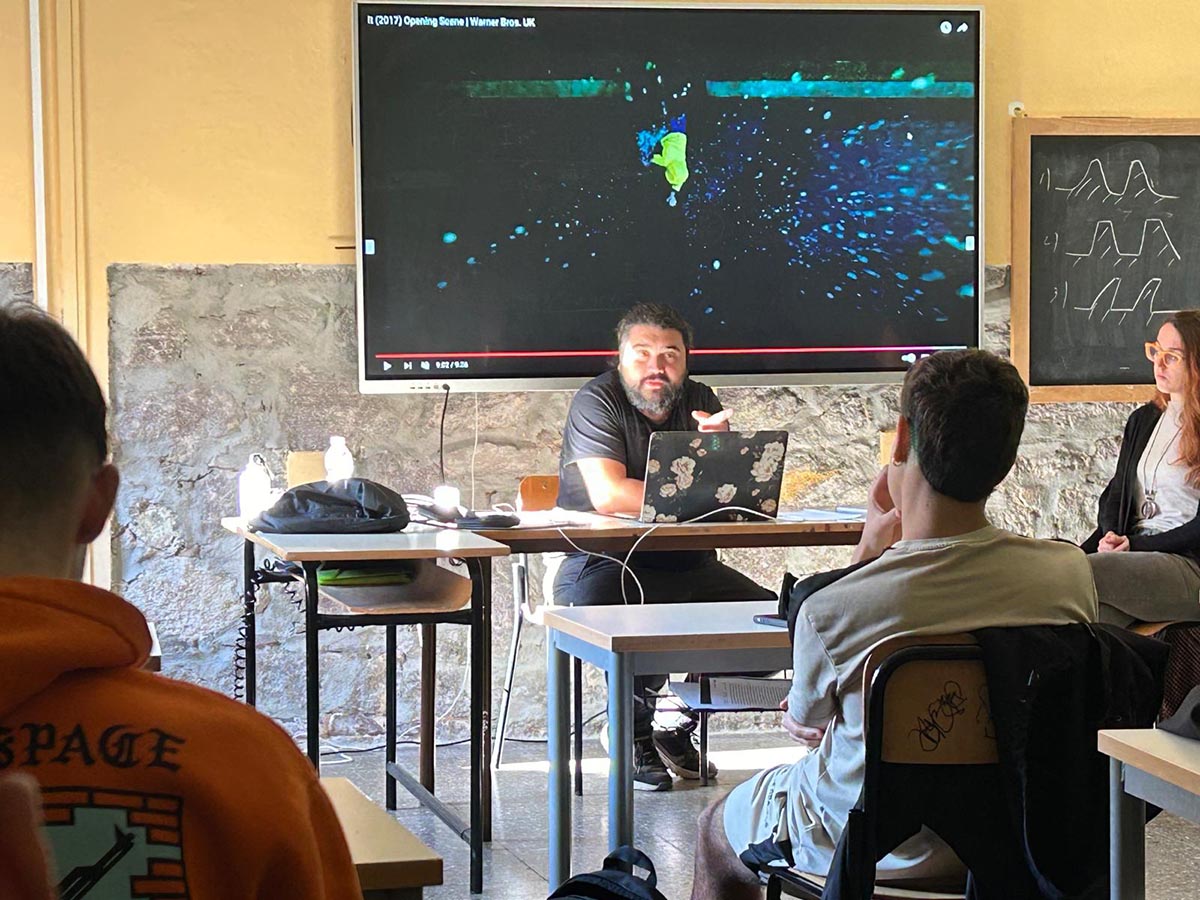
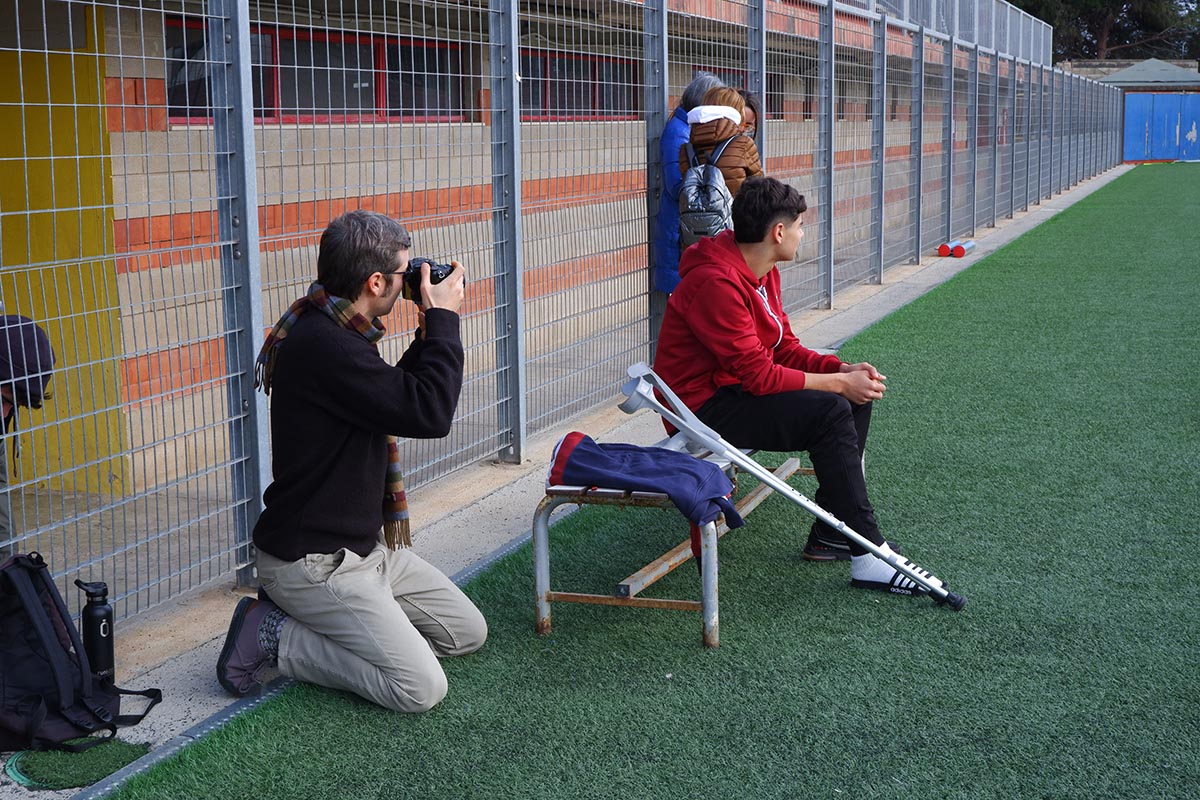
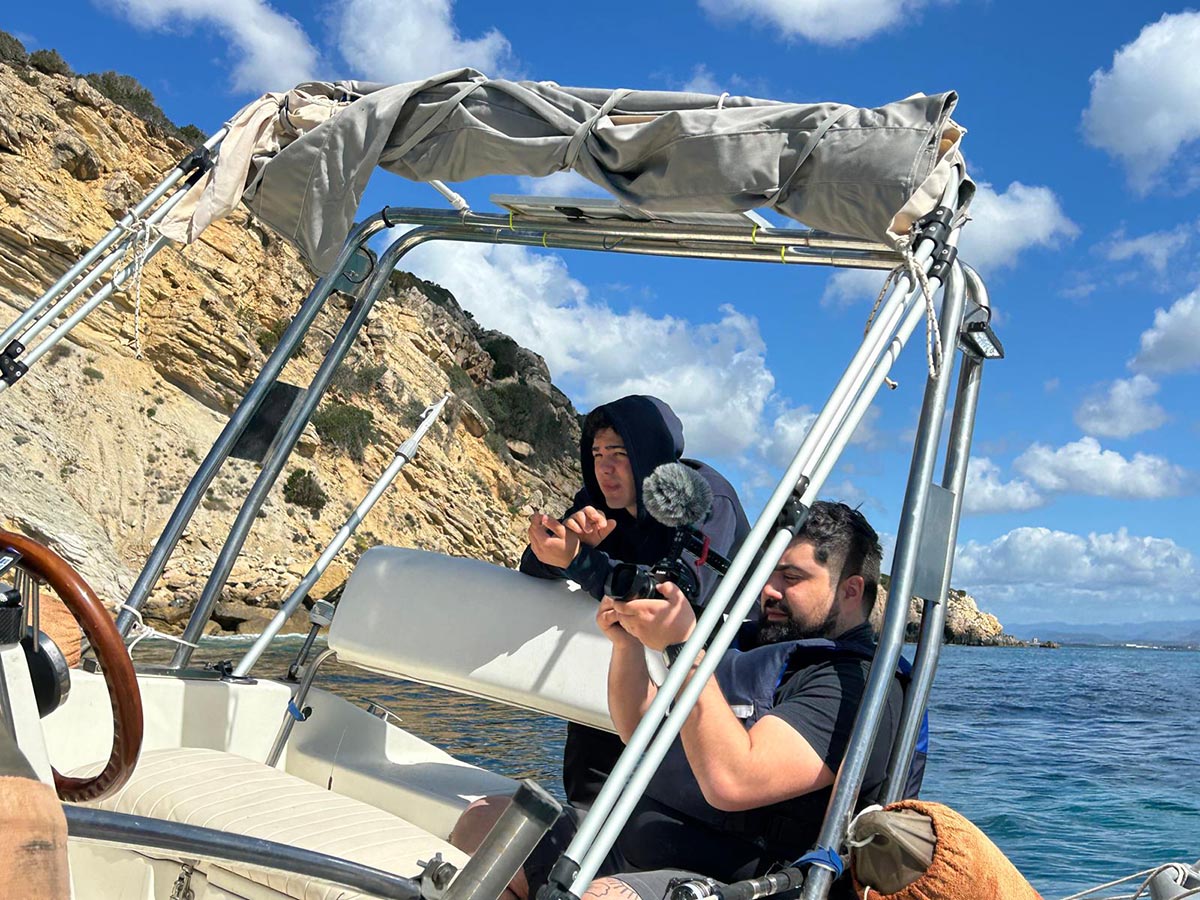
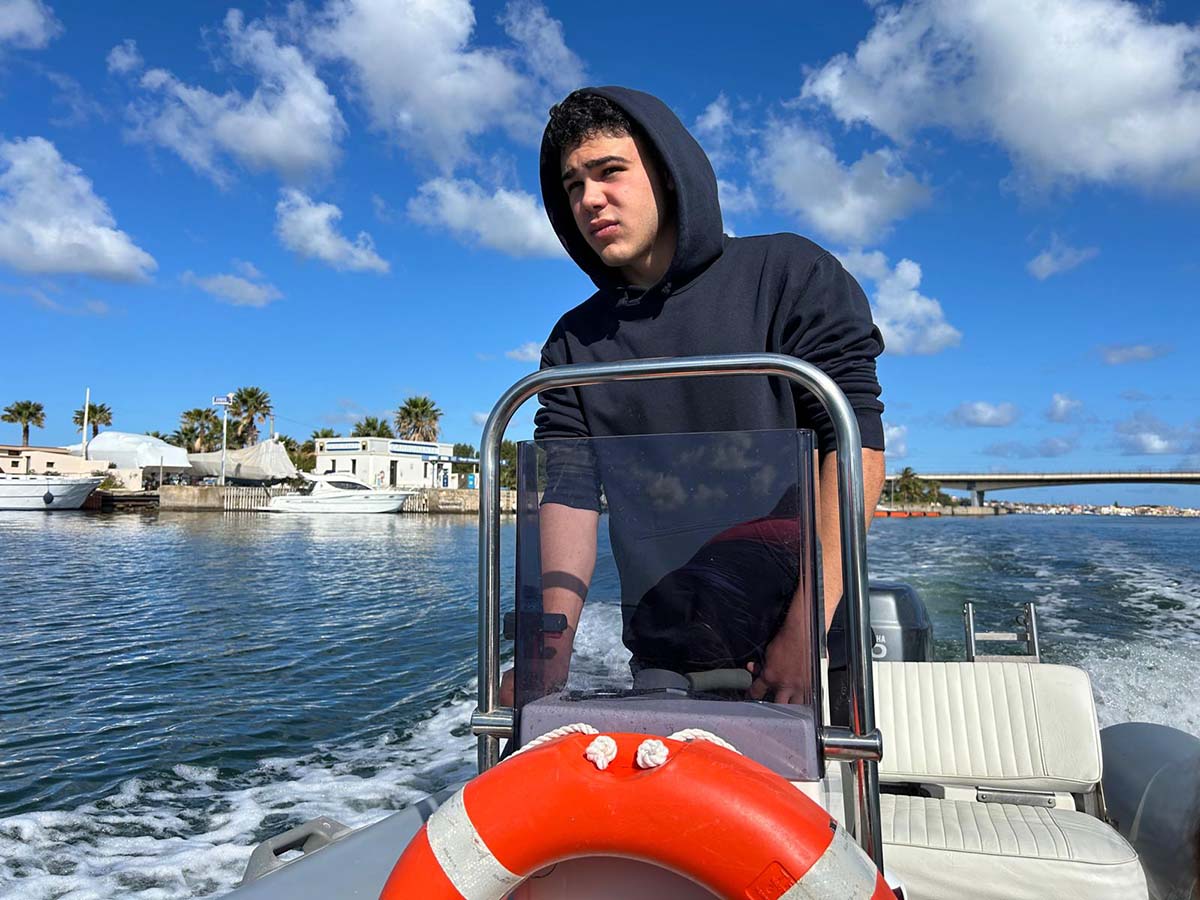
Realizzare un cortometraggio non è semplice, è un percorso a tappe che richiede diversi linguaggi in dialogo tra loro. Il risultato finale è una fusione felice di scrittura, immagine, musica, ritmo, performance. Bisu TV si è avvalsa di tanti professionisti provenienti da vari ambiti artistici e della collaborazione fondamentale con Eja TV emittente sarda con tanti registi esperti nell’ambito educativo e della formazione tecnica. Stafano Cau, Mauro Pes, Davide Dal Padullo, Nicola Onnis, Daniele Arca di Eja TV hanno lavorato alle sceneggiature sulla base del soggetto e degli spunti emersi in classe, alle riprese e al montaggio, supportati da Martina Celani e Francesco Portas. Le colonne sonore si sono avvalse dell’apporto di Francesco Medda Arrogalla e Carlo Spiga che hanno tenuto laboratori dedicati alla musica nelle classi coinvolte. La realizzazione dei costumi e degli oggetti di scena ha visto la collaborazione di Amy Sow, Laura Ennas e Carlo Spiga. Di seguito un breve carosello fotografico che ci mostra gli incontri dei registi a scuola e alcune fasi delle riprese.
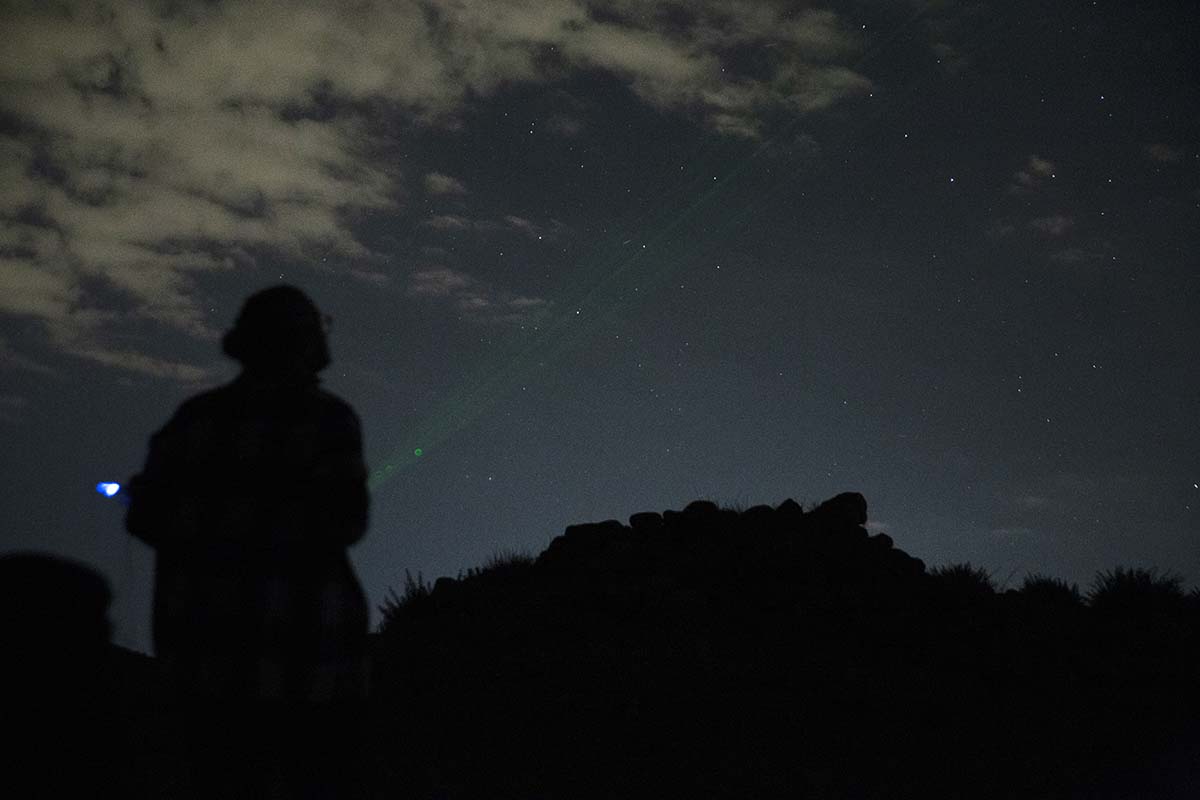
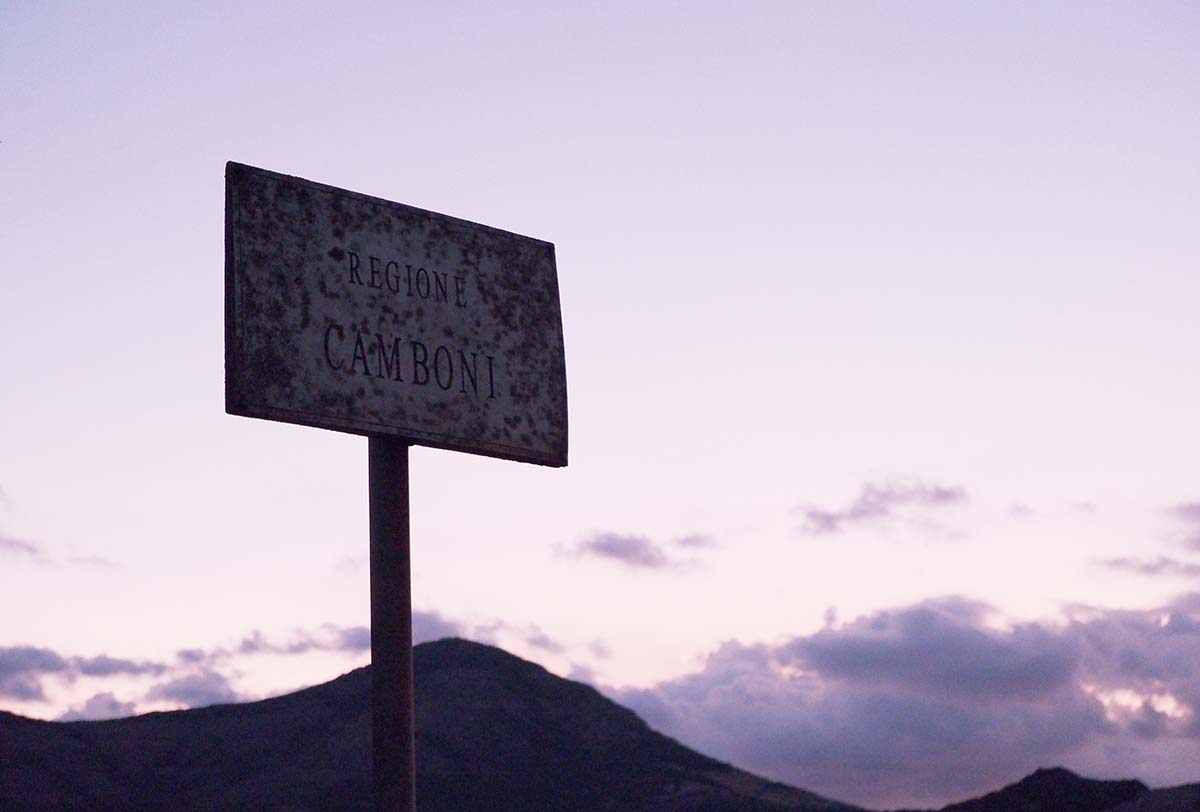
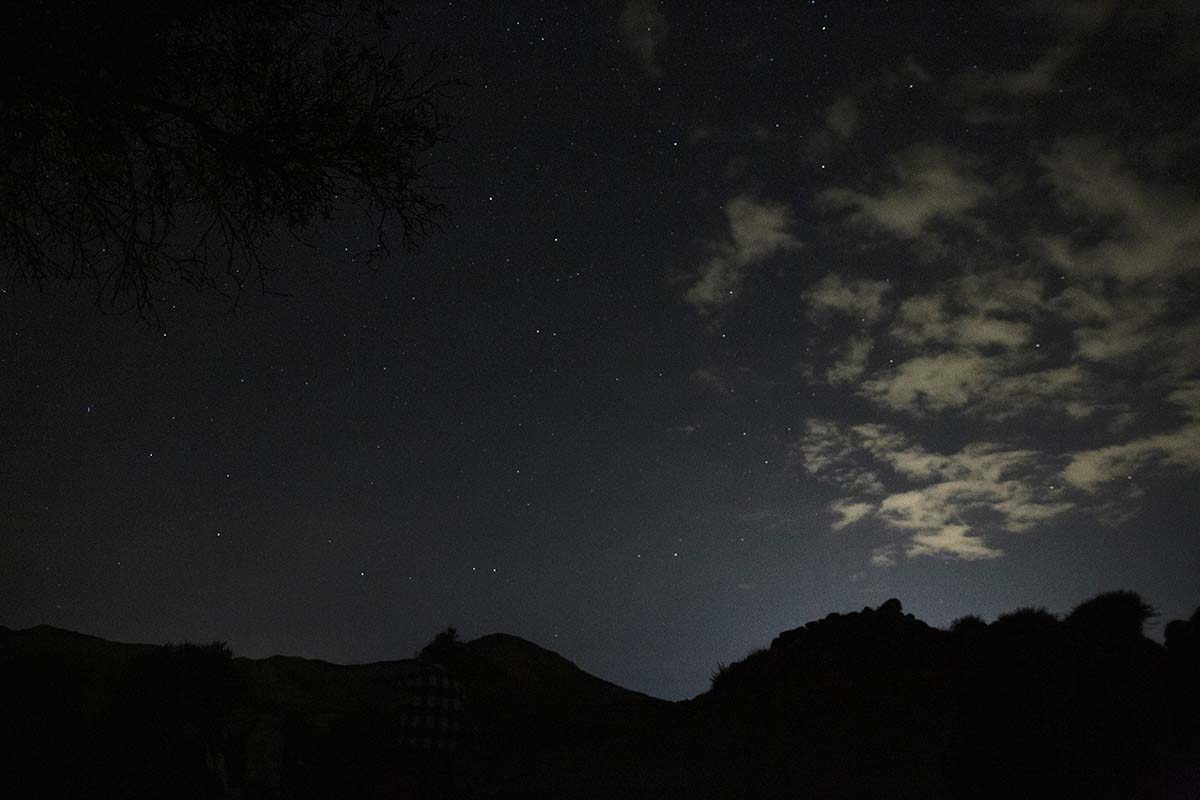
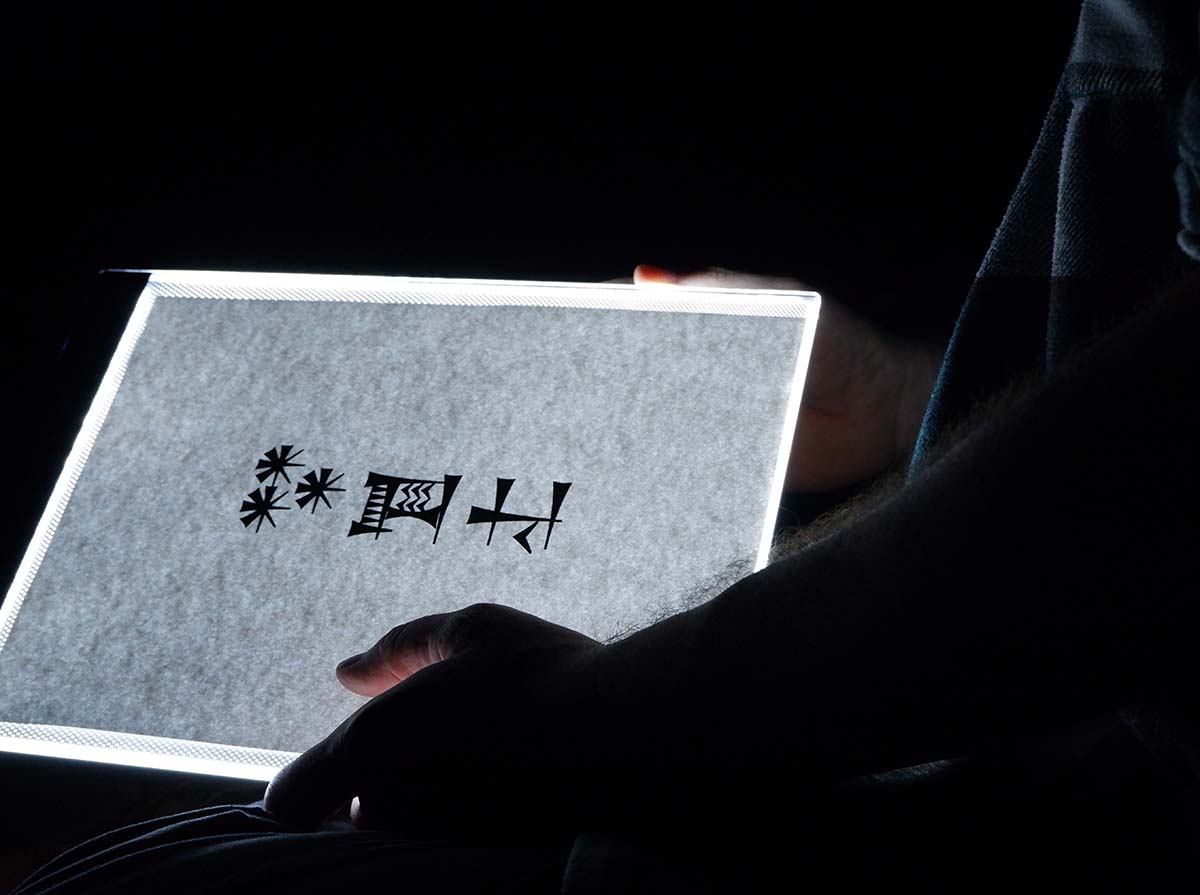
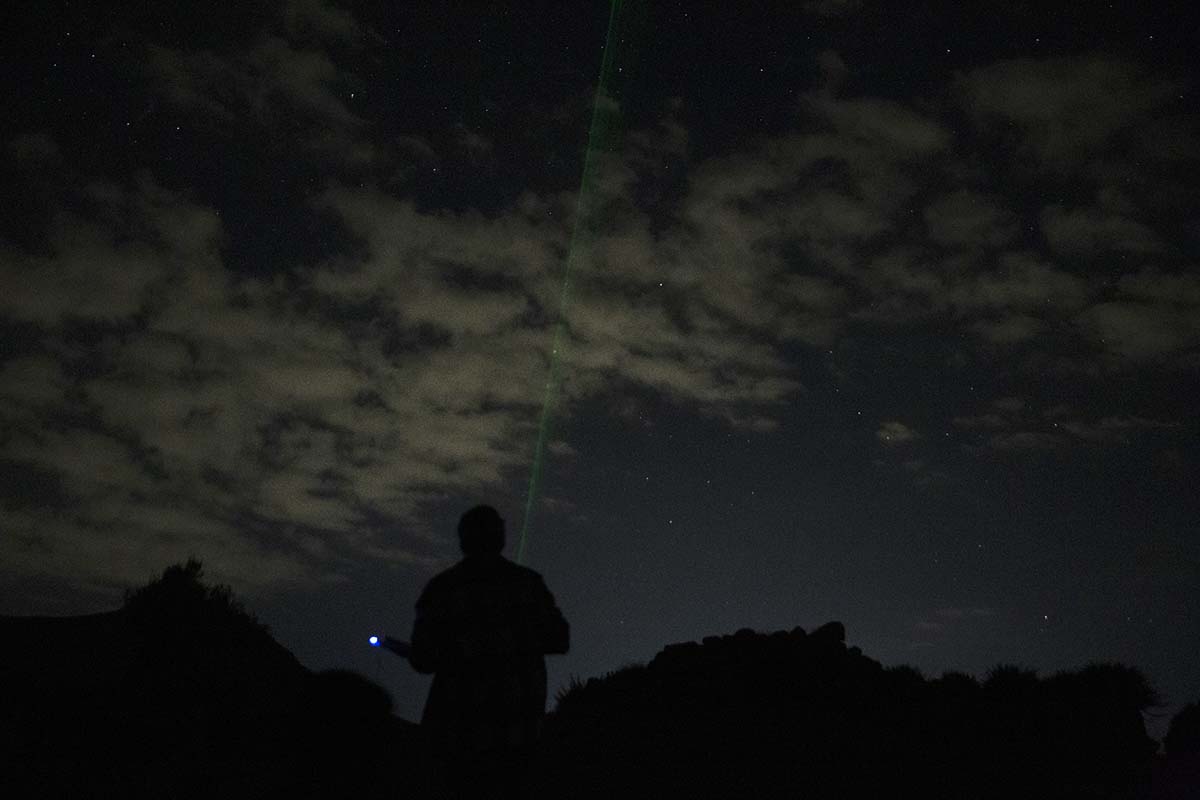
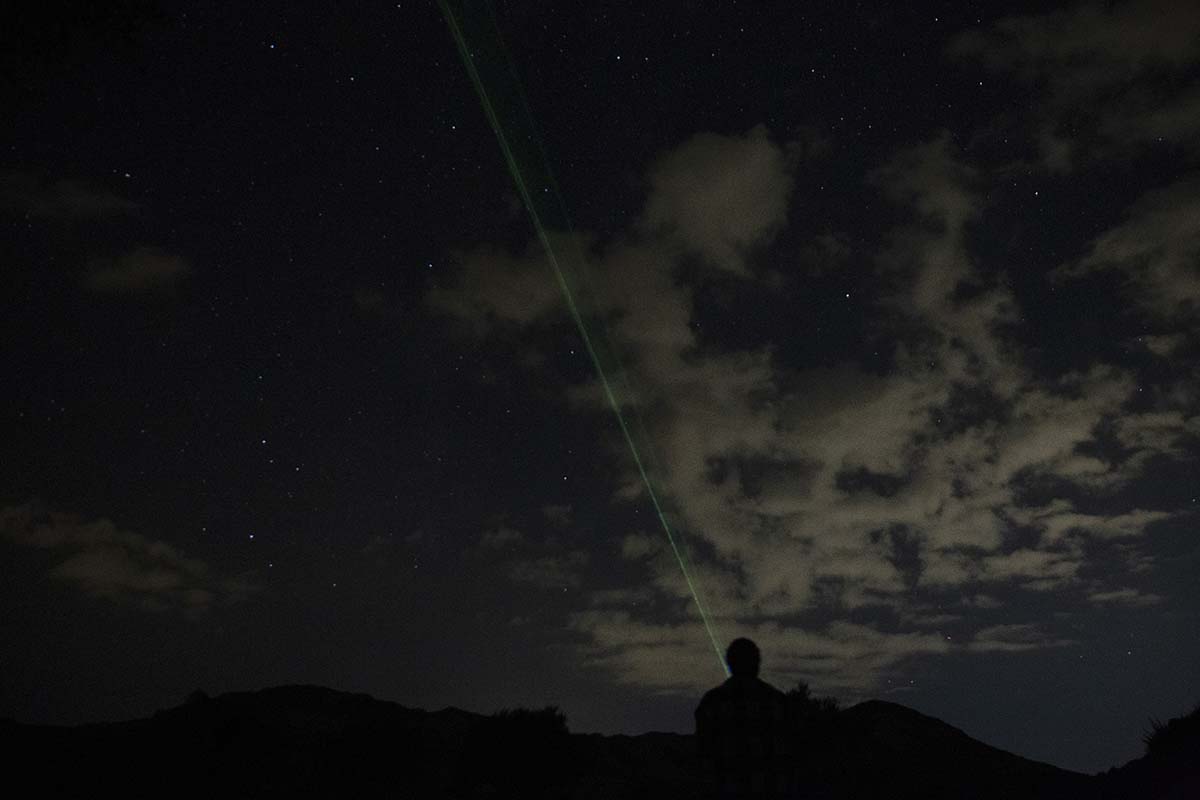
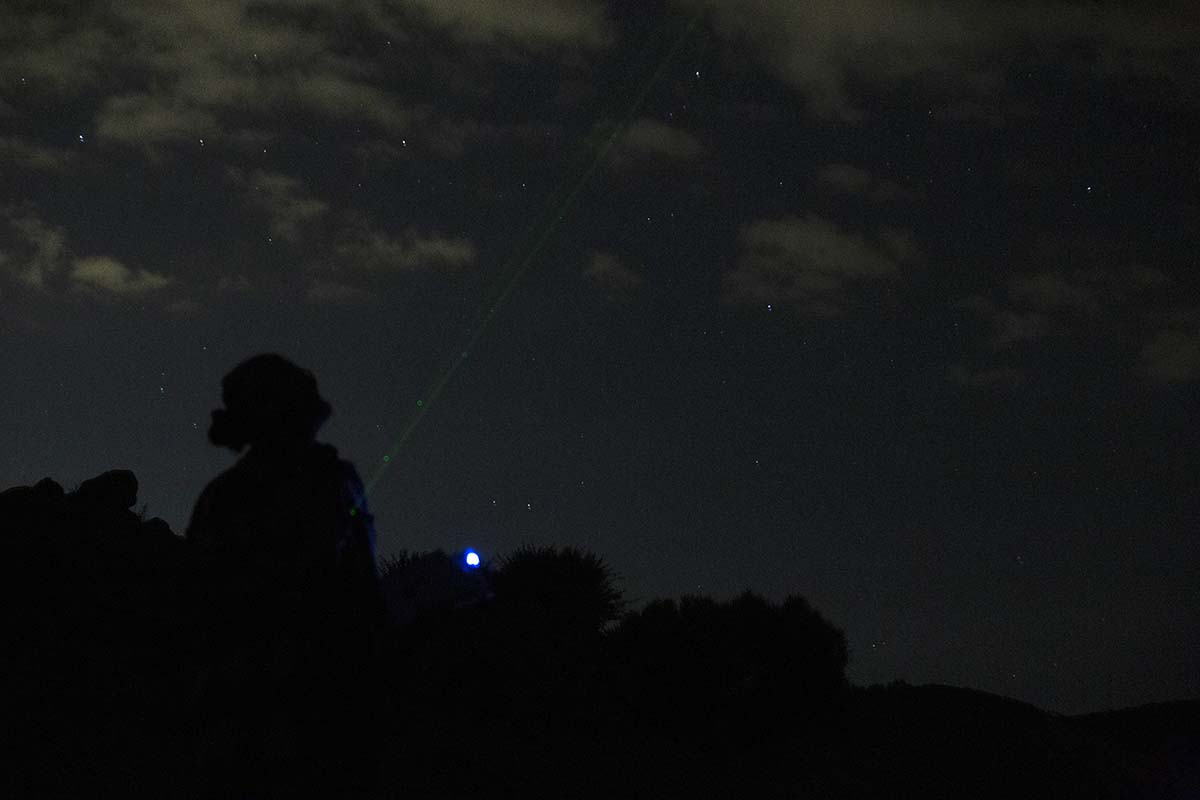
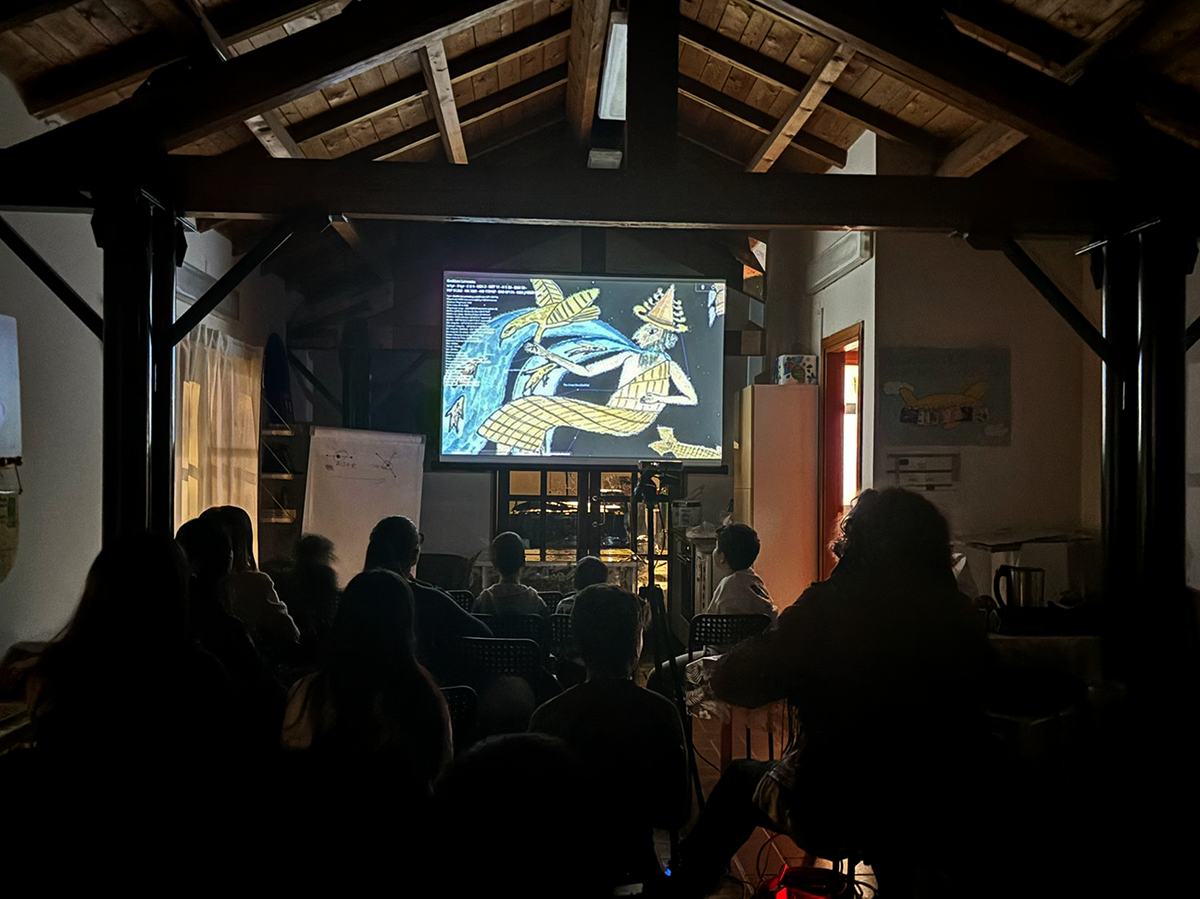
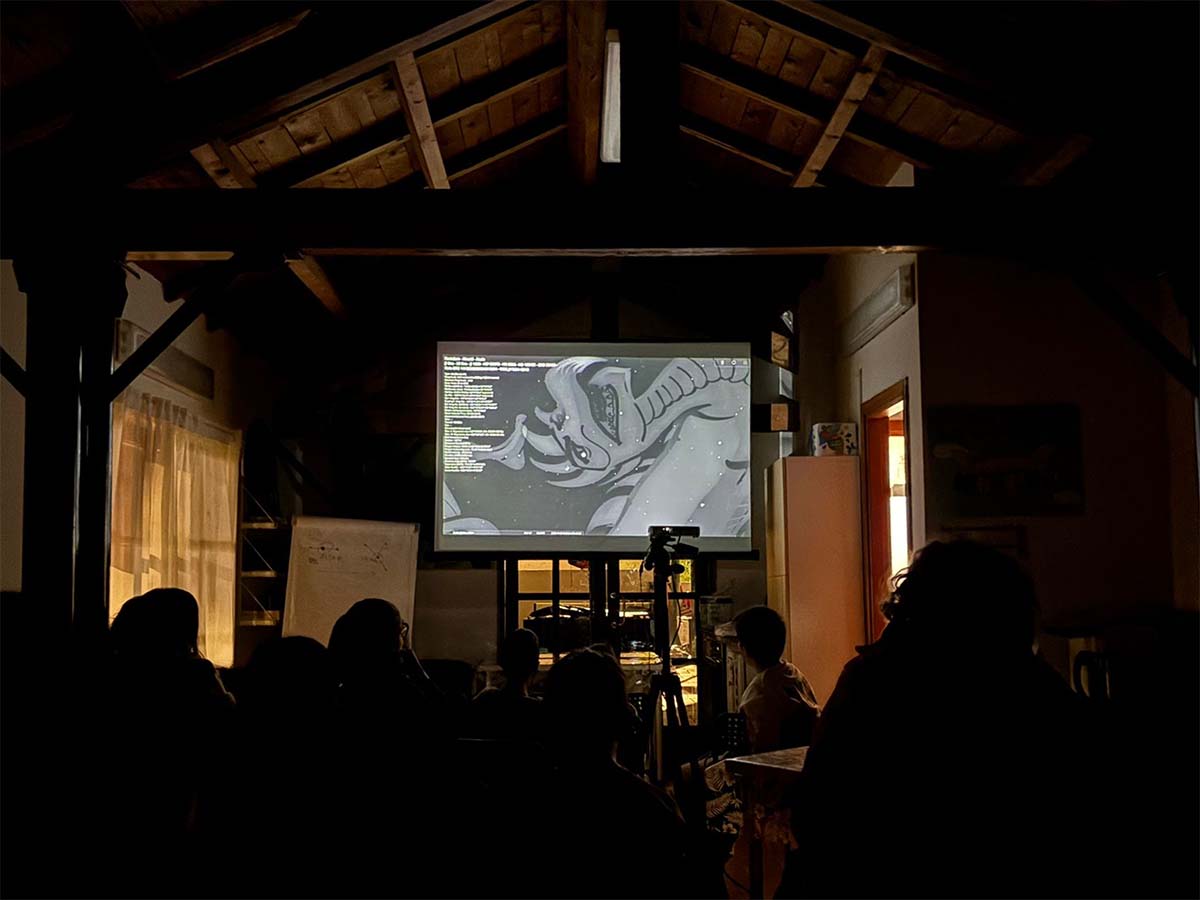
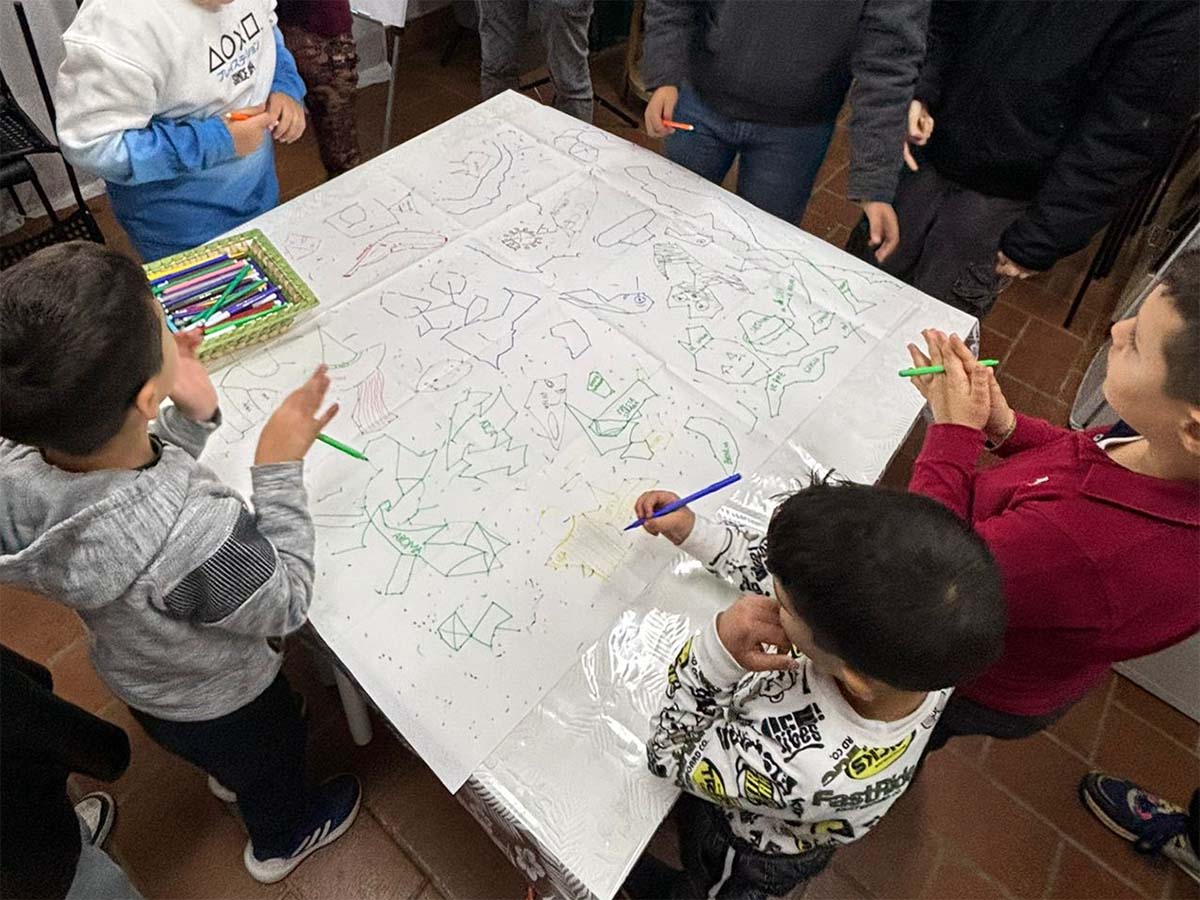
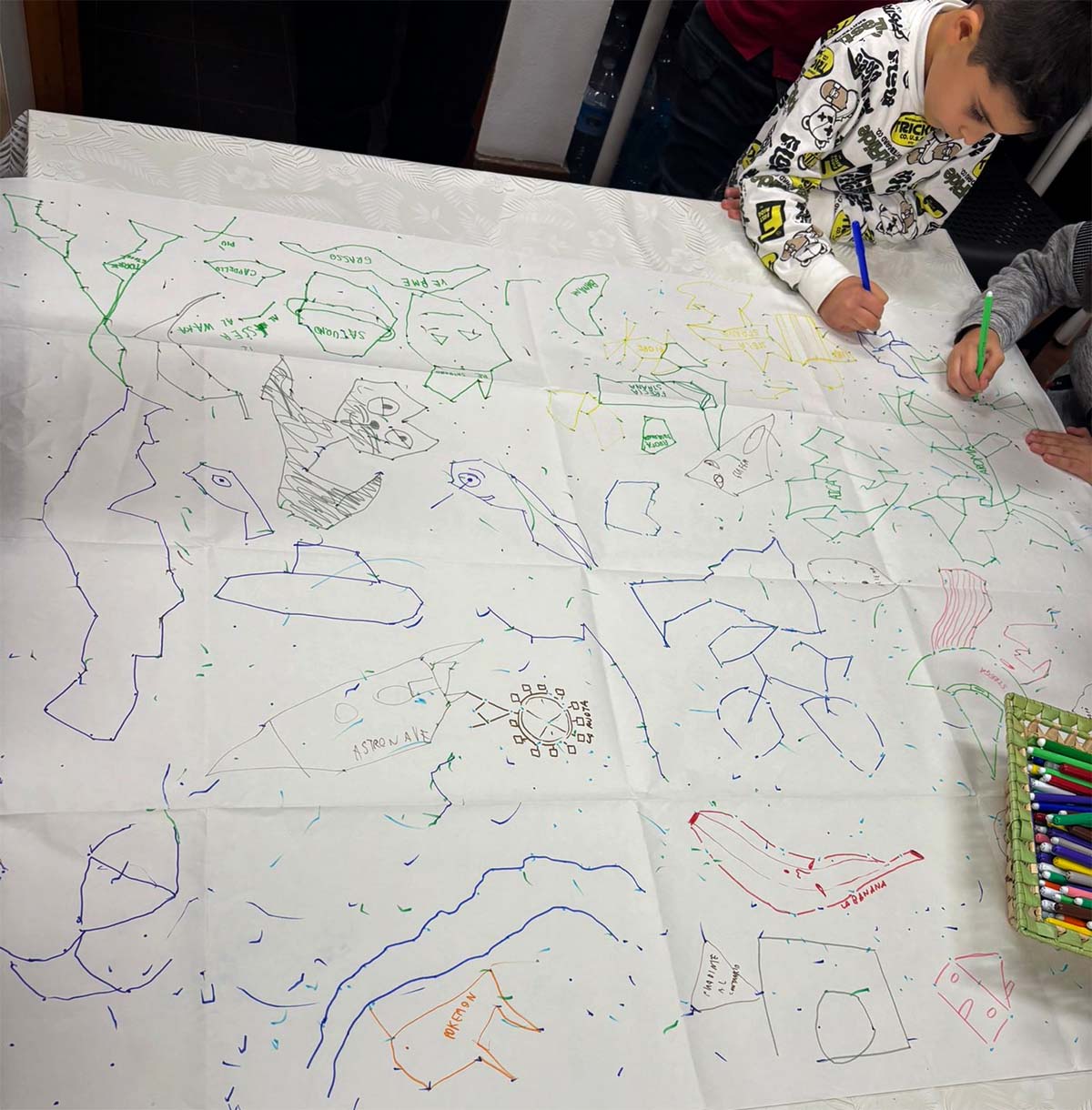
The Perdaxius area is predominantly rural and sparsely populated compared to many heavily urbanized Italian and European regions; this has protected the area from light pollution. The Sulcis night sky is dark enough to see with the naked eye all the stars described in the most important historical catalogues, from Ptolemy’s Almagest to Al-Sufi’s Book of Fixed Stars. But it can also become an excuse to indulge children’s and young people’s desire to tell their stories and connect with themselves, others, and the universe.
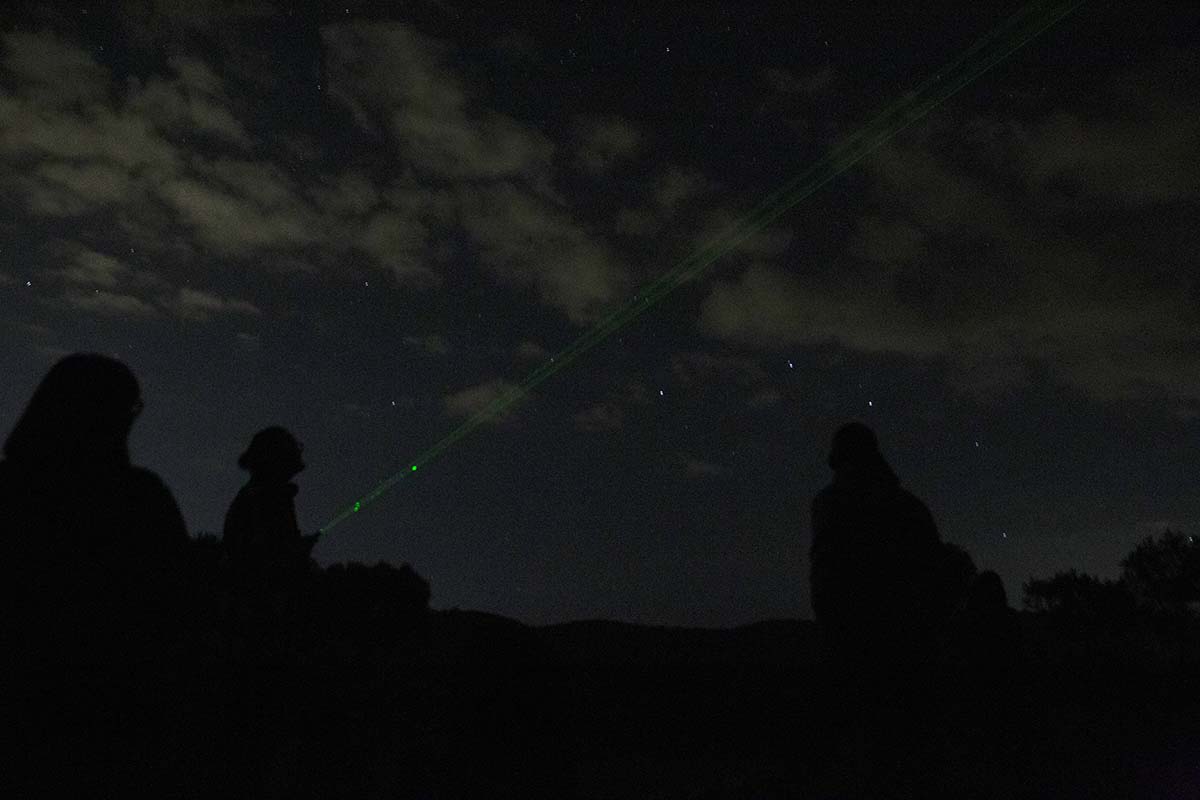
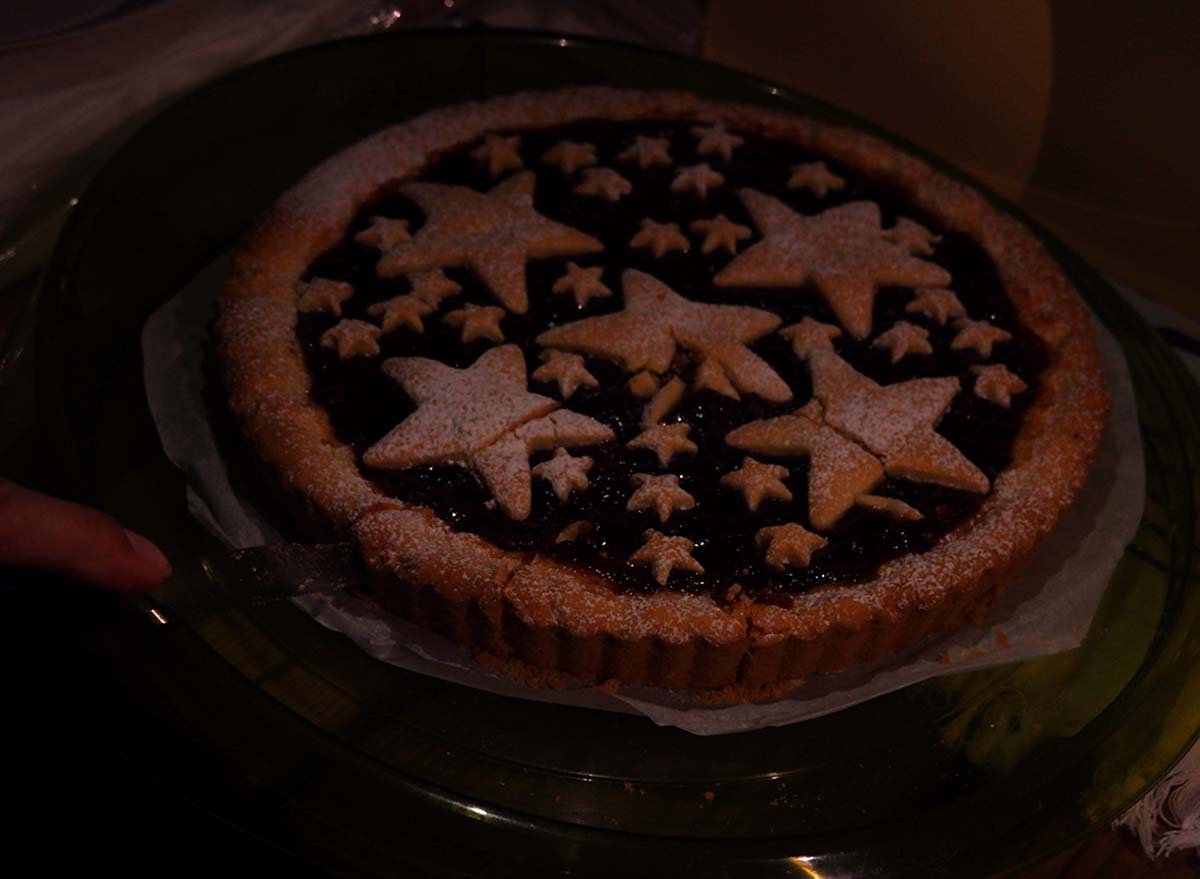
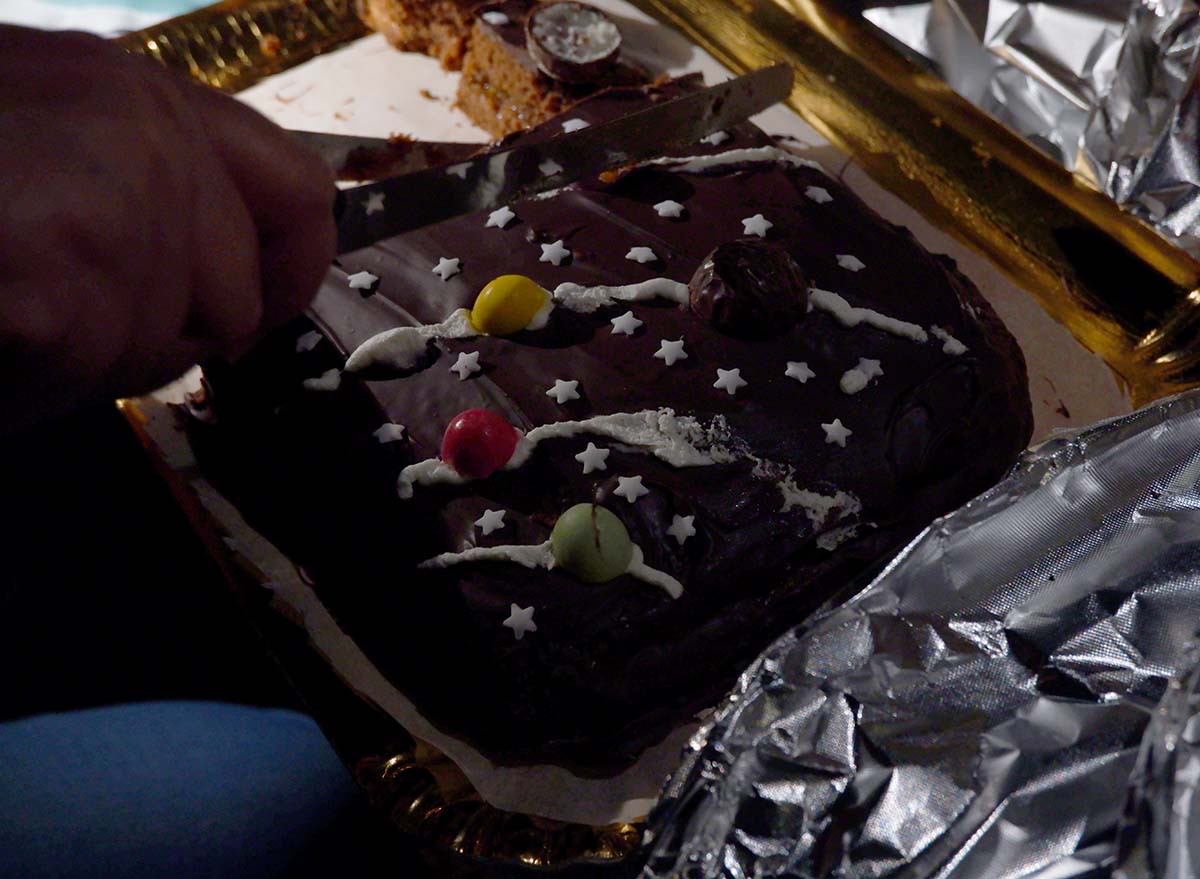
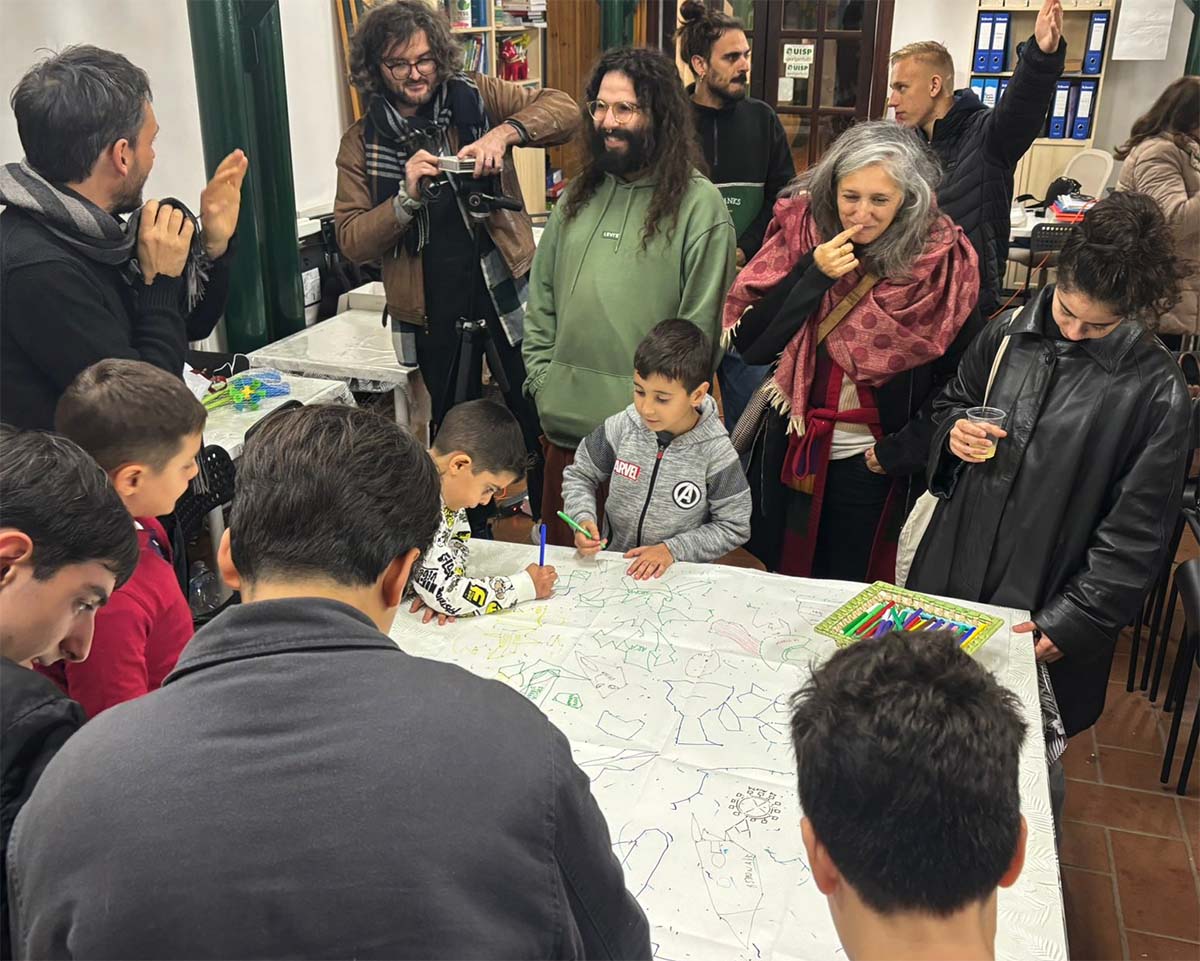
The activity includes sky observation evenings dedicated to children and adolescents, also open to families, and in-depth meetings on the history of sky observation, the origins of the most famous constellations, and the names of the stars. Children and young people will identify stars and constellations, redraw the map of the sky, reinterpreting historical figures with their imaginations and then imagining new stories of their own and drawing figures that belong to their experiences, their desires, their future: a new map of the Sulcis sky.
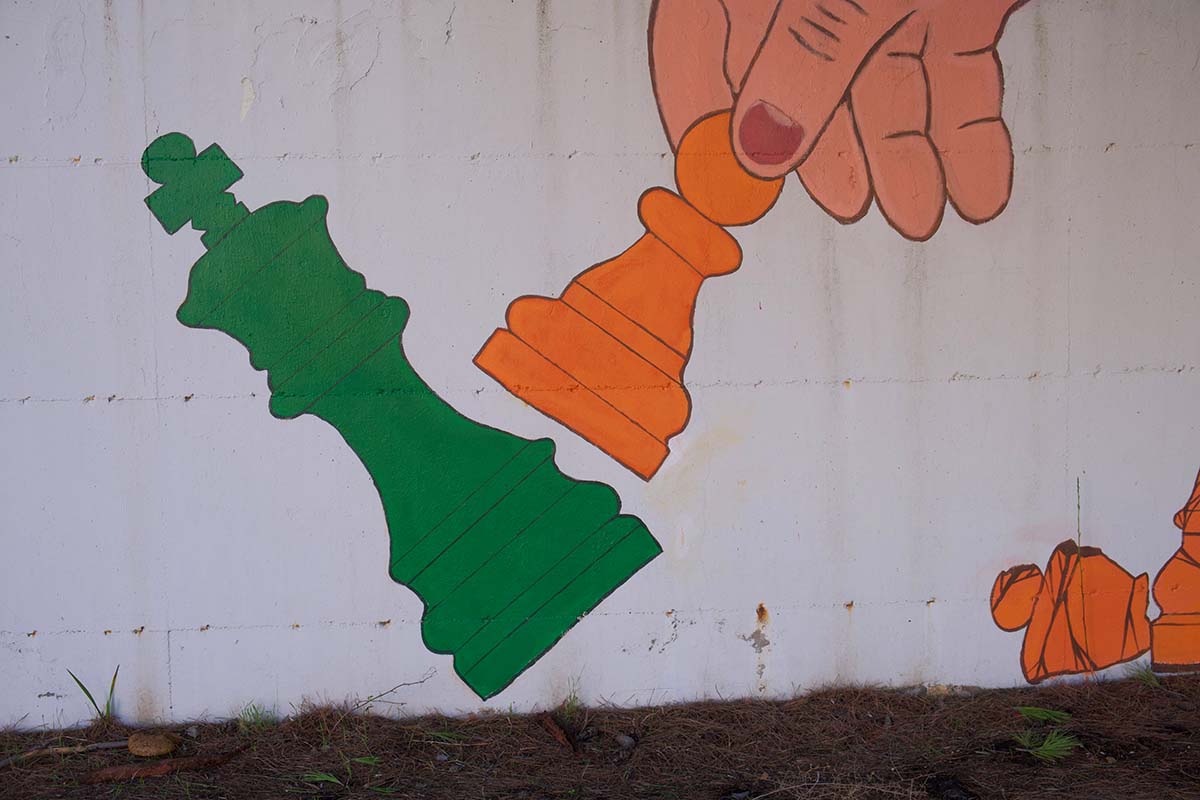
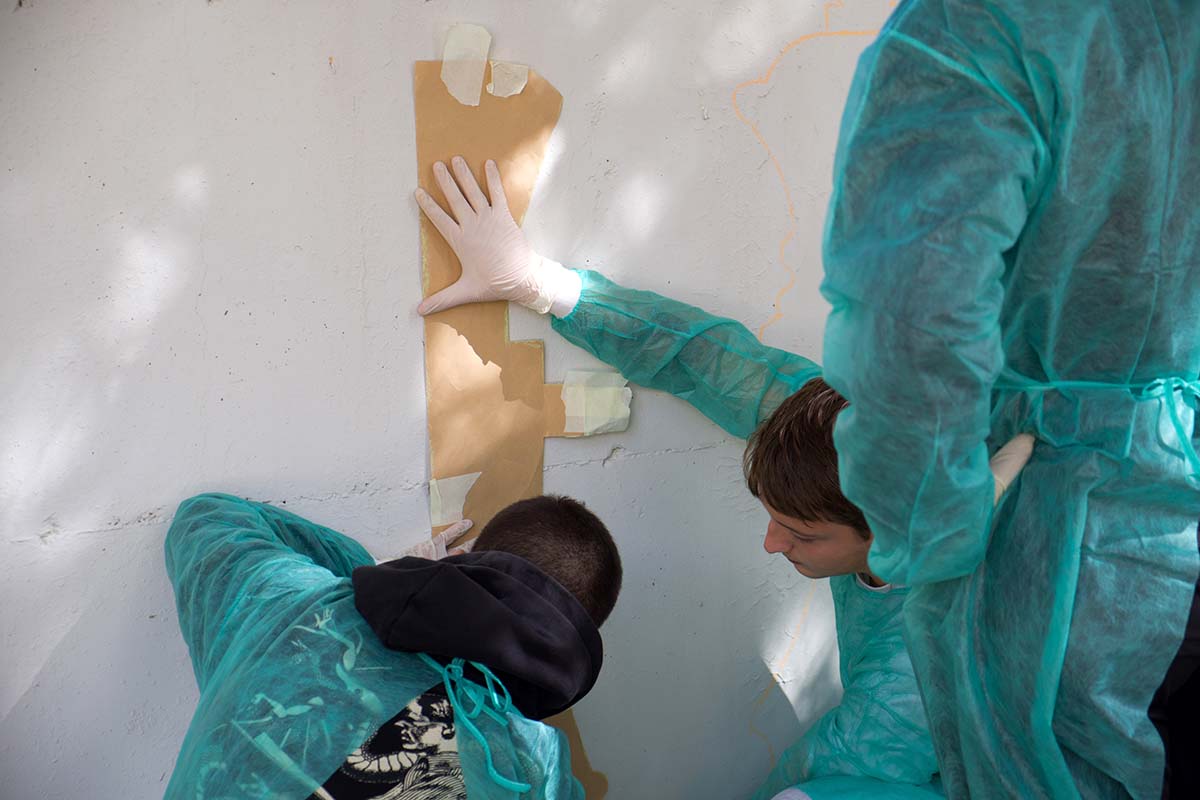
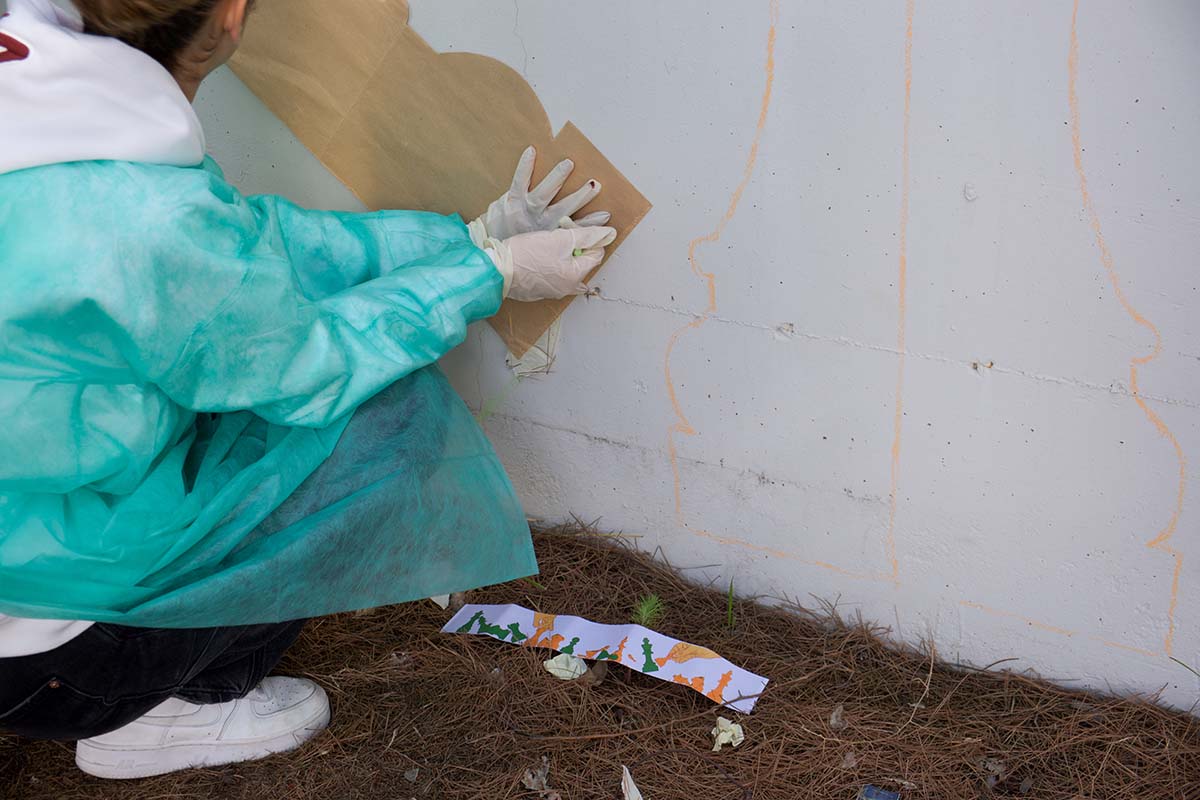
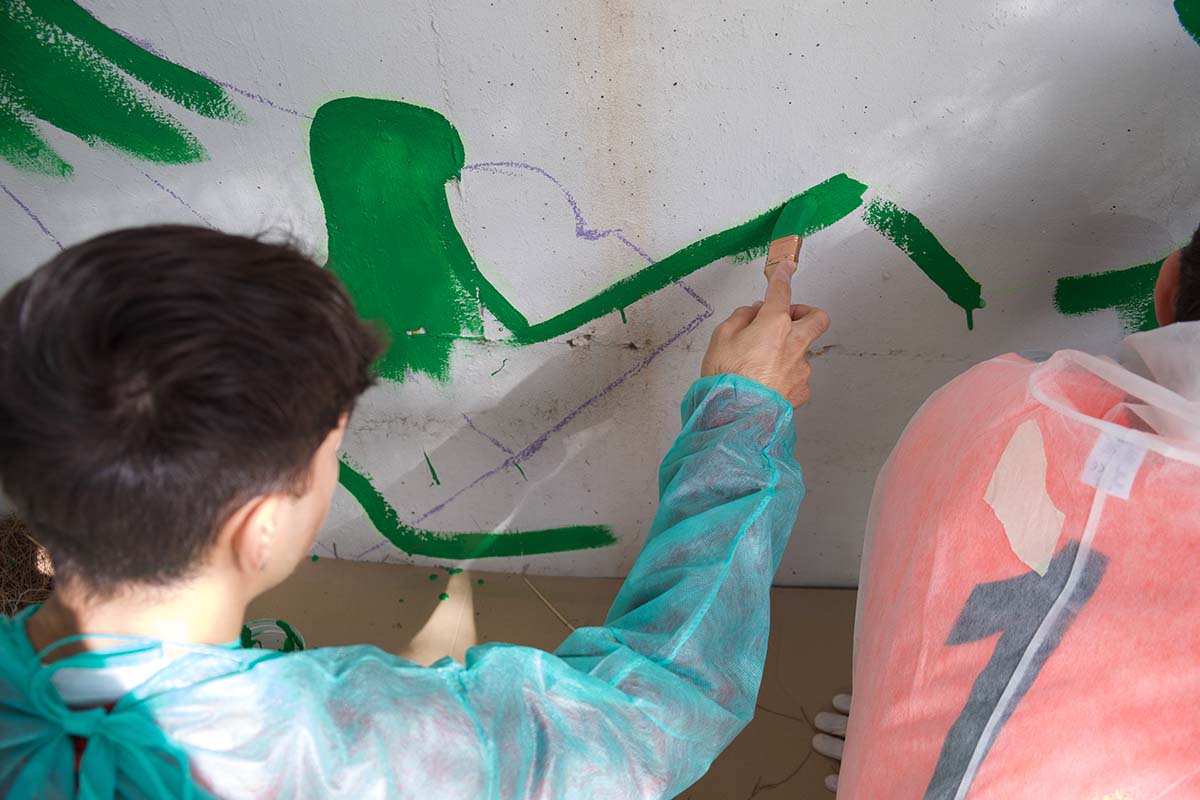
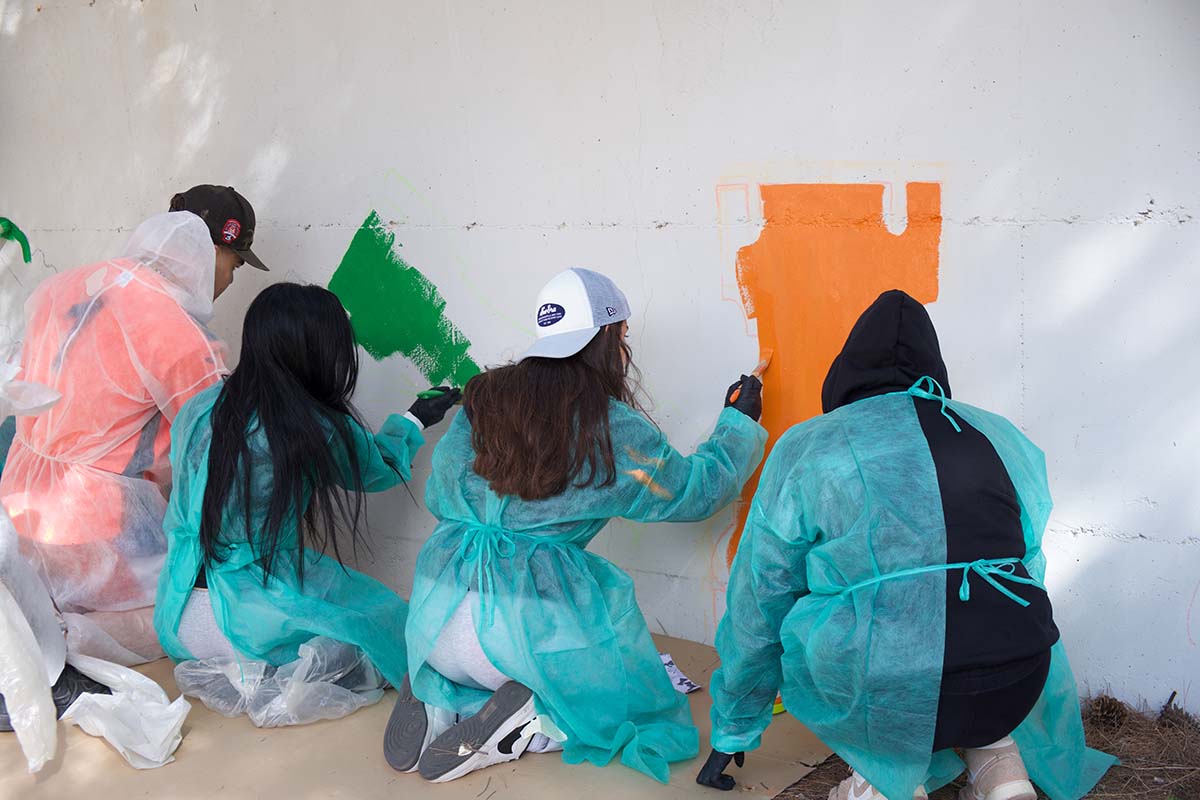
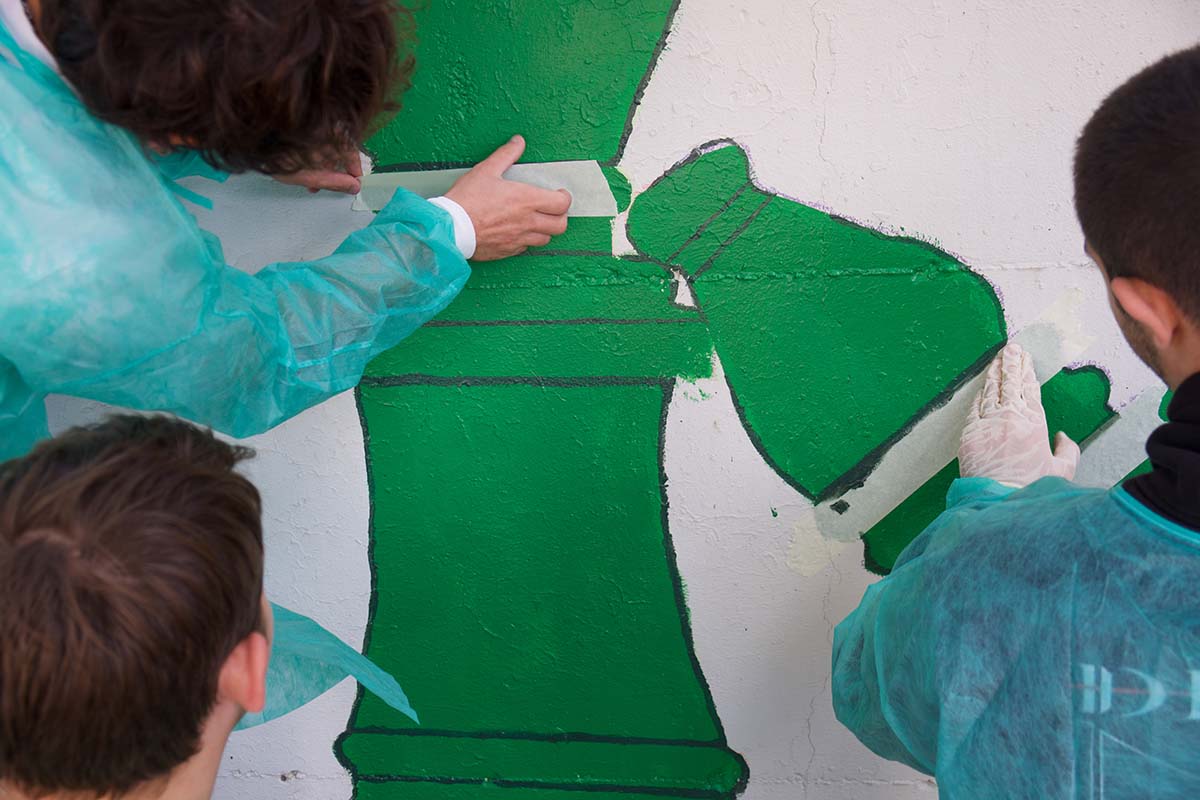
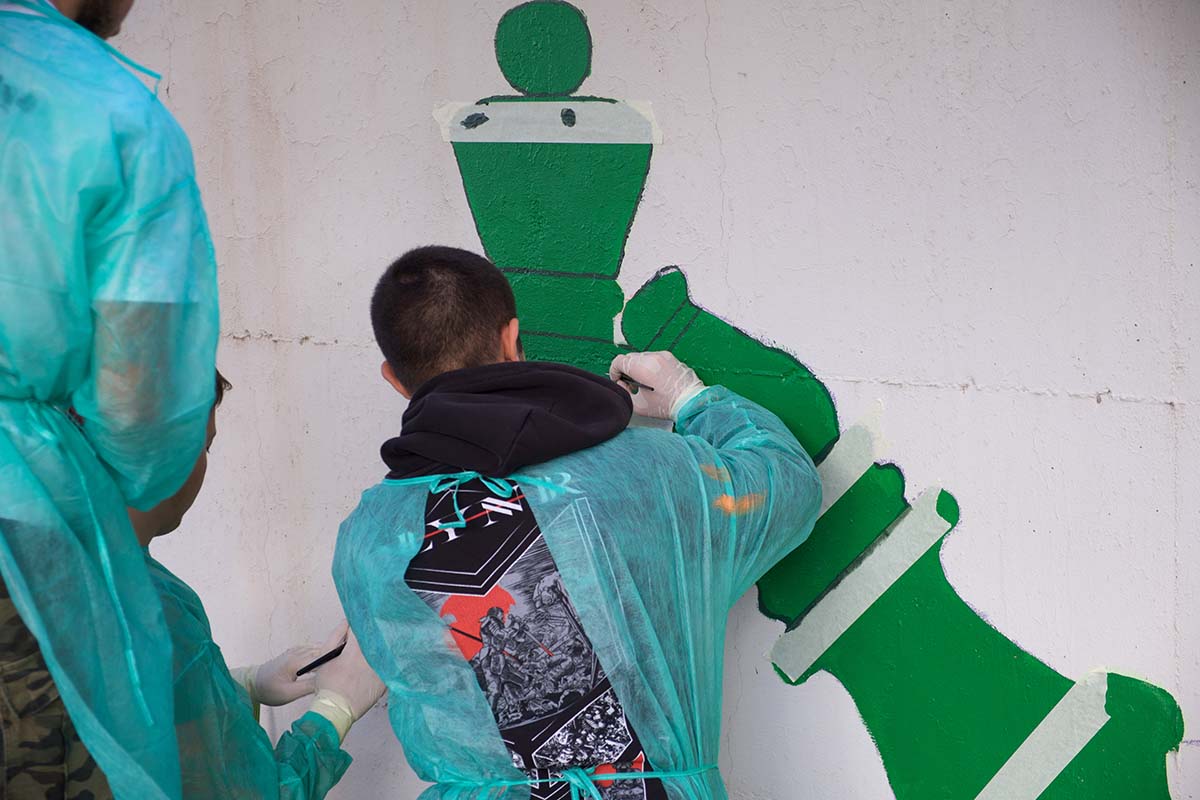
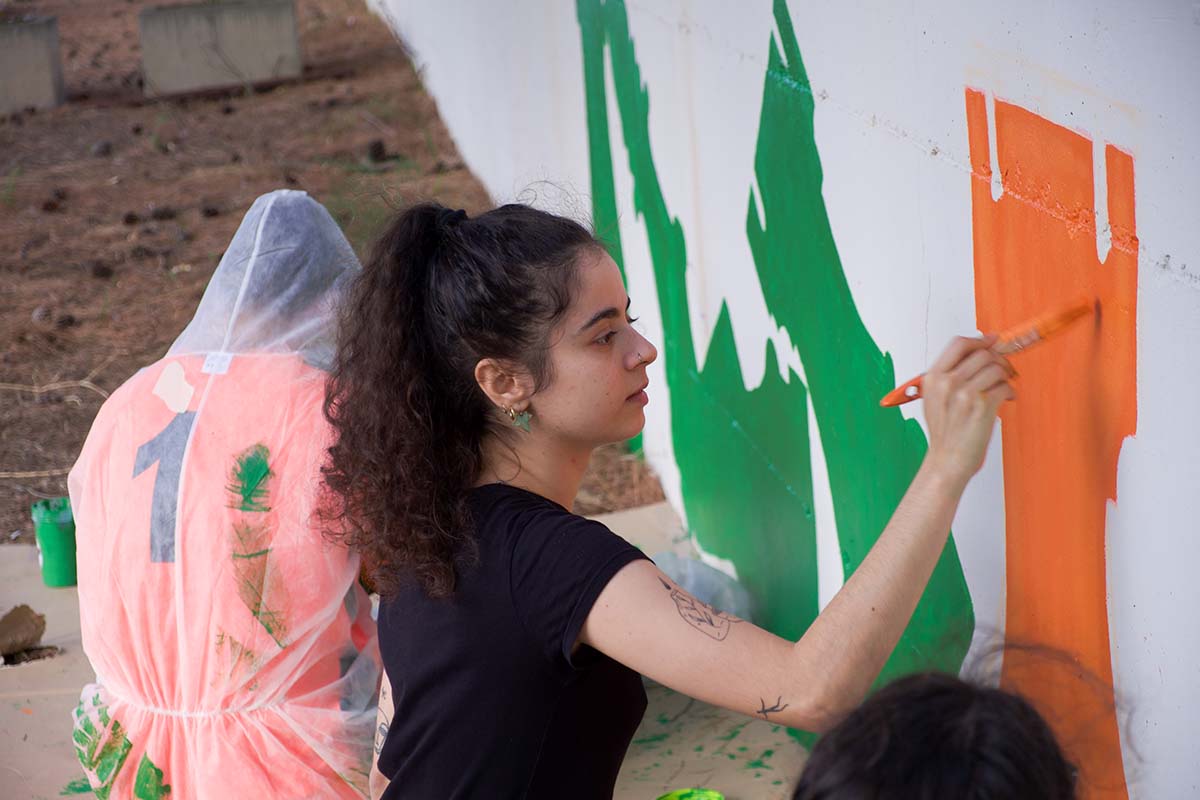
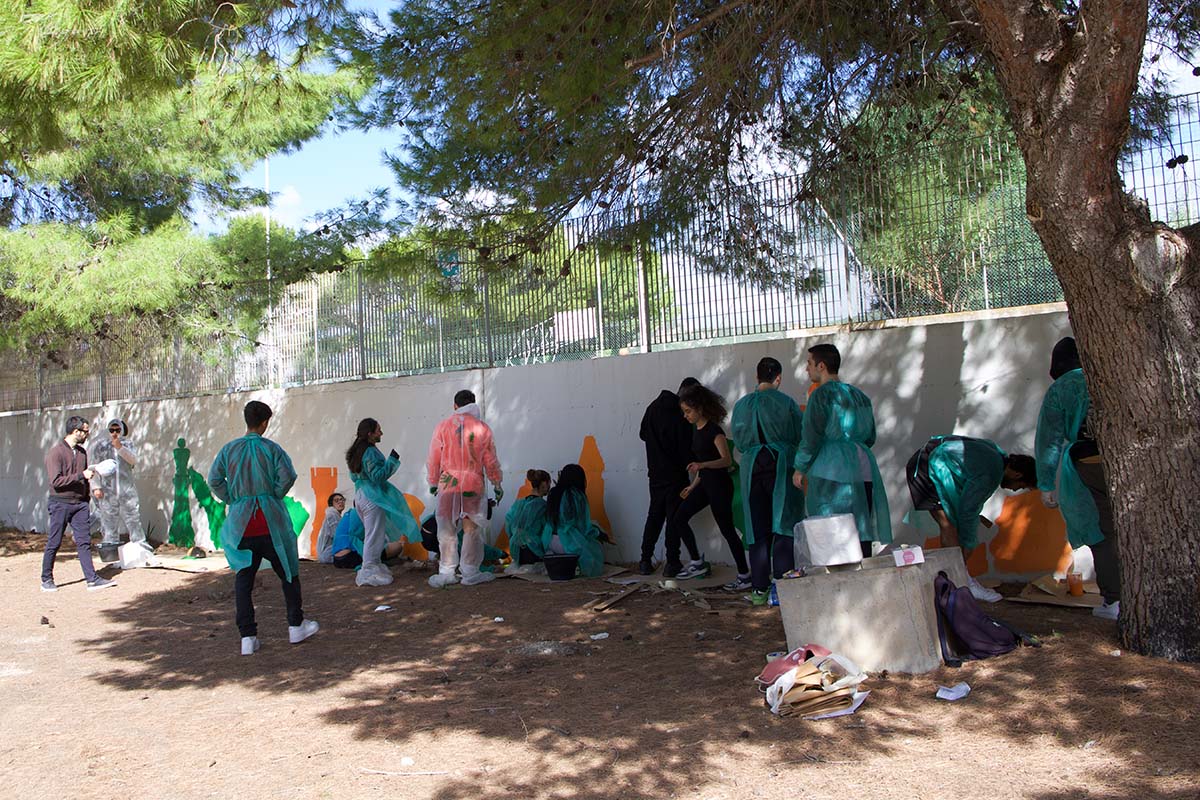
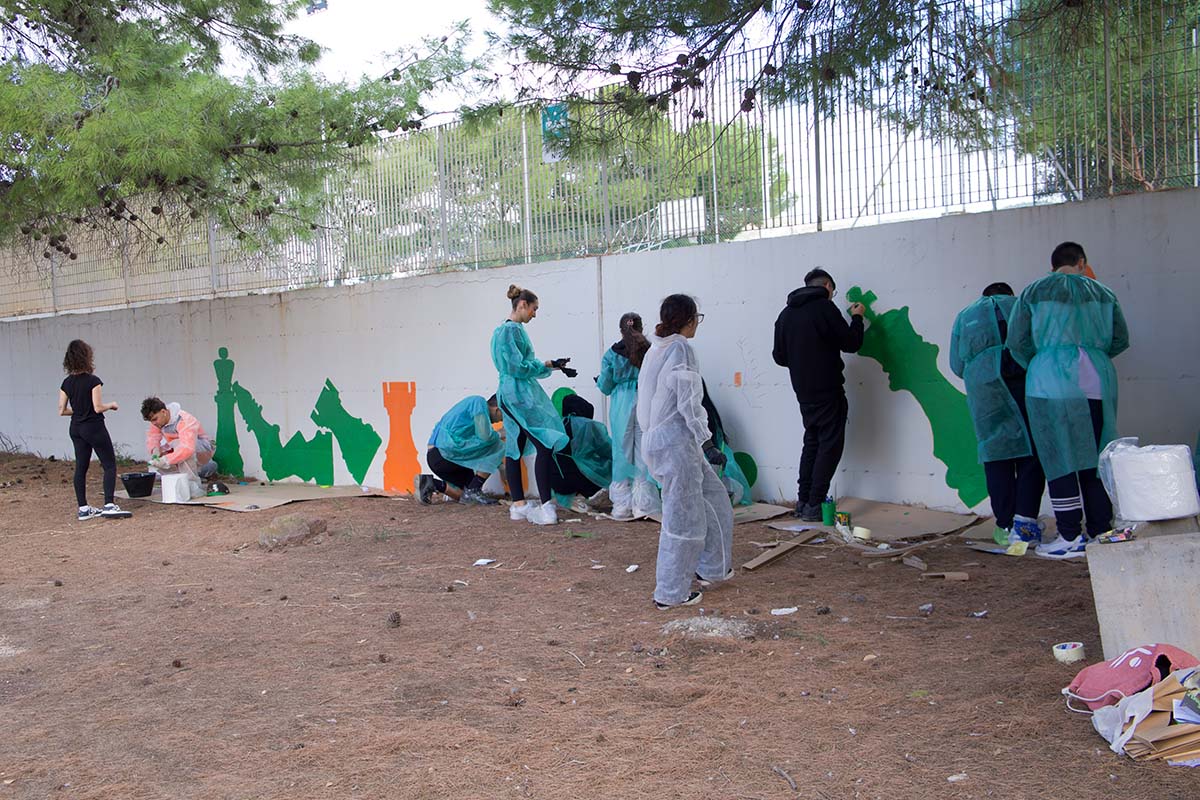
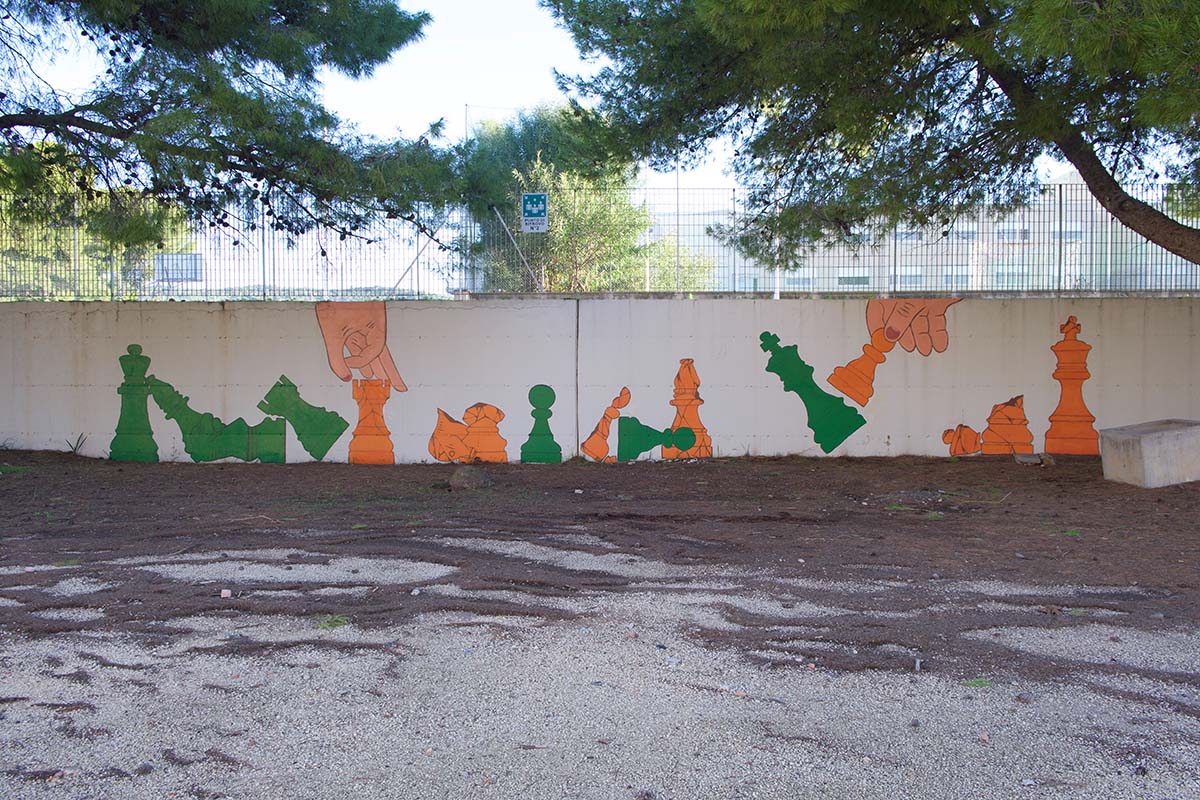
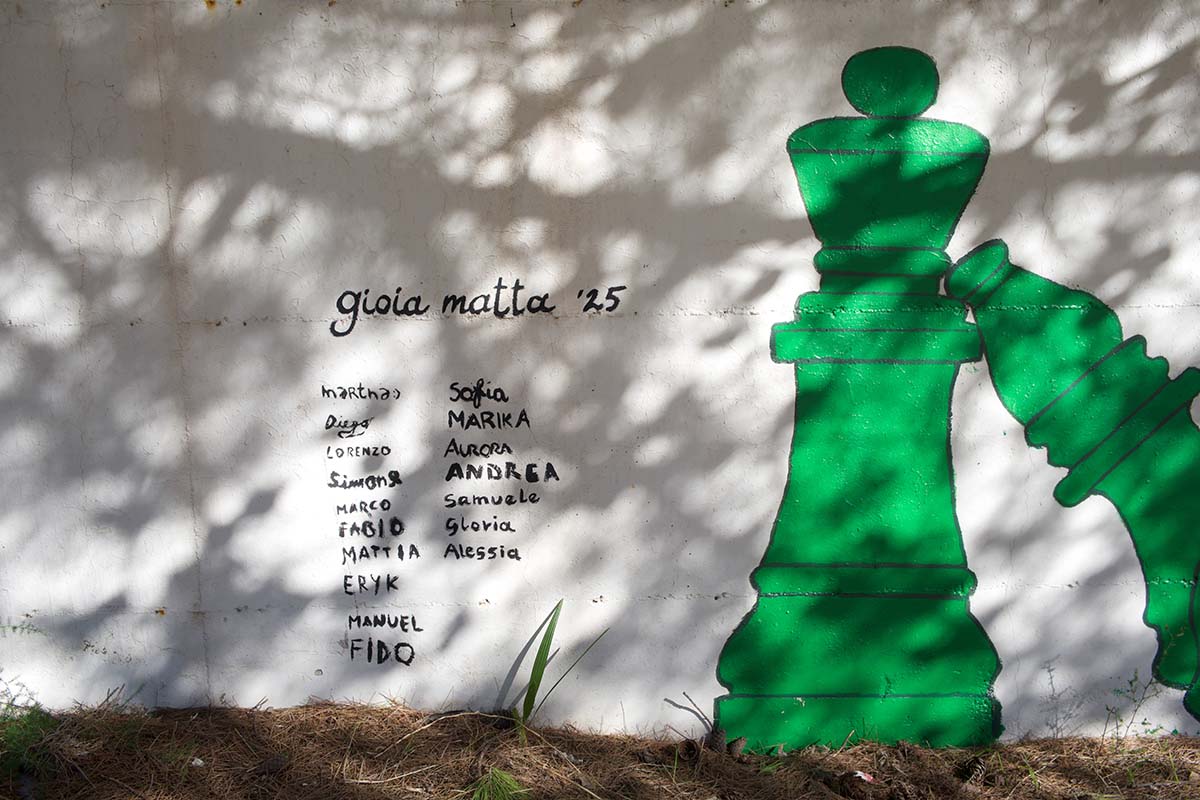
Scacco Matto è il titolo di un murale realizzato all’interno dell’I.T.C.G. Angioy di Carbonia nell’ambito di una serie di laboratori che hanno coinvolto la classe 4A dell’indirizzo Grafica e comunicazione, condotti dall’artista Gioia Matta in collaborazione con Martina Celani.
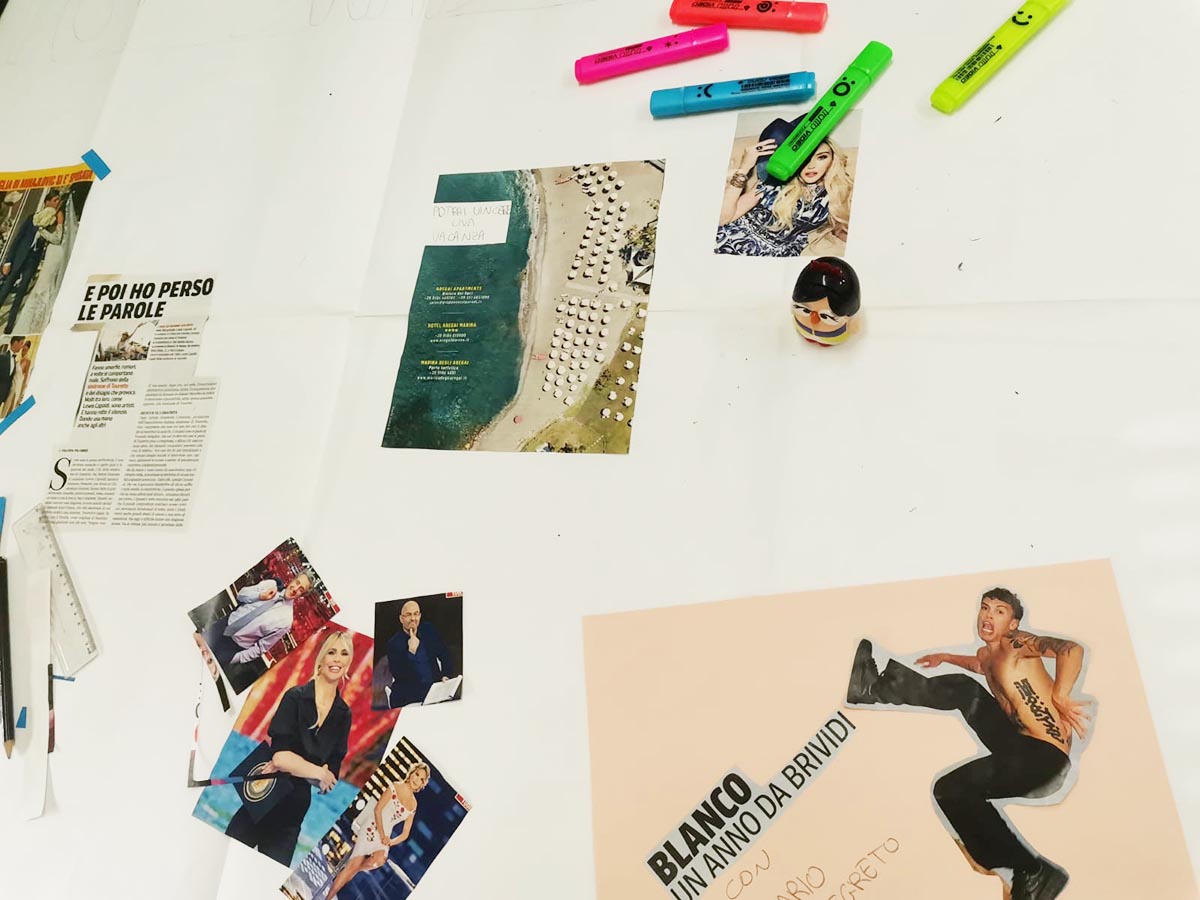
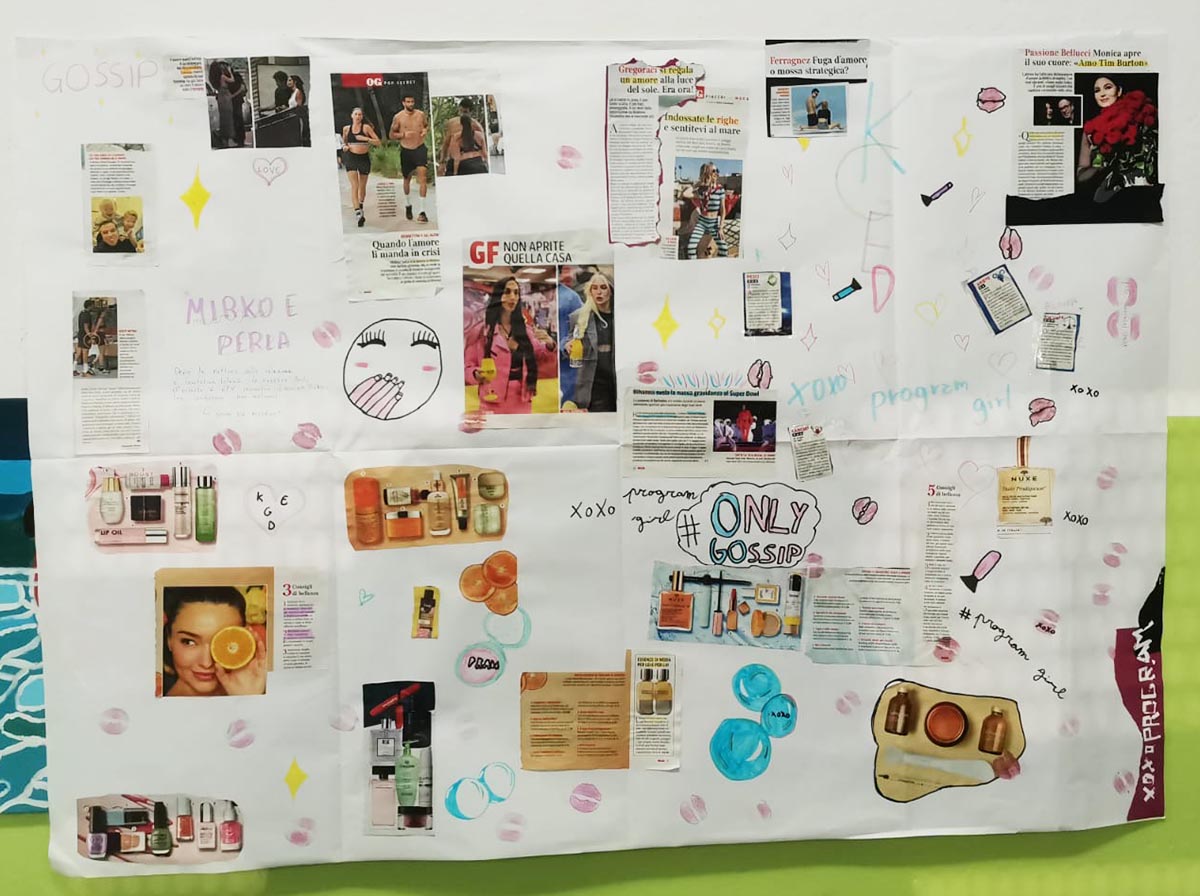
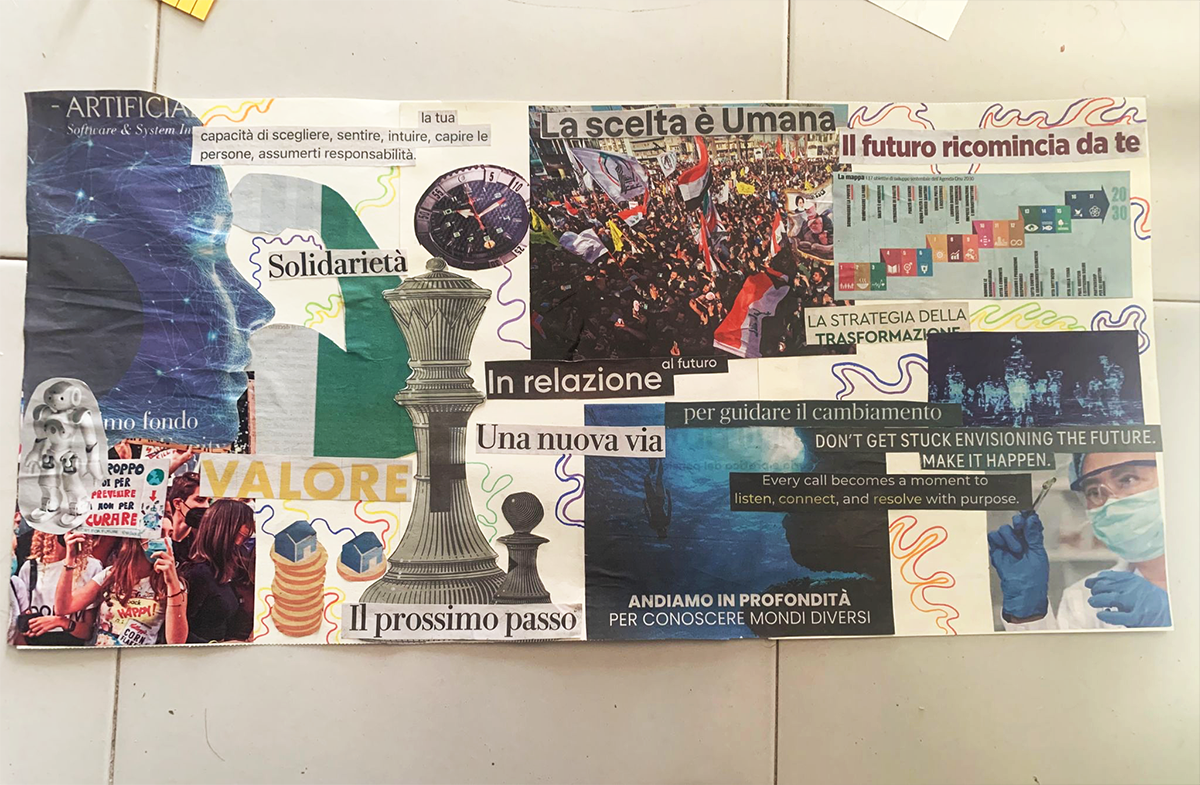
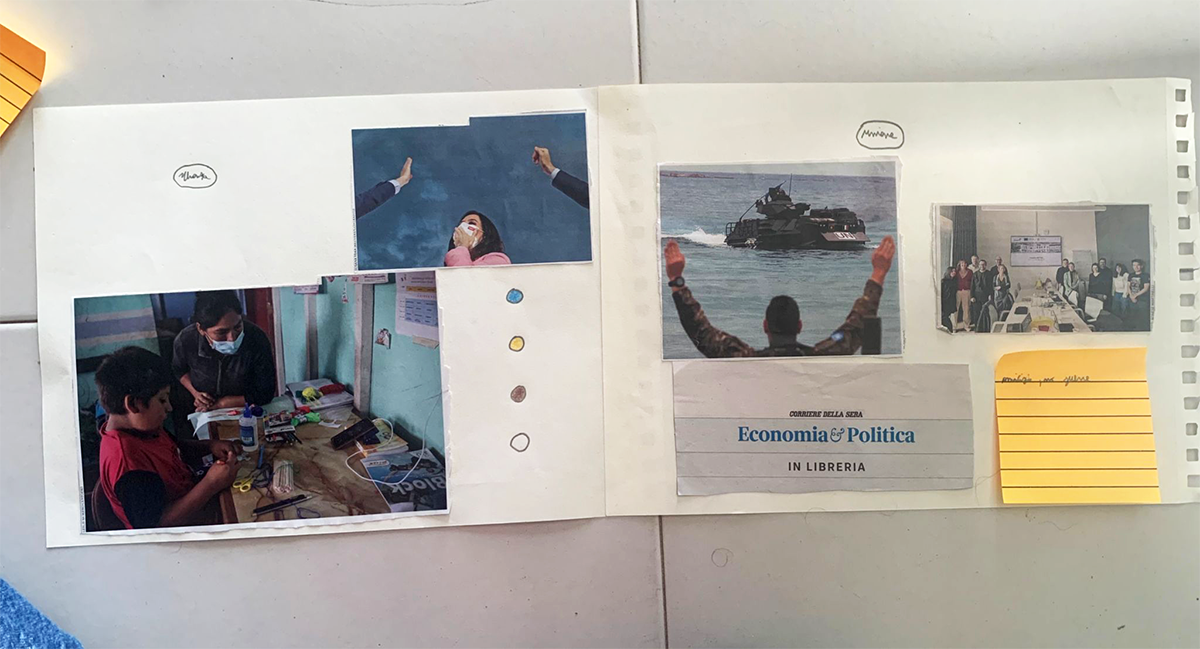
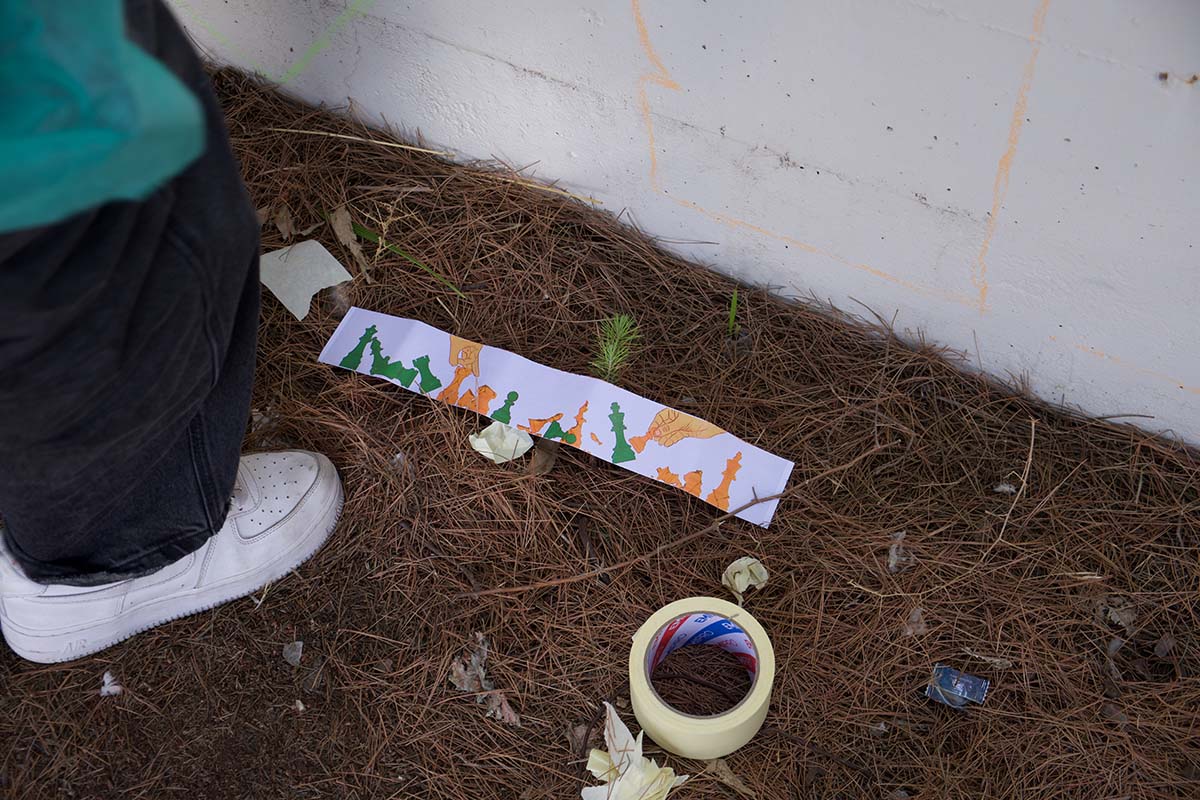
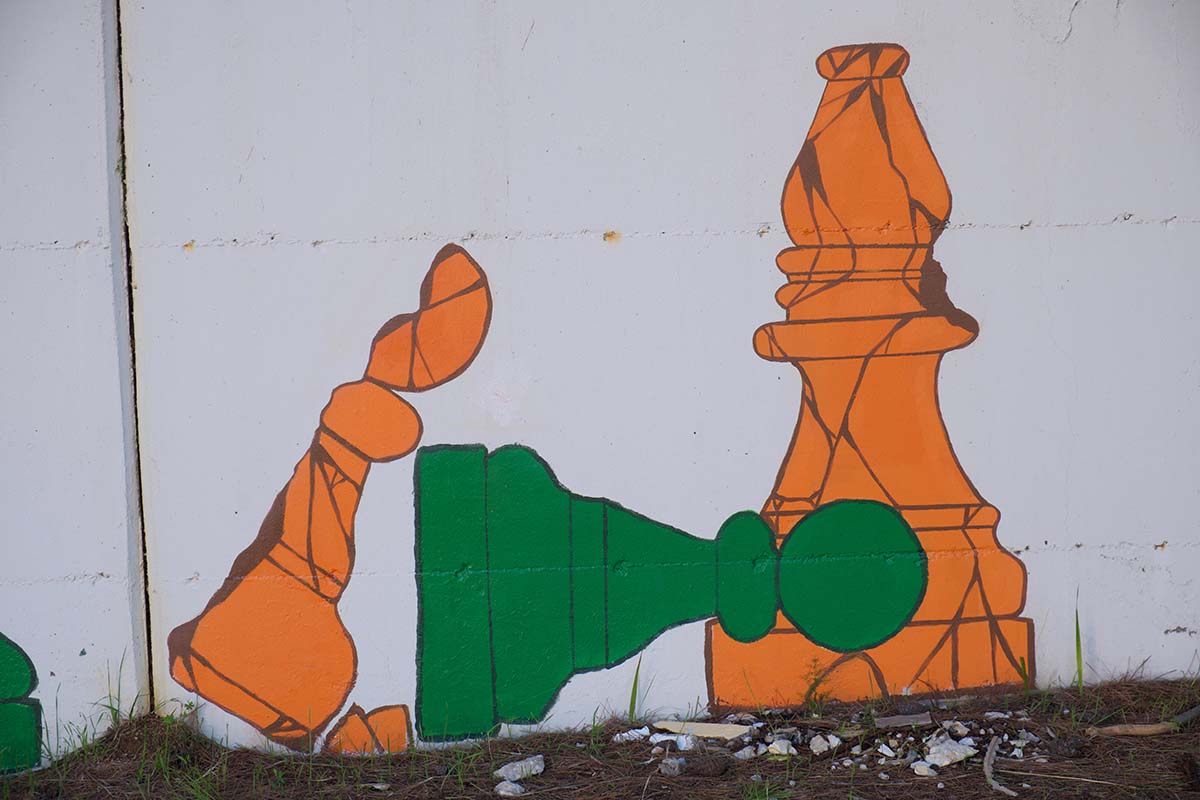
Nell’incontro introduttivo, dedicato ad un brainstorming / confronto sviluppato attraverso la tecnica del collage, gli studenti hanno selezionato immagini, parole e frasi tratte da giornali locali e riviste internazionali. Sulla base di questo materiale, abbiamo ragionato insieme su come intervenire su un muro bianco esterno messo a disposizione dalla scuola. La scelta è stata quella di affrontare il tema della guerra e della sua rappresentazione: spesso raccontata come un gioco di strategie e mosse, viene qui tradotta nel linguaggio degli scacchi. Il murale raffigura un campo di battaglia trasformato in una scacchiera. Due squadre si fronteggiano: quella arancione gioca secondo le regole, mentre quella verde distrugge con una mano le pedine avversarie, giocando quindi slealmente. Rimane un solo pedone della squadra arancione, il più debole, che riesce però a fare scacco matto e a ribaltare l’esito della partita. Un’immagine semplice per affermare un messaggio chiaro: la guerra non è un gioco.
L’artista Gioia Matta, ideatrice del laboratorio realizzato in collaborazione con Martina Celani
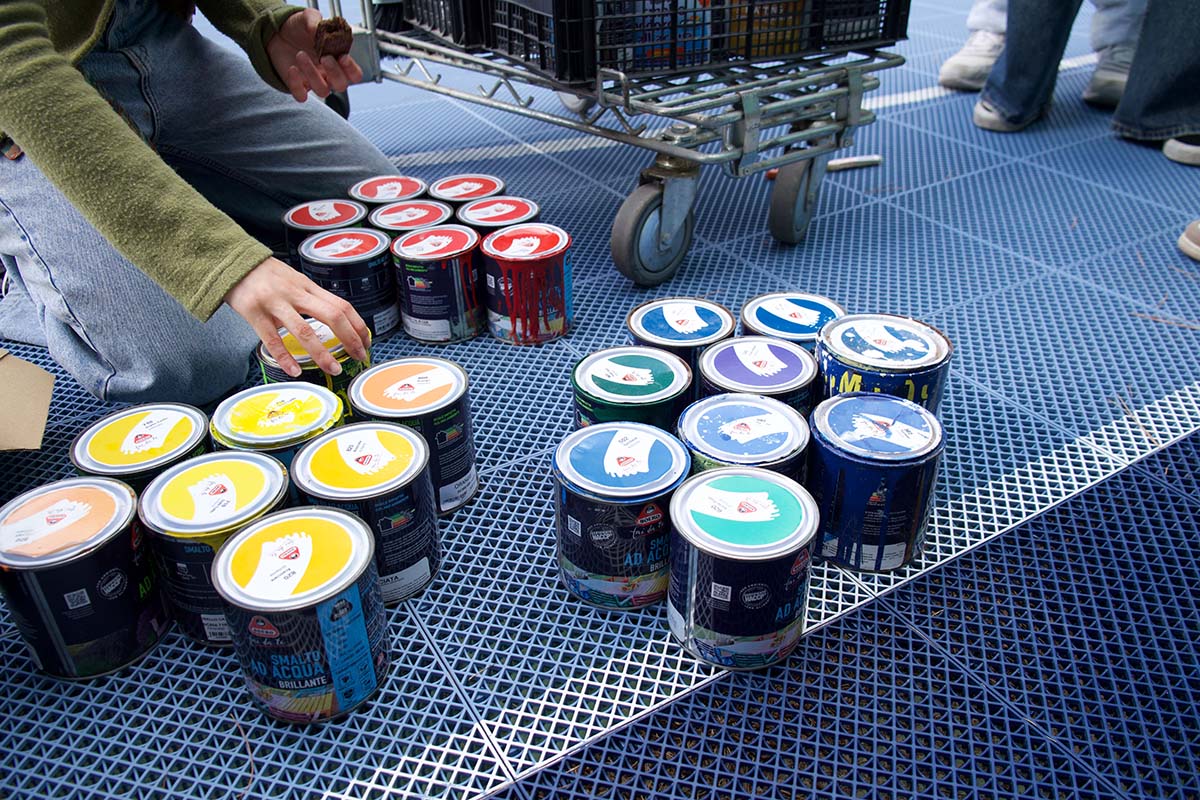
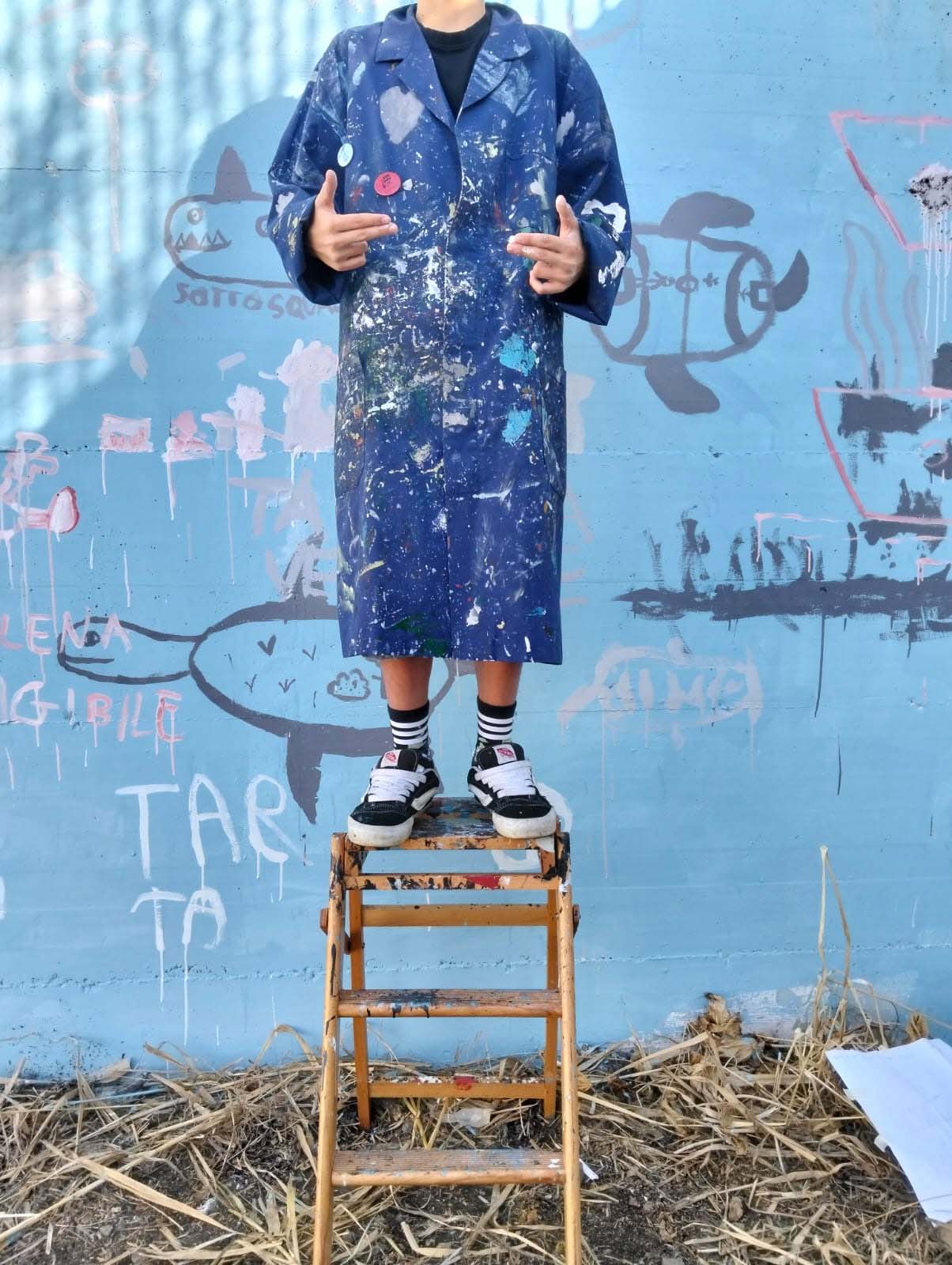
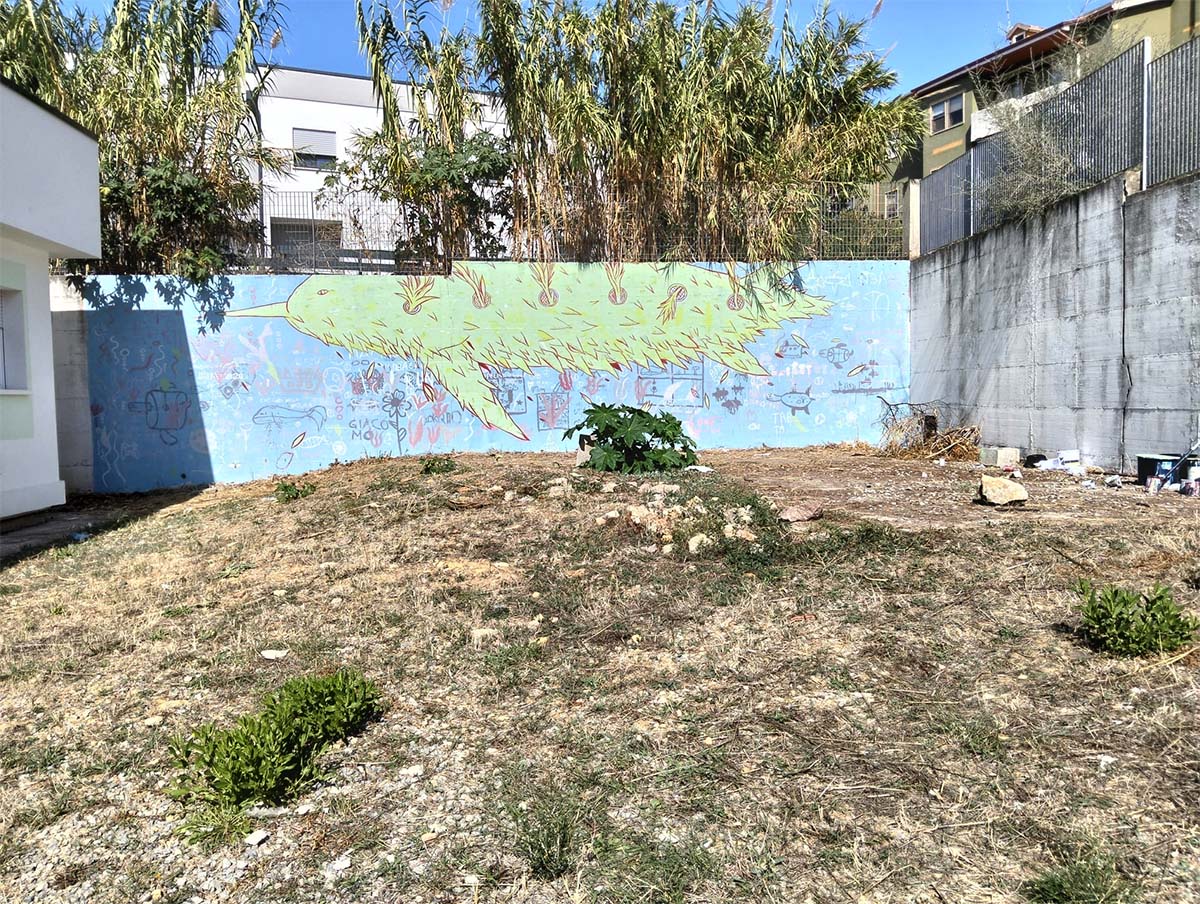
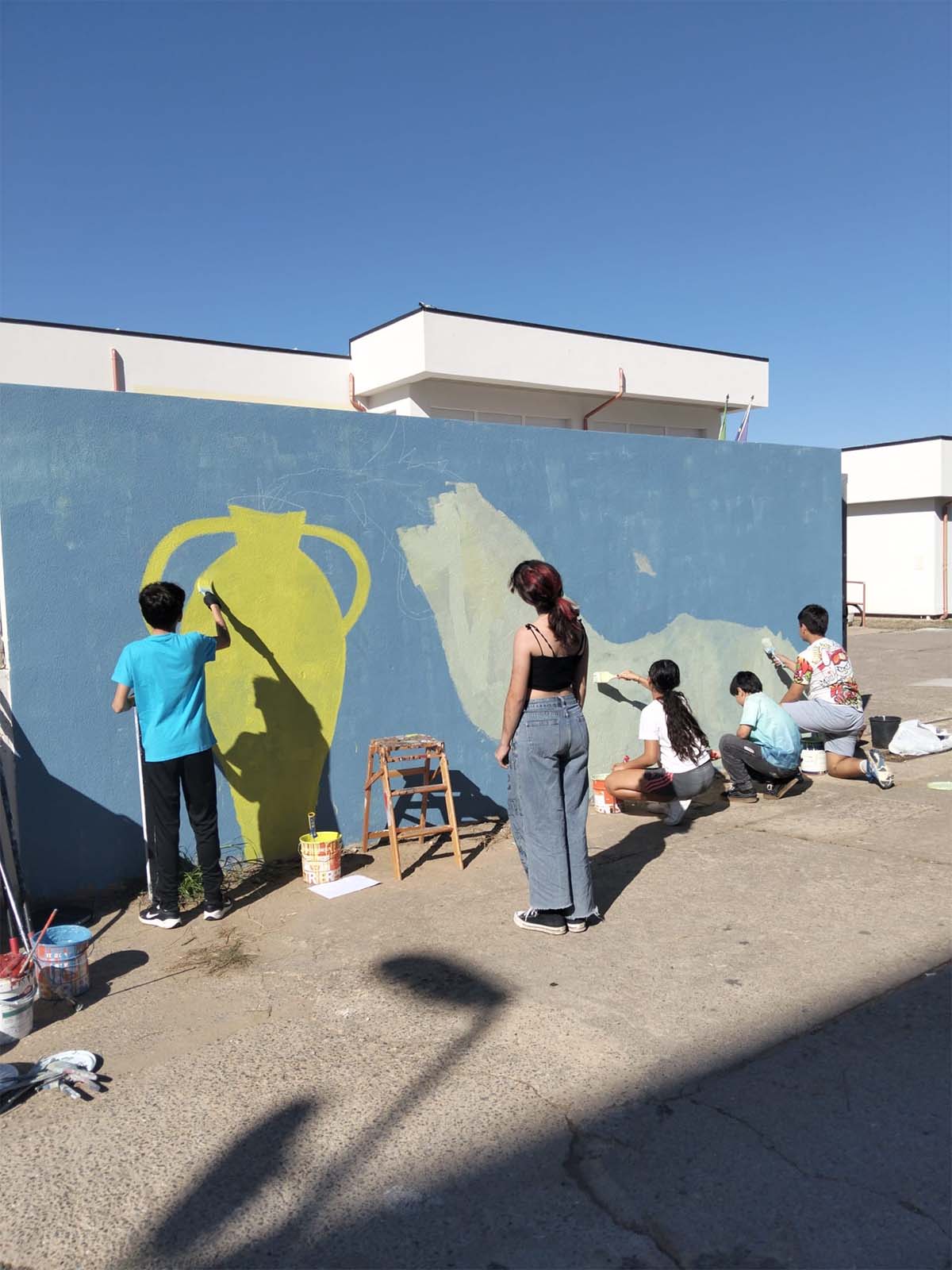
In October 2025, artist Crisa, in collaboration with illustrator Riccardo Cusimano, led a series of workshops dedicated to the art of murals, of which the artist is one of the most experienced exponents, at the Gritti Institute and the I.C. Pascoli in Carbonia. The drawings of fantastical creatures drawn by the students became the basis for the decoration of the exterior wall of the gymnasium overlooking the courtyard and a basketball court. Some of the creatures chosen by the students are inspired by the contemporary phenomenon of brainrots, but reinvented in a more personal way.
This edition of Caro Giacomo, the first in a few years, was not just a celebration, but an artistic and community exploration. The works on display during the festival, from July 24th to 27th, were created together with the town’s children, who in the days leading up to the procession participated in a series of workshops designed to stimulate their imagination and creative thinking.
This resulted in the flags created by Martina Celani using the cyanotype photographic technique, which portray the town’s inhabitants, immortalized by Gioia Matta in the utopian desire to register them all, because “people are the festival.”
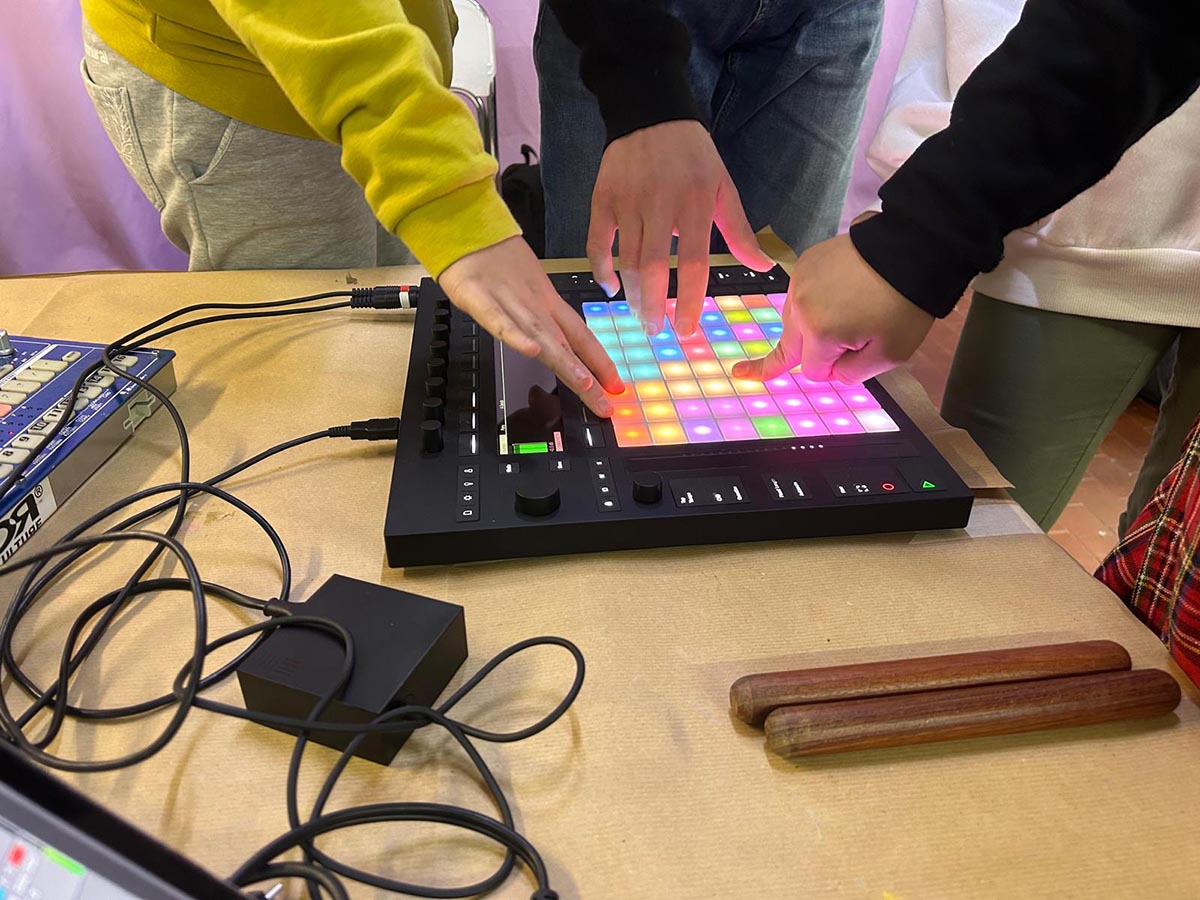
In the exhibition space located in Piazza Dante, it was possible to listen to seven unreleased musical compositions conceived by Elia Longu, Francesco Portas, and Carlo Spiga, based on texts and sounds created during the music workshop, which could be activated through the interactive music station available to spectators.
On July 25th, the procession dedicated to Saint James, the patron saint of Perdaxius, was held, and the Polaroids created from the shots taken by the children themselves during the procession (accompanied by Martina Celani, Roberta Soldi and Anna Auricchio), gave us their perspective on the celebration.
* * *
STORIE AL VENTO by Anna Auricchio, Martina Celani, Laura Ennas, Gioia Matta
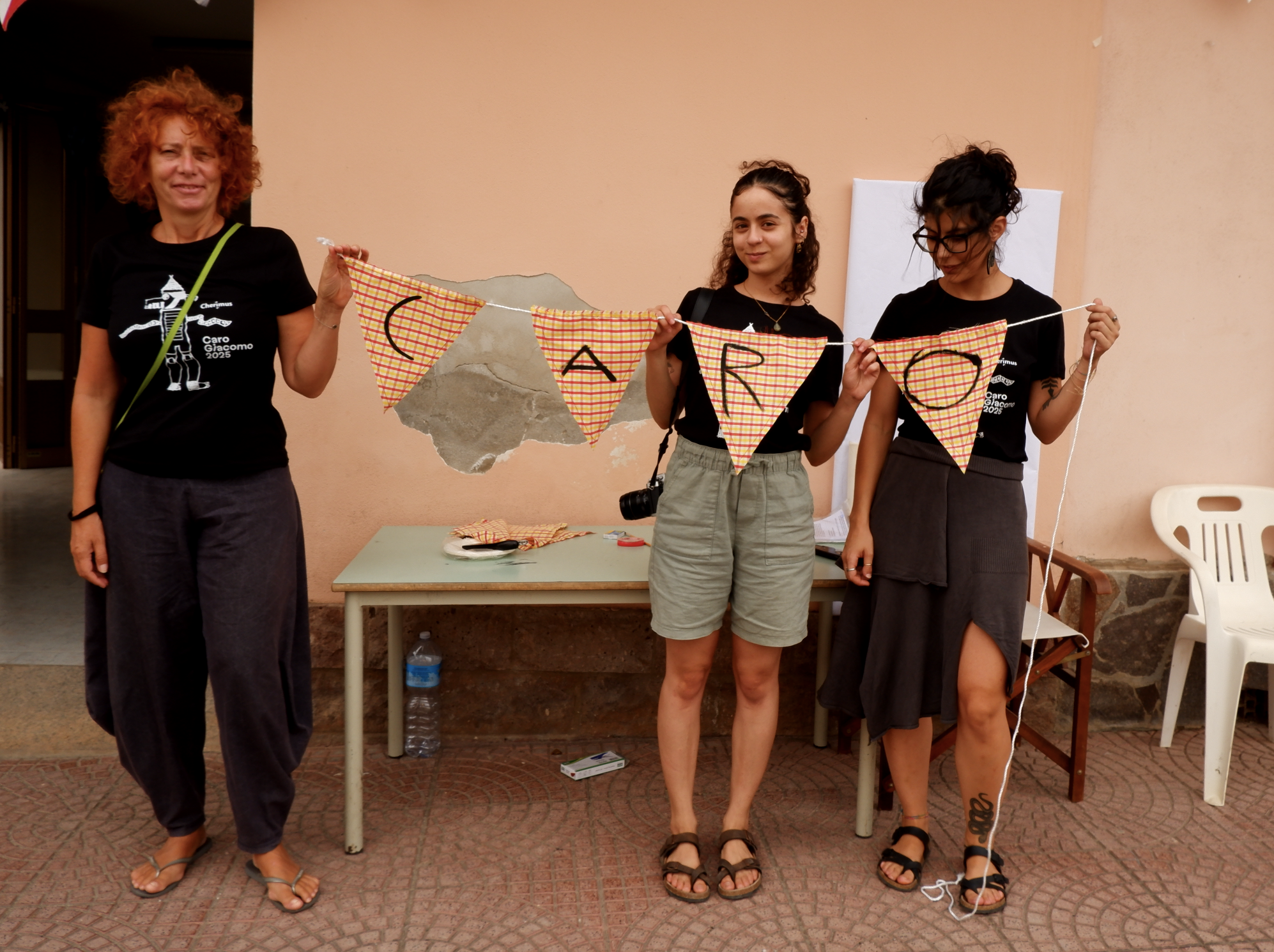
What happens when you start from scratch, from the basics of a village festival? One of the most recognizable elements of a festival are the classic colorful triangular flags that pass through the streets on holidays. The most commonly used today are made of lightweight plastic, are inexpensive, don’t last long, and are quickly thrown away: ephemeral objects, like the holidays that quickly vanish. The idea of artists Anna Auricchio, Martina Celani, Laura Ennas, and Gioia Matta is to make this distinctive element of the festival durable and unique without purchasing new materials, reusing scraps of fabric recovered from the village and involving the community in the design and creation of the new flags. Throughout the month of July, fabrics were collected (old samples, discarded clothing, unused fabrics), and the Perdaxius community center hosted a series of workshops where a group of local children chose colors and compositions, cut out, and assembled the new flags with the artists. At the end of the workshop, the flags were installed, as they are every year, in Perdaxius town square, traversing the sky during the long summer days of late July. Rather than the traditional solid colors of ordinary flags, the new flags offered unexpected designs, colors, and textures: one of the most characteristic and, in some ways, banal elements of a celebration became a moment of reflection and sharing, and gave shape to a public artwork that now belongs to the community and can be rearranged and enriched with new flags for festive occasions.
LE PERSONE SONO LA FESTA by Martina Celani, Gioia Matta
Reflections on the festival don’t stop at the garlands of flags that decorate the town square, but delve deeper and intertwine with photography, particularly portraiture and cyanotypes. What is a festival, after all, if not the people who make it up? And what is a community? What if the flags were people, their faces, their gazes?
CACCIA ALLO SCATTO by Martina Celani, in collaboration with con Roberta Soldi
The activity transformed the children into reporters during the procession of Saint James; together, they explored Perdaxius, armed with Polaroid cameras, learning to observe carefully and choose the right moment to capture the celebration, the streets, and the people through images. The participants’ shots were later revealed to the photographers themselves and then to the public in the exhibition space in the square.
SUONI IN COSTRUZIONE by Elia Longu, Francesco Portas, Carlo Spiga
A workshop exploring sound and listening through the creation of small musical instruments made from inexpensive or discarded materials, and a collective sound composition inspired by Perdaxius. During the festival, a musical parade of children walked through the town streets, creating never-before-heard musical interweavings.
LA GRANDE CACCIA AL TESORO DI PERDAXIUS di Roberta Soldi e Laura Ennas
A grand treasure hunt, as large as Perdaxius, involves the entire village, its residents, and its businesses. The treasures are terracotta puppets made by local children during workshops led by artist and set designer Laura Ennas. Located throughout Perdaxius, the puppets mark the stages of a collectively constructed adventurous story. The hunt allows young participants to explore hidden corners of streets and houses, observe them with new eyes, and experience an unexpected adventure.
CASE E NEGOZI DI PERDAXIUS by Carlo Spiga
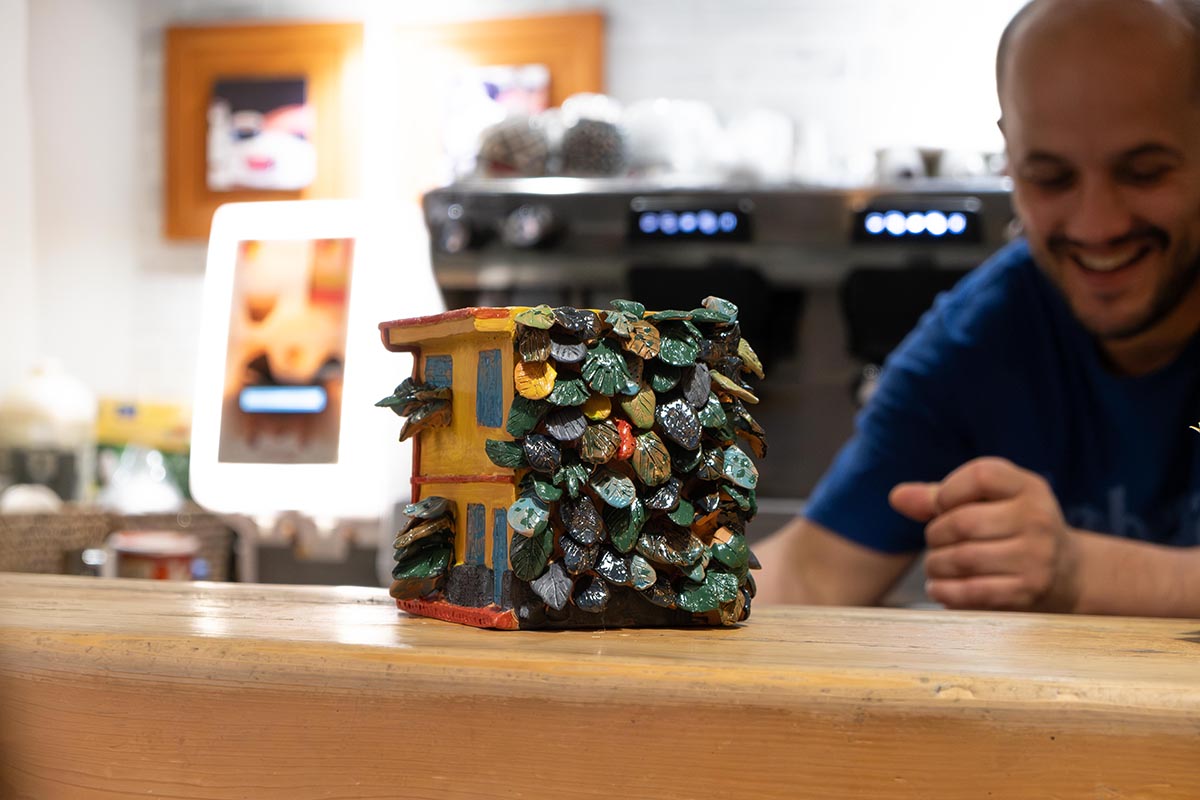
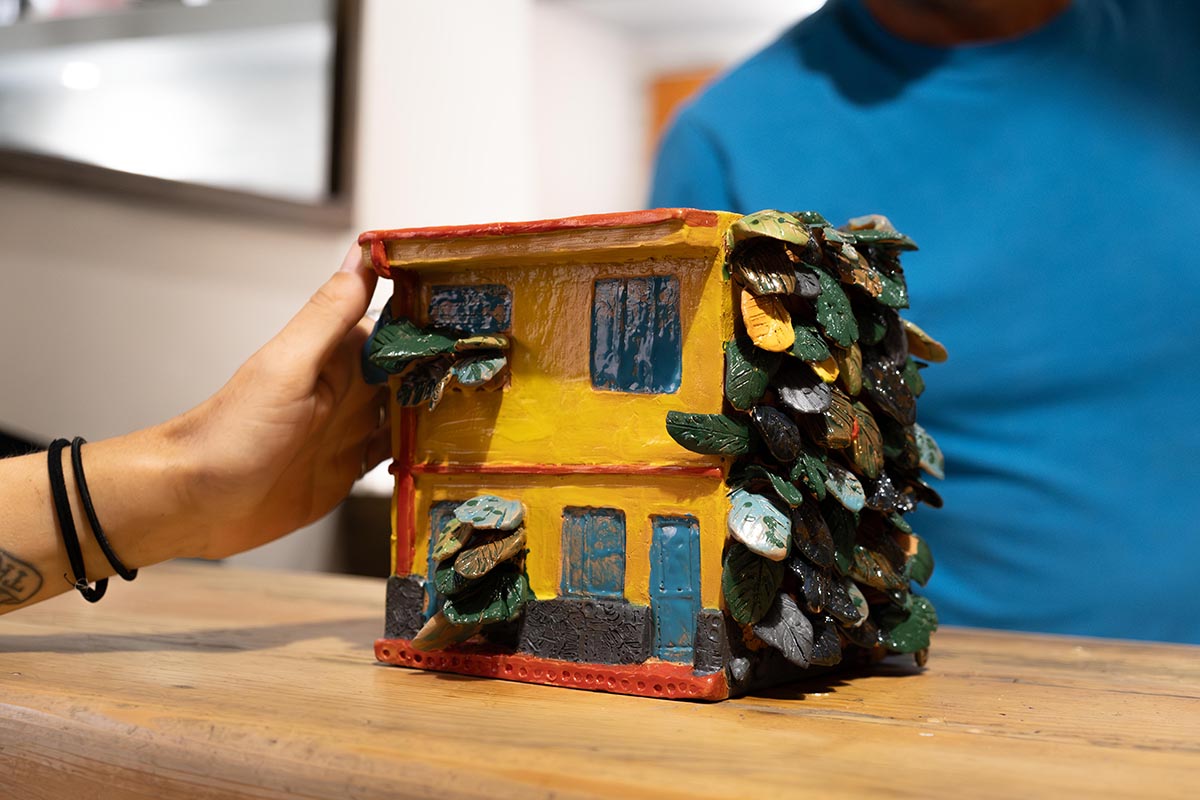
Carlo Spiga has been working for years on small terracotta houses, studying the shapes and materials of traditional homes in Sardinia and the Sulcis region. In 2015, together with Paolo Carta, he led a series of workshops with the community of Cagliari’s Sant’Elia neighborhood, titled “Houses and Gardens of Sardinia.” Since then, his reflection on ways of living and the relationship between architecture and nature has led the artist to develop a highly original sculptural production. He chooses to display these works only in public or residential spaces, where the sculpture’s pedestal is a bar counter, a shelf, or a garden. “Houses and Shops of Perdaxius” is a series dedicated to the town that annually hosts the Caro Giacomo Festival; a small house was placed inside the town’s only bar, keeping bartenders and patrons company during the festival.
CARO GIACOMO 2025 IN PIAZZA DANTE The now unused spaces, which over time housed, among other things, a clothing store and the village butcher, have been transformed into a place where works and experiences have been returned to the community, also becoming a new meeting point for residents during the holidays
“L’art de lutter. Contre les violences faites aux femmes et aux enfants” aims to revive debates on gender-based violence in Mauritania, from Nouakchott to the most remote villages of the Country, through meetings and workshops held by artists, artisans, musicians and activists. The project was conceived in 2021 by Art Gallé, an art association based in Nouakchott as a mobile version of their initiative outside the capital. This 2023 edition of the project is a collaboration between Art Gallé and Cherimus. The goal is to continue and strengthen the action of this important initiative in Mauritania and spread knowledge about the project abroad, starting from Sardinia. Since its creation, Art Gallé has touched on sensitive subjects, giving pencils, brushes, and paints to marginalized people in order to empower them to tell their own stories. Art, in all its forms, can be a vehicle of change and transformation. Self-expression is an important tool to unpack dynamics of power and oppression.
Cherimus collaborated actively with Art Gallé to run conferences and workshops in January and July 2023 in Nouakchott, Boghé and Ouadane. The workshops put together artists, artisans and a large audience of different ages around pot making, henna art, music, painting and public art. The conferences held in Nouakchott and Boghé were ran by Art Gallé and allowed women coming from all over the villages to gather and openly share their issues, connect and envision a network of support to not feel alone.
This process deepened the longstanding artistic dialogue on the topic of systemic gender-based violence with visual artist, activist and founder of Art Gallé, Amy Sow, a dialogue begun on the occasion of her visits to Sardinia in 2019 and 2022.
Cherimus and Art Gallé will record the voices of the workshop participants, as well as Mauritanian artists and activists willing to share their experiences and statements, to create an audio podcast of the project.
The project “The art of fighting. Against violence against women and children in Mauritania” is financed by regional law n. 19 of 11 April 1996, of the Autonomous Region of Sardinia and by the Sardinia Foundation. The partners of the project are the Nivola Museum of Orani and the municipalities of Carbonia, Iglesias and Perdaxius; The F. Meloni comprehensive institute, the Elda Mazzocchi Scarzella association, Domusnovas.
January 2, 2023, Art Gallé, Nouakchott Panel: L’apport des artistes dans la lutte contre les violences faits aux femmes et aux enfants
The first meeting on gender-based violence was held at ArtGallé where visual artist and activist Amy Sow, rapper Abda MC, journalist and activist Houleye Kane, and beautician Dado Bathily, moderated by sociologist and activist Djeynaba Ndiome, spoke about the legislative situation of the country and the need to deepen and broaden the knowledge about the topic. The speakers spoke, data in hand, of the vastness of the problem and opened a dialogue with the audience. Visual artist Emiliana Sabiu spoke at the meeting about Cherimus and its efforts to bring attention to these increasingly urgent issues in the rural areas of Sardinia and the importance of the recognition by the Regione Autonoma della Sardegna of this project to support the struggle on several fronts. “The art of fighting” aims to bring discussions of gender-based violence from Nouakchott to the most remote villages of Mauritania through meetings and workshops held by artists and musicians.
January 3, 2023, Toujounine neighborhood, Nouakchott Painting workshop
Art Gallé and Cherimus were welcomed by Mrs. Leila and the young people of the Toujounine neighborhood with traditional mint tea. The workshop held by Amy Sow aim was to strenght awareness about gender-based violence with a group of girls and boys held by the ArtGallé team led by Amy Sow. At the end of the meeting the girls and boys had the opportunity (for many of them, the first!) to experiment with painting.
Mr. Sylla held a workshop of traditional fabric-dyeing techniques from his atelier in the Arafat neighborhood south of Nouakchott.
January 6, 2023, Riad neighborhood, Nouakchott Traditional doll-making workshop
Workshop in collaboration with the Association pour La Défense de la Voix des Enfants en Mauritanie (ADVEM) which hosts 120 children from the neighborhood and gives them early education. Visual artist and activist Amy Sow spoke about her artistic practice and started to raise some basic questions about gender-based violence and awareness and led a workshop to build traditional dolls.
January 6-7-8, 2023, Ndiagu
The project’s first scheduled trip outside the metro area of Nouakchott is at the center of a political clash between local authorities. The mayor of the village where a meeting and workshop was supposed to be held refuses to meet ArtGallé and Cherimus and does not grant space and support, despite the full consent of the regional authorities. The stated reasons are that in the territory they administer, violence against women and children does not exist.
June 26, 2023, Hawa Kassé’s workshop, Boghé Pottery workshop
In June, six months after the first trip, Cherimus came back to Mauritania for the core part of the project. After a six hour journey from Nouakchott together with the team of Art Gallé, we reached Boghé, where we met Hawa Kassé who taught us and all the participants of the workshop how to make terracotta vases. Hawa’s family specializes in the production of vases, especially those used until recently to store water and food. The vases are modeled by hand with local materials and are fired in pits. Even though all the children of the family help with the work, Hawa explained that young people are no longer interested in learning this craft, which is thus in danger of being lost. Visual artist Carlo Spiga, invited by Hawa and Art Gallé, created some lids for the vases adding to them small sculptures of animals made by children, evoking elements of Nuragic statuary.
Hawa Kassé
June 26, 2023, Boghé Bench-making workshop
In the heart of Boghé there is a wide valley where children play and run. We were told that for a few months of the year the basin is filled with water and fish from the Senegal River, a body of water around which the families, seated on the side of the road, gather to enjoy the landscape. Children often stay until late hours. Here, Art Gallé has organized a workshop to build and decorate benches so as to increase the comfort and safety of those who gather here. Boys and girls from nearby neighborhoods came by to paint and personalize the new benches, and the community began to use them right away. We assisted Amy Sow and Oumar Ndiaye in the organization of the workshops, building on the experience we gained together on the occasion of the project ”I giardini possibili”.
The evening of the 26th of June we were honored by the visit of the music star Amadou Tamba Diop, that had dinner with us and sang a welcome song for Cherimus and ArtGallé team.
Amadou Tamba Diop (1950-2023), legend of “Leelé”, a traditional music from the region of Fouta << Amadou Tamba Diop était réputé pour sa parfaite maîtrise de ce genre musical, dont il était toutes ces dernières années le chantre, témoigne un communicateur traditionnel via WhatsApp. Selon plusieurs sources, ”son nom était intimement lié à des célébrités comme Sidy Chérif de Thilogne et Samba Diop ‘’Leelé’’, qui passe pour l’un des rares artistes du Fouta à avoir son nom associé au genre musical pratiqué. Selon un article du Quotidien paru en septembre 2022, ‘’le Leelé est un genre littéraire, poétique et musical des Haalpulaar (Toucouleurs) du Fouta Tooro, qui prend sa source dans la culture multiséculaire de cette région du nord du Sénégal et du sud de la Mauritanie’’ >> (APS, Agence de presse Sénégalaise)
* * *
June 26, 2023, Boghé Panel Voix des femmes
Meeting with women from the Boghé region, invited to share their experiences and difficulties and to participate in an open discussion on gender-based violence. One participant asked, “Artists, what solution do you have?”
July 3, 2023, Alliance Francaise classroom, Ouadane Henna workshop
Henna (حناء) is a dye prepared from the plant Lawsonia inermis, used since ancient times for the temporary tattooing of hands and feet, and the dyeing of hair. In Mauritania the practice of decorating the hands and feet with henna is traditionally made by women of a single caste, who make these elaborate decorations for the community. This is why Amy Sow and Zaida Bilal imagined a workshop in which the boys and girls of Ouadane would feel free to experiment with henna designs, through colors and canvas. During the workshop, the traditional Mauritanian designs met the Sardinian symbols of Nuragic culture, giving rise to new combinations. Small note: the workshop was hosted in one of the classrooms of the Alliance Francaise in Ouadane. In this room, there was a map of France. There was, however, no geographical reference either to Mauritania or to the African continent as a whole.
July 3, 2023, Ouadane Bench-making workshop
In Ouadane, the evening brings relief from the high temperatures of the day. In an open space in the village, the elderly meet every day, sitting on the floor on traditional carpets, to chat, drink tea and play checkers, while the children run around. The dialogue between Zaida Bilal and Amy Sow gave rise to the idea of building, coloring and installing three benches, which will make that space more comfortable, especially for the elderly. During the workshops, Cherimus and ArtGallé were able to discuss the methods adopted during the project and the children had the opportunity to experiment with painting, and to touch the colours, if only for once in their lives, as Amy tells us.
July 2-3-4-5, 2023, Auberge Vasque Chez Zaida, Oudane
“No one gives you freedom, you have to take it,” says Zaida Bilal our partner in Ouadane. This is how, in spite of many challenges, she centered herself and transformed her life and that of her community: starting from scratch, alone, she managed to build her hotel Auberge Vasque Chez Zaida in Ouadane. The space is more than simply a hotel: it is also a cultural and meeting center. Zaida takes guests and artists to the desert in her pickup truck and promotes a new economic and social model, pushing for the empowerment of local women and fighting against their exploitation. In the photos, Zaida guides us -her guests from Cherimus and ArtGallé -to the “Eye of the Desert” and explains to us the geography of this impressive natural monument.
Zaida BilalZaida Bilal and Amy Sow in the قلب الريشات, literally “The heart of the feathers”, also called the Eye of the desertAmy Sow draws the structure of the قلب الريشات in the sandZaida Bilal explains how the قلب الريشات structure worksZaida Bilal driving us in the desertThe Rouaijil family playing at Auberge Vasque Chez Zaida the night of July 4thCarlo Spiga joins the group for a jam session, playing the launeddas